

Frederick L. Kiechle, MD, PhD
1946–2024
October 2024—Frederick L. “Fritz” Kiechle, MD, PhD, editor of the CAP TODAY “Q&A” column from 2008 to 2024, died on July 30 at age 78.
“He was a champion for clinical pathology, a champion for the laboratory. He was an innovator in clinical chemistry,” and “devoted to resident education,” says Dorothy Adcock, MD, chair of the CAP Publications Committee and former chief medical officer, Labcorp.
Dr. Kiechle was an author of the CAP Publications manual So You’re Going to Collect a Blood Specimen, through its soon-to-be 16th edition. He wrote Disruptive Technologies in Clinical Medicine, which the CAP published in 2023. He was a member of the CAP Publications Committee from 1993 to this year, having served 12 of those years as an advisor. He was a member of the Archives of Pathology & Laboratory Medicine editorial board (2006–2023), member and then chair of the Patient Preparation and Specimen Handling editorial board (1993–1996), and a member of the Chemistry (2008–2013) and Special Chemistry (2006–2007) resource committees.
Dr. Kiechle began his career at the University of Pennsylvania before moving to William Beaumont Hospital in Michigan, where in 1988 he was named chair of the Department of Clinical Pathology and later cofounded the Beaumont reference laboratory. He joined Pathology Consultants of South Broward, Fla., in 2006, where he was medical director of the Department of Clinical Pathology for Memorial Health Care System and vice president of the Department of Pathology at Memorial Regional Hospital. He later was chief medical officer of Boca Biolistics Reference Laboratory in Florida.
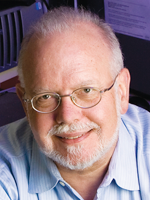
“He had the highest scientific integrity,” says Dr. Adcock, who worked with Dr. Kiechle for 35 years on CAP and American Society for Clinical Pathology committees and was a coauthor of the phlebotomy manual for more than two decades. “If Fritz said something, you could rely on it. I would rely on him, and so would many others in the field. You knew if Fritz came out with something, it was fact.”
He was in step with the latest innovations until the end, Dr. Adcock says. She recalls Dr. Kiechle telling her about continuous glucose monitoring “long before it ever hit the literature, and then years ago, even capillary sampling, which is something people are dabbling in.” Disruptive Technologies in Clinical Medicine is “the perfect example of who he was—that at the age of 76 he wrote this book that’s cutting edge.”
“He was an early adopter of many techniques,” she says, including molecular procedures and automation in the Beaumont reference laboratory. Early on he looked to innovation and efficiency as solutions to the undersupply of technologist staff, Dr. Adcock says.
Rodney Arcenas, PhD, D(ABMM), who worked with Dr. Kiechle for 10 years at Pathology Consultants of South Broward, recalls likening him to a shark that has to keep moving to stay alive. “I said he tended to always try to keep learning to feel alive. He was always in that learning mode.”
Dr. Arcenas, now a clinical development lead at Roche Diagnostics Solutions, was only recently out of his fellowship when Dr. Kiechle, who had multiple publications and speaking engagements to his name, joined the pathology group. “At first it was a little intimidating knowing I had full access to this person at work, but he ended up being very down to earth” and a mentor to Dr. Arcenas and other scientists in the group.
The two soon bonded over their shared passion for playing jazz piano, Dr. Arcenas says. Every year during Medical Laboratory Professionals Week, Dr. Arcenas brought in a portable piano and small speaker, and he and Dr. Kiechle played piano for staff during lunchtime or celebratory activities, with other musicians in the laboratory joining in. Dr. Kiechle was a member of jazz bands and recorded two albums of solo jazz piano. Dr. Adcock recalls listening to him play piano after committees met. “If there was a piano at the hotel, Fritz would find it and at night he would play,” she says. “Fritz was just a cool cat.”
And a “true renaissance person,” says David Alter, MD, D(ABCC), another of Dr. Kiechle’s mentees and now director of clinical chemistry and professor, Department of Pathology, Emory University School of Medicine. He met Dr. Kiechle when he was a resident member of the CAP Publications Committee. Later, he did a fellowship at Beaumont when Dr. Kiechle was chair. “He provided me with very good mentoring when I was looking at my first job. I repeat it to people to this day.” When Dr. Alter was considering private practice, Dr. Kiechle advised: “Don’t go into a private group if it’s not stipulated that you’re on the partner track,” and make sure it’s in the contract. “Stay away from any group that says, ‘It’s not really on our radar’ or ‘We don’t do that for your type of specialty.’” It’s “something I never would have known, honestly, coming out of training.”
“He was one of the top three or four clinical pathology mentors I looked to for advice and direction,” Dr. Alter says.
Those who knew Dr. Kiechle knew of his many accomplishments, Dr. Adcock says, “but he was so humble, so down to earth.” And he was collegial when he led work groups, she adds. “He encouraged others to speak up; he wanted to hear their opinions. . . . He brought everyone in, made everybody feel important, made you feel like you were really contributing.”
“He made it fun,” she says. “It was never like it was work.”
Ever the author and editor and knowing he was ill, Dr. Kiechle gave Dr. Adcock his contributions to the 16th edition of the phlebotomy manual, which is in progress now, before he died. “We’ll get it out with his name on it,” Dr. Adcock says. She and Dr. Kiechle also completed work recently on a yet-to-be-published guide to 21 of the most common chemistry analytes—what causes them to be elevated or low, interferences, whether reference ranges for the transgender population differ, for example. “This was going to be volume one,” she says. “He laid out the next 20 volumes. He was always a step ahead.”
Dr. Kiechle won several awards, among them: CAP Outstanding Educator in 2023, CAP Lifetime Achievement in 2008, Association of Clinical Scientists Gold-Headed Cane in 2023 and Clinical Scientist of the Year in 1996, and ASCP Distinguished Service in 2001.
“He was not only respected within the CAP but other societies as well,” Dr. Adcock says.
“He was a great musician, a great scientist, a great friend.”
Dr. Kiechle is survived by his wife, Janet, a son and two daughters, and five grandchildren. Donations in his memory can be made to the CAP Foundation Clinical Laboratory Science Investigator Award to fund four weeks of training for pathology residents to participate in research on novel biomarker assays (https://bit.ly/CT_10-24-Kiechle).
—Amy Carpenter