

Surgical pathology cases
Valerie Neff Newitt
April 2025—A few years after its launch, the CAP’s online Interactive Surgical Pathology Cases webinar series is set to roll out for this year, with a session on urinary bladder pathology to take place May 14.
The faculty members for the two-hour session are Lara Harik, MD, of Emory University School of Medicine, and Sara E. Wobker, MD, MPH, of UNC School of Medicine.
The focus will be common diagnostic pitfalls in flat and papillary urinary bladder cases and a practical approach to diagnosing and grading such cases.
The second online session, on head and neck pathology, will take place Aug. 28, and the third, on lung pathology, is scheduled for Nov. 12. All begin at noon central time. The second and third sessions this year will be one hour.
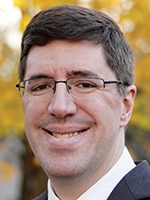
The virtual surgical pathology case series is a project of the CAP Surgical Pathology Committee, chaired by Raul S. Gonzalez, MD. “Our committee has a long history of educational offerings and this is an extension of that,” says Dr. Gonzalez, professor of pathology and laboratory medicine at Emory School of Medicine. Each online session is open to all, he says, and is a “succinct, high-yield update,” with two faculty each presenting two cases and allowing time for audience questions and answers.
The fees for the one-hour sessions are $45 for CAP members, $59 for nonmembers, and $10 for junior members. For the two-hour session: $90 for members, $117 for nonmembers, and $20 for junior members. Those who enroll in all three receive a 10 percent discount. Continuing medical education credit is provided.
Pathologists who register will have the case slides to review beforehand, “so they’ll be prepared with the knowledge of the morphology of the cases,” Dr. Gonzalez says. During the webinar, each case is presented and the attendees are polled on what they believe the correct diagnosis is from a multiple-choice list. “Then the faculty member will discuss the case, including why the correct diagnosis is correct and why the distractor answers can be ruled out,” Dr. Gonzalez says.
“The goal is to provide an interactive experience.”
This format, familiar to pathologists, is what sets this apart from other online offerings, he says.
“We knew there were several online offerings, but we were not aware of any that simulated the way pathology residents learn in a hot-seat format where a faculty member presents cases and shows slides that the learner has previously had a chance to look at and formulate thoughts about. And then the conversation proceeds from discussing the slide, the potential diagnoses, how to resolve the differential, and the impact on patient care.”
“It’s a way for people to interact with experts in real time,” says Aaron Auerbach, MD, MPH, who was chair of the Surgical Pathology Committee in 2021 when Dr. Gonzalez, a committee member at the time, suggested the series. “And we are trying to hit tumor types and specimens that will be the most practical for our audience.”
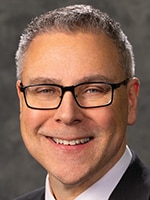
The appeal is clear to Dr. Auerbach, who is director of education, research, and repository tissues at the Joint Pathology Center, part of the Department of Defense, in Silver Spring, Md. “Do you want to get your pathology education from a book? From a meeting you have to travel to and lasts all day?” he asks. “Or do you want to get your pathology information over lunch, at the office, interacting with experts online?”
Then, too, there’s the benefit of it being a relaxed setting, “of sitting back and listening and chiming in with questions, with educators who want to interact. We want this to be as if you were at the microscope with us,” he says.
Attendees need a computer, access to Zoom, and “we’re ready to go,” Dr. Auerbach adds, noting registration is open until the start of the webinar.
The right audience is the general surgical pathologist and experts in the topic of the day. “And there’s so much the residents could learn from this. It would be great prep for their boards,” he says.
This program, to Dr. Auerbach, “hits a home run.”
Surgical Pathology Committee member Nadine S. Aguilera, MD, shares his view. “It’s a nice interactive talk and case presentation. It’s short so you don’t have to commit a great deal of time, and you learn something. Then you go back to work.” The interaction is relaxed and nonintimidating, she says, “a bit more casual than a lecture,” making it comfortable to speak up to ask questions.
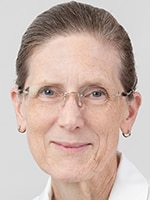
Dr. Aguilera is a professor and section chief of hematopathology, Department of Pathology, University of Virginia Health System. She works behind the scenes to schedule the webinar speakers, most of whom to date have been members of the Surgical Pathology Committee. “We’re also reaching out to other committees,” she says. “We’re open to others who want to present.”
An engaging hour is what she and her colleagues on the committee aim for. “It’s supposed to be an enjoyable webinar that you don’t have to get too bogged down in, but you see differential diagnoses and cases you might run across in your practice,” Dr. Aguilera says. And for the faculty: “It’s a non-anxiety-producing way to present interesting cases.”
The presenters for the head and neck pathology webinar in August are Juan Hernandez Prera, MD, of Moffitt Cancer Center, and Abberly Lott Limbach, MD, of Ohio State University. For lung pathology in November, the presenters are John Carney, MD, of Duke University School of Medicine, and Mitra Mehrad, MD, of Vanderbilt University Medical Center.
Registration is at http://education.cap.org/surgpath.
Valerie Neff Newitt is a writer in Audubon, Pa. The views expressed in the story are those of the sources and do not reflect official policy of the Department of Defense or the U.S. government.