
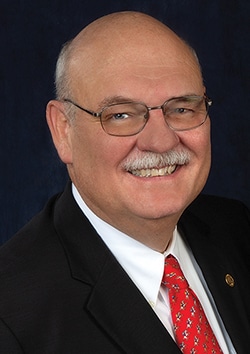
Patrick Godbey, MD
February 2021—In late December, the U.S. Congress passed a COVID-19 relief bill that included two key items for pathologists—measures that the CAP pushed hard to achieve on our behalf. The document is more than 5,000 pages and addresses a large number of subjects, including thoroughbred horses. Here, I’d like to offer a brief analysis of the elements that affect our profession.
For pathologists, the most urgently needed piece of this bill was the scheduled 2021 Medicare cut to pathology service payments by the Centers for Medicare and Medicaid Services. As has been discussed in this column before, the planned cut averaged nine percent and included, for example, a 12.5 percent cut for 88305-26, which is the code we commonly bill for tissue biopsies. Many kinds of physicians and health care providers would have felt the pain, which is why the CAP teamed up with more than 50 nonpathology advocacy organizations to warn Congress about the dangers of such a drastic cut. In addition to the serious loss of income for pathology practices, the cut would have led to a precipitous reduction in access to care, especially for patients in rural and minority communities.
With just 10 days to spare, both chambers of Congress approved a measure to pare back those cuts. Make no mistake: There is still a reduction in service payments, but I am much relieved to say that it will be about 25 percent of the cut that had been scheduled. Pathologists, in academic and private practice, can measure the difference in their Medicare checks. The estimated Medicare savings for pathologists are on the order of up to $85 million for 2021.
The CAP was instrumental in making this happen, and it was the pathology organization that effected this change. Let me offer a glimpse of the breadth of work that went into it. The CAP worked closely with legislators in the House and the Senate to introduce legislation and garner support for it. Our lobbying campaign mobilized 1,600 pathologists to engage in political activities last year. They used tools provided by the CAP and sent nearly 9,000 messages to 473 representatives and senators, urging them to address the impending cuts by supporting the proposed legislation. I and more than 50 of my colleagues in the CAP held virtual meetings with various congressional offices as well. When I say that the CAP was instrumental, what I mean is that through the CAP, our members’ voices are amplified and heard, ensuring that our collective message to elected leaders is noticed and understood.
Unfortunately, this achievement does not mean the battle is over. While we celebrate the most recent success of our advocacy work throughout 2020, there are scheduled cuts for Medicare services that are slated to go up an average of six percent next year. We must remain vigilant, engaged, and committed to the power of advocacy to protect our practices and our patients.
The other component of the relief bill that is relevant to pathologists concerns balance billing and the surprise medical bills patients receive. The No Surprises Act is designed to hold patients harmless from bills for out-of-network services provided at in-network health care facilities. The legislation establishes an arbitration process with no minimum financial threshold for independent dispute resolution. As part of that process, Medicare and Medicaid rates will be removed from consideration, and insurers will pay for out-of-network services that are agreed to. If your state has a strong balance billing law already, this new law will not supersede that.
The CAP spent more than two years advocating for legislation to protect patients from the financial nightmare of unexpected medical bills and to support network adequacy requirements for health insurance plans. Two years ago, the leading legislative bill to address surprise bills represented the interests of insurance companies and would have severely disadvantaged physicians. The inclusion of this act, with the changes lobbied for by pathologists and other physician organizations, in the year-end relief bill represents a major success for all members of the CAP.
Another essential detail about this bill: It was passed with strong bipartisan support. The CAP will work with selected members of the Senate and the House as well as their staffs on both sides of the aisle. Our interest is about what affects pathology and laboratory medicine, and there is no partisanship in that. We are all physicians and we want what is best for our patients. It is important that the CAP’s efforts focus on selected members of both parties. This country is more divided than it has been in a long time, but the CAP must not be. Our shared principles for democracy hold us together. Our advocacy with Congress is about ensuring the best outcomes possible for pathologists and their patients, not about siding with one party over another.
Dr. Godbey welcomes communication from CAP members. Write to him at president@cap.org.