


August 2025—With cuts to government programs underway or on the way, how are laboratory budgets affected? CAP TODAY publisher Bob McGonnagle asked members of the Compass Group what the impact has been as of July 1, when the group met online. Also up: how one lab is gearing up to close two patient care gaps and using a Costco approach to do so.
The Compass Group is an organization of not-for-profit IDN system laboratory leaders who collaborate to identify and share best practices and strategies.
I’d like to ask what kind of budgetary advisement you are all under, given the climate of government cuts. Jordan Olson, what kind of fiscal year do you have at HNL?
Jordan Olson, MD, chief medical officer, chair of pathology, and medical director, HNL Lab Medicine, Allentown, Pa.: Our fiscal year started today. It’s looking like another challenging year in terms of the revenue coming in, but I think all of medicine is in the same boat.
How dependent is your operation on Medicare and Medicaid payments?
Dr. Olson (HNL Lab Medicine): We have a significant population on those payers. Any change in those rates would make a significant change to our revenue.
How soon will you be re-forecasting?
Dr. Olson (HNL Lab Medicine): Our finance group is constantly re-forecasting. Whenever there is news about what rates might change to, we re-forecast.
How is this affecting your new projects in IT or with analyzers or additional services?
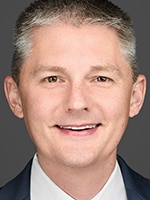
Dr. Olson (HNL Lab Medicine): Right now, it’s not. We’ve been able to successfully budget around our projected revenue. We’ve budgeted to a margin with our current budget, but if payments change, we’ll be forced to adapt.
Chris Scanlan, tell us about your fiscal year at BayCare.
Christopher Scanlan, director of laboratory administration, BayCare Health System, Clearwater, Fla.: We forecast quarterly and continuously throughout the year. Florida was one of a few states that didn’t expand Medicaid in the Affordable Care Act, so there’s a belief that Medicaid cuts will be more limited in impact compared to other states. We are concerned about the 15 percent rate cut that seems likely on the fee schedule in January.
From a capital standpoint, we have to strengthen our rationale and be strategic about initiatives outside the routine replacements we’ll do every few years.
Michele Erickson-Johnson, are we going to have to call on Denny Sanford again or are we going to be okay as is?
Michele Erickson-Johnson, PhD, MB(ASCP)CM, HCLD/TS (ABB), senior director of laboratory operations for medical genetics and biorepository, Sanford Laboratories, and assistant professor of internal medicine, University of South Dakota Sanford School of Medicine: We don’t get our budget workbooks until mid-July and they’re due mid-August. For the genetics lab, we are partially, not entirely, funded by the Imagenetics initiative through Denny Sanford. We’re working to set up a more reference-lab–type structure in which we transfer costs out for the testing. Normally we’re lucky enough not to have many items cut from our budget, but I have to prove performance on financial wellness before anything gets put on the capital budget.
You’ve enjoyed a decent staffing situation in Sanford. Has that changed?
Dr. Erickson-Johnson (Sanford Labs): No, it hasn’t. Our laboratory is fully staffed, including our send-out bench at the reference lab. The genetics lab just posted an application for a laboratory genetic counselor and I’ve had more than 12 applicants. However, our MLS program didn’t have a full class for the next session.
Mike Eller, what does your fiscal year look like at Northwell?
Mike Eller, assistant vice president of business development, Northwell Health Laboratories, New York: We’re entering budget season. We do quarterly reviews with senior leadership on forecast, and we’re doing pretty well this year. They told us to watch our discretionary spending for things like travel; they want us to keep an eye on it. We’re waiting on the percentage they want us to cut going into the next budget season. It’s a constant push to reduce cost and find additional revenue opportunities. When you keep looking, you find money, but it’s always a struggle.
Northwell, like everyone, has a lot of Medicare and Medicaid in the payer mix. Dwayne Breining, are the potentially severe cuts in Medicare and Medicaid a concern for your operation?
Dwayne Breining, MD, executive director, Northwell Health Laboratories: Luckily it’s still a relatively small percentage of the overall business, but it’s wildly variable by hospital within our system. Our partners in New York City will be tremendously impacted. We’re a nonprofit, so we operate on a one or two percent operating margin annually.
Now that the bill has been signed, people can read it and titrate out what it’s going to cost. Mixed within the Medicare cuts was some tax relief for health care institutions as well, so that will have to be balanced out. It doesn’t hit initially, but eventually people will start dropping off the eligibility rolls. That will have to be layered into the calculations. It won’t affect us at Northwell as much as some of the safety-net–type places. We often have business with them and do what we can to help.
Are your projects for instrumentation—new assays, new areas of expansion or refinement—going to stay intact?
Dr. Breining (Northwell): Bill Parcells, former coach of the New York Giants, used to say his job was to make practice so challenging that the players welcomed the Sunday afternoon game as a walk in the park. That’s kind of what our system does to us on capital requests. It is so limited and we have to go through star-chamber–like committees every time we ask for capital funding that we tend to have a solid business plan before we make a request. It’ll usually sail through because we wouldn’t bring it forward unless it was going to be positive.
If we can’t keep the PAMA monster at bay for another year, it will become a significant topic. Moira Larsen, tell us your thoughts on this discussion so far.

Moira Larsen, MD, MBA, physician executive director, MedStar Medical Group Pathology, MedStar Health, Columbia, Md.: We too have just started our fiscal year, and we are waiting for capital to be released. We have not been told there are limitations. We just went through a business transformation exercise, and those processes are proceeding apace. We consolidated all our microbiology to one lab; we had had two labs running. We are working on bringing in more testing.
Our budgets include an increase in pathology across the board, with expectations of expanding surgical practice. In a recent meeting we asked who we should be talking to in terms of tracking PAMA for us so we will know what needs to be adjusted, and we were given the contacts in our rates and reimbursement section. Our organization tries to protect us from the worst so we can do what we think is right by our patients. We have added pathologists in order to expand and do the work we were planning on insourcing this year from reference laboratories.
We just signed a contract with Epic, and we’re working on digital pathology and AI contracts. We’re proceeding business as usual until someone tells us otherwise.
Pete Dysert, what’s top of mind for you at Baylor Scott & White?
Peter Dysert, MD, chief, Department of Pathology, Baylor Scott & White Health, Dallas: In the last report by Becker’s Hospital Review, we were at an about 11 percent operating margin for this year. We benefit from the local economy and great system leadership. I don’t see any budgetary constraints. In fact, we are getting a BSL-3 morgue built this year.
On another matter, Texas passed in June the Texas Responsible Artificial Intelligence Governance Act, which will become effective January 1, 2026. It requires that if we use AI in any adjunctive way to make a diagnosis, it must be disclosed in the EHR. This is new for us, so we’re working through it now. I think it will be part of the disclosure as it is for our laboratory-developed tests—the information is incorporated into our surgical pathology reports, where we’re using AI. I wondered where other people were with AI and how they handle it in their states.
Dr. Breining (Northwell): I don’t think New York State has issued regulations on AI. I imagine when it comes—and I expect it to be similar to what Texas has—we will probably add it to the fine print that’s appended to many of our laboratory reports.
Greg Sossaman, MD, senior medical director, pathology and laboratory medicine, Intermountain Health, Murray, Utah: At the USCAP meeting this year, ADASP had a session where Eric Glassy gave a good presentation in which he said he had talked to pathologists who indicate on their reports that an artificial intelligence algorithm was used for quality assurance purposes. It’s his view that it is good practice to be transparent.
Gaurav Sharma, tell us what is going on at Henry Ford.

Gaurav Sharma, MD, system vice chair of clinical pathology, division head of regional laboratories, and medical director of the outreach laboratory, Henry Ford Health, Detroit: My motto after doing extensive informatics work has been: The right thing to do should be the easiest thing to do. One project we are working on with our integrated network, in-house insurance, and primary care and nephrology experts is to identify at-risk patients who qualify for an order, and preload them to simplify the ordering for chronic kidney disease screening. Rather than try to educate everyone, we are exploring ways in which we can preload these orders, and then we can intercept patients when they walk into a lab site for testing—it doesn’t have to be for CKD—and in an informed way show them, “You have a diagnostic care gap. Would you like to get this test, because your doctor has already ordered it?” It’s a worthwhile project. It seems like a simple idea, but it’s not easy.
Where are you in the timeline?
Dr. Sharma (Henry Ford): We are getting ready to launch at two pilot sites. It’s part of a series. The first part was preloading orders for fecal immunochemical testing for colorectal cancer screening—a patient walks in for a blood test and we say, “You’re here for a blood test, but do you know you’re due for a FIT test? Here is the kit, take it home, call your doctor if you have any questions, and if you are interested, we’ll do it.” It’s the right thing to do, and it’s the best thing to do for preventive efforts. We’re exploring if we can do the same for fatty liver because that is a silent epidemic.
How do you measure the effectiveness to the patients of those interventions?
Dr. Sharma (Henry Ford): All we are doing is counting the number of times we gave out kits and the number of times we got the results back, and I’m going to give it to other experts.
In many health systems I would say the largest number of individual in-and-out visits are in a lab setting. Most health systems have not leveraged that traffic to close diagnostic care gaps; they focus more on mail outreach, messaging, and so on. Think of it as Costco. Nobody goes to Costco to buy the $1.50 hot dog. When you take your cart out, you see it. Most people do not visit a clinic for only a lab test. They go to see their doctor, but on their way out, they see this lab finding diagnostic care gaps and offering to close the gap on the spot. People like that convenience.
Aaron Waldman, can you comment on what you see from the NorDx perspective?
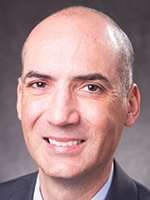
Aaron Waldman, MBA, chief financial officer, NorDx, Scarborough, Me.: While health systems across the state of Maine continue to struggle financially, NorDx and MaineHealth are reporting profitability. We are working diligently to maintain strong service levels and access across our communities. Our outreach business is growing and infrastructure investments are being made. Senior leaders are focused on better understanding opportunities to standardize lab charges to patients across regions and how to improve operational efficiencies in our laboratories.
Do you expect AI applications to improve the overall efficiency of the NorDx operation in the next two years?
Aaron Waldman (NorDx): We expect some efficiency gains; however, these will not yet be significant in the next couple years. Targeted segments of our business are benefiting from AI, such as billing. We are supporting initiatives in machine learning across digital pathology specifically. As we continue to engage in long-range planning, investment in technology is front and center.
Diana Kremitske, tell us what is happening at Geisinger.
Diana Kremitske, MS, MHA, MLS(ASCP), VP laboratory operations, Diagnostic Medicine Institute, Geisinger, Danville, Pa.: A big initiative we’re working on in our organization is care without delay. This is a model practiced in Kaiser. It’s to make sure all the services the hospital provides Monday through Friday are also available on the weekend to reduce care delays. Laboratory is in a good place because we have all our services 24/7, with rare exceptions such as FNA, but people are on call for that. To support the care without delay initiative, we’re looking at the data on unnecessary labs being done on the day of discharge and working with CMOs of our hospitals and with hospitalist leaders to see where the opportunities lie. It seems promising based on the data we have.
Our new executive leaders are also promoting Geisinger becoming a high-reliability organization, in the truest sense of the meaning. In addition to all the quality projects we normally do, what are the tenets around a high-reliability organization? That will be rolled out across our organization over several months. Also, there will be alignment with many quality projects across the organization to the enterprisewide quality scorecard reporting. There’s a lot going on and we’re busy.