

Now out is the Survival Guide to Endocrine Pathology (IP Press), by Sylvia L. Asa, MD, PhD. CAP TODAY talked with Dr. Asa about the new book. What she told us follows.
Dr. Asa is consultant in endocrine pathology, University Hospitals Cleveland Medical Center and University Health Network Toronto, and professor of pathology, Case Western Reserve University.
What can you tell us about this new book and its format?
The Survival Guide series is meant to be exactly what it sounds like—a book to help you survive your way through a tough case. Unlike many textbooks, these books do not provide an in-depth, erudite discussion of the many aspects of every disease. Instead, they are meant to be more like an atlas with practical guidance to navigate the day-to-day practice of diagnostic pathology. In this book, I took the approach that I use when I teach residents and fellows. When we review cases for sign-out, I discuss the approach to the case, including how to exclude differential diagnoses, but also emphasizing the important clinical implications of a diagnosis and what features must be identified to ensure the correct treatment of the patient.
Is there a reason that endocrine pathology needs a survival guide?
Endocrine pathology is the area of pathology where structure and function are critically interconnected but frequently misunderstood. There are very few pathologists who have had the opportunity to study endocrine pathology from top to bottom—in many places, even the large academic centers, the head and neck pathologists do thyroid and parathyroid pathology and that is considered “endocrine pathology.” Some have the luxury of seeing adrenals. Very few are involved in pituitary pathology; that often falls to neuropathologists. But these organs are all interconnected and related to neuroendocrine tumors (NETs) of the entire respiratory, gastroenteropancreatic, and genitourinary tracts and nearly every anatomic site. The importance of the distinction of paragangliomas from other NETs is often not appreciated, but there are implications for blocking a catecholamine crisis during or before the resection operation. All of these entities have significant predisposition syndromes with direct implications to immediate first degree relatives. The consequences of ignoring or overlooking such features are obvious.
I have had the good fortune to focus on this field throughout my career, to see primary cases and complex consultations of virtually all types of endocrine disorders. My goal with this book was to summarize more than 30 years of experience of day-to-day endocrine pathology diagnosis in a simplified format that makes it easy to pick up this relatively inexpensive soft-cover book and flip through the figures to find answers about difficult cases.
The book reviews thyroid, which is the commonest specimen in endocrine pathology, but also has chapters on parathyroids, pituitary, neuroendocrine tumors of the dispersed endocrine system, pheochromocytoma/paragangliomas, and adrenal cortex with reference to other steroidogenic tissues. The approach in each chapter is practical with simple guidelines on how to handle specimens, when to order special stains and what to order, how to deal with controversies, and, most important, how the report generated by the pathologist should, and often does not, help the clinicians and the patient to plan their next steps.
Who is the intended audience, and is there anything like this book on the market?
This book will be of value to pathology residents and fellows but also to practicing pathologists who see endocrine cases. It is a handy reference to have at your workstation when dealing with cases in your day-to-day routine regardless of whether you practice in a general or specialized area.
There is not really anything else like this book. There are few textbooks of endocrine pathology that have this scope, and the few that are available tend to be much more detailed, less practical, with fewer figures.
Can you tell us a little about yourself?
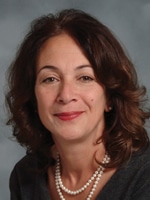 I am a pathologist who started my medical career in internal medicine with the intention to be an endocrinologist. I trained in Toronto at a time when pathology was ignored in medical school and when I was in my residency, I realized that I did not understand the pathologies I was seeing on the wards and in the clinics. I decided to do a year of pathology, and quickly realized the potential of this field. I switched into pathology and met my mentor, Kalman Kovacs, [MD, PhD], who studied my favorite tissue: the master gland, pituitary. I then had the wonderful fortune to marry the world’s smartest endocrine oncologist, a man who sees patients with endocrine tumors—we are the ultimate multidisciplinary team.
Throughout my career, I have focused on ensuring the recognition and growth of endocrine as a subspecialty in pathology, but I have also been an advocate for the advancement of pathology. This field has a strong history, but it evolved from the advances made by investigative clinicians. As medicine has become more complex, technology has evolved, and knowledge has increased exponentially, pathologists must secure the role of the knowledge base and the enforcer of quality testing in medicine. However, while we oversee complex laboratories, we also must focus on a field where we have a depth of knowledge from the gene to the cell line to the mouse model and to the human patient. My experience in endocrine pathology has taught me the importance of a depth of knowledge in a specific field and the value of being an integral member of a care team. I firmly believe that pathologists who understand the diseases they diagnose are the best placed to see patients, explain their disease, and help them make decisions about their management.
In 15 years as head of the largest academic department of pathology in Canada at University Health Network, I was able to build that model of a large department of highly subspecialized individuals, creating a team with in-depth knowledge of every technology and the various pathology disciplines, with expert diagnosticians and scientific investigators pushing new boundaries. We developed a high-quality biobank in 2001 and implemented digital pathology in 2006. I am proud that much of the knowledge in this book comes from samples in that biobank and most of the images are from digital slides.