

Karen Titus
January 2021—Susan Butler-Wu, PhD, D(ABMM), is clear about who she is and what she does. “I’m just a microbiologist,” she says.
But in a viral pandemic, a microbiologist—and everyone else associated with clinical laboratory testing—becomes so much more than the job title. (For the record, Dr. Butler-Wu is director of the clinical microbiology laboratory, LAC+USC Medical Center, Los Angeles, and associate professor of clinical pathology, Keck School of Medicine of USC.)
Likewise, a test becomes more than a lab value. The very fact that testing has become the focus of national discourse is a testament to the upending nature of the pandemic, she says. “The public are having conversations about Ct values. It’s mind-blowing.”
In a year when laboratory testing became startlingly visible, everyone from politicians to pundits to patients has offered up opinions, theories, and dubious notions about SARS-CoV-2 testing.
Against this disruptive (and occasionally amusing) backdrop, those with actual information (if not adequate testing supplies) are pondering what a genuine national testing strategy might look like. As they reckon with the frustrations and failures of 2020, what can be done better in the event of a future global health crisis?
The federal response to SARS-CoV-2 testing undermined the laboratories from the start, many say.
“What was the strategy?” asks Dr. Butler-Wu. “I’m curious.”
If there was one, she says, it was that the pandemic, at the start, was going to be managed by relying solely on public health laboratories for testing.
That’s fine for foodborne illnesses or bioterrorism, she says. But it’s also the approach used with the H1N1 swine flu pandemic that began in 2009. “It failed for H1N1; it failed for this; it will fail for the next one,” says Dr. Butler-Wu. “It’s not right or fair to put it all onto public health, and it’s not realistic to expect it to work. It fails.” With SARS-CoV-2, “It failed terribly.”
As it became clear that public health laboratories alone couldn’t handle the massive demands for SARS-CoV-2 testing, there was also a dawning awareness that no other broad response would be forthcoming. Clinical laboratories would be navigating this on their own.
“There were several waves of this realization that hit us,” says Karen Kaul, MD, PhD, chair, Department of Pathology and Laboratory Medicine, and Duckworth Family Chair, NorthShore University HealthSystem, Evanston, Ill. She and laboratory director Linda Sabatini, PhD, worked with others in the lab to develop an assay, beginning in late January. “In our minds we were thinking back to swine flu,” she recalls.
The struggles were manifest. “There was no cooperation, for example, with any agency that could share viral RNA with us to use as a standard to validate our assay,” says Dr. Kaul, who is also clinical professor of pathology, University of Chicago Pritzker School of Medicine.
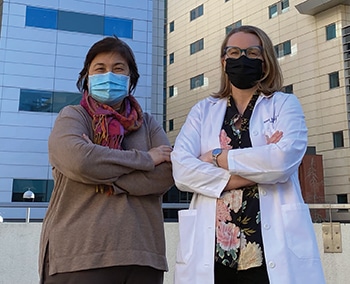
“That left us scratching our heads,” she continues. “So we thought we would do it as an LDT,” until directives on that changed as well.
“We ultimately did submit for EUA, because we wanted to be totally compliant,” Dr. Kaul says. “But after a couple go-rounds—and I can only imagine what it’s like working at the FDA these days, and the bolus of work they’ve had tossed upon them—but in the end they came back and told us, in essence, they didn’t have time to review our materials. And since we’d already been running it, we could just continue without EUA.”
For labs, the EUA imbroglio resembled the Goldilocks fable, with the agency struggling to provide oversight that was neither too much nor too little. And while many express genuine empathy for the pressures the agency faced, “It absolutely hurt the lab’s response, particularly academic medical centers,” Dr. Butler-Wu says. “They were essentially handcuffed. It was lunacy.”
All of which points to the lack of a central body to oversee a quick expansion of quality testing across the country, Dr. Kaul says. “That would have helped many of us who were wasting time and energy,” she says.
While labs are learning about the virus on the fly, “right when we’re in the thick of it,” says Dr. Kaul, “we do know some things from other viral pandemics. It would have been nice to have said early on that if you’re going to offer a PCR test, you have to have a sensitivity, an LOD, of a certain number.” Tests that didn’t should not have been submitted for EUA or used by laboratories, she says. “We did, as laboratorians, have a number of surprises with things that did get through the EUA but weren’t adequate for testing in the hospital.” A pandemic is not a kids’ birthday party, in other words—not every test should get an invitation.
Drawing on even earlier lessons from the swine flu response, Dr. Kaul also emphasizes the need to quickly disseminate information about tests. H1N1 mutations rendered some FDA-approved test methods useless. An underlying national communications network “would do us all a great deal of good,” Dr. Kaul says. And while SARS-CoV-2 doesn’t appear to mutate as quickly, “We’re certainly seeing different genomic versions of the virus in the waves of infections and how they spread around the world.”
And, as she noted, making a standard available “would be a great place to start” with future pandemics, Dr. Kaul says. “It’s a big deal—I completely understand—to make a quality reference material. But we all need to make sure our tests are performing as they should.” During the pandemic, “We’ve all been kind of making it up and sharing with other laboratories. So it would be wonderful to have a national version of this.”
Both Drs. Butler-Wu and Kaul call for more coordination between various types of laboratories.
The current model of using public health labs as the only first-line response “needs to be completely revamped. It does not work in a pandemic,” says Dr. Butler-Wu. “Our colleagues in public health do tremendous work, but the response needs to start elsewhere, too. The virus got a foothold before we could even get there and react properly.”
“At the end of the day,” she adds, “we were screwed by the fact that we don’t have a national health care system. Instead, every clinical lab was, essentially, completely responsible for figuring out how it was going to handle testing. And every single health care facility and system—every one—had to fight to get the tests they did.” That cage match approach doesn’t work. “We can’t be in that situation again.” If every lab was, in a sense, inventing its own wheels, it was also sourcing its own rubber. “Actually, we’re still in competition with each other,” Dr. Butler-Wu says.
How do reference labs fit into the picture? Dr. Butler-Wu lauds the tremendous work they’ve done in getting testing off the ground. Yet the payment piece gives her pause. Adding to her wish list, she says, “Testing in a pandemic should be done at cost.”
Obviously expenses need to be reimbursed, she acknowledges. “But I’m pretty confident there are some labs that have probably made a pretty penny during the course of this.” Acknowledging that such income could have been reinvested to build capacity, Dr. Butler-Wu nevertheless says the privatized, siloed lab response “was our undoing,” along with other missteps early on.
Dr. Kaul likewise argues for a more coordinated, integrated response involving public health, clinical, and reference laboratories, as well as those from outside the lab. “We need a team of informed, data-driven people representing all aspects of what’s going on,” she says. “Having such a network in place will suit us well for what happens in the future.”
The CDC and public health labs are crucial, Dr. Kaul says, but they’re not situated to address the clinical testing needs of the public as a whole. “We need to have this testing capacity in the hospitals, because we’re dealing with patients walking through our doors of the emergency room and our clinics. We need to know what to do with them, very rapidly, to keep them safe and other patients and staff safe. We can’t wait days for this information.”
It’s not practical to expect public health labs or reference labs to take on this testing. “I see sort of a triumvirate of the three groups, working together to keep up their end of the testing equation, so that patients and physicians can get the information they need in the time frame they need,” says Dr. Kaul, who outlined this approach in a guest editorial published in May 2020 (Kaul KL. J Mol Diagn. 2020;22[7]:841–843). “There’s a bit of a disconnect between the public health lab network and hospital laboratories. Having even a communication network in place, just to keep hospital labs informed of what’s going on, would be a great step in the right direction.”
This wasn’t the first time the disconnect created trouble. Just as hospital labs couldn’t access the CDC’s SARS-CoV-2 assay, “similarly, 10 years ago, we could not access the CDC assays for swine flu,” Dr. Kaul says.
Being unable to easily share information created more problems. In trying to help other local institutions early on, including nursing homes, NorthShore was hampered by the inability to link systems electronically. “That means somebody on the front end is having to manually enter all this information and manually report it out. That became a real issue for us,” Dr. Kaul says.
She calls for a broader reach, especially as many hospitals have extended testing to patients well beyond their physical walls. “Right now we’re not sharing data sufficiently—it’s very fragmented. So having some global way to share electronic information, so that we could swing testing capacity to keep everyone operating maximally, would be wonderful,” Dr. Kaul says. “We’re not there yet.”
As she thinks back over her nine months of pandemic experience, Dr. Butler-Wu praises her state’s response in helping the lab procure swabs and transport media. “That’s been a godsend,” she says. “Without that help I don’t think we would have swabs.”
But dealing with allocation and scraping to get supplies—“basically shaking people down,” she says with a laugh—was the more common approach to keeping the lab running. “We had to fight for every scrap we got,” she says, sounding like a streetwise character from Oliver Twist, then adding, “That should never be happening.”
These are not success stories, she says; rather, it’s the story of a larger failure to roll out testing and supplies more equitably. “I know people balk at oversight and more regulations,” she says. But without them, she adds, the haves and have-nots among laboratories will persist.
Can a national testing plan exist where a national health care plan doesn’t? While many tiptoe around phrases like “universal health care,” Dr. Butler-Wu isn’t one of them. “I’m from Ireland, so I don’t care,” she says. “Americans don’t like big government. I get it—I’ve lived here for 20 years.” But, she continues, the phrase “one nation indivisible” has rung hollow this year. “This is the one time you need a completely uniform response. This is a pandemic. Rugged individualism is a recipe for failure.”
Adds Stan Schofield, president of the regional laboratory NorDx, which is part of the Portland-based MaineHealth integrated health care system, “The political system we have here today fully and completely missed the degree of severity and mortality involved with this.”
Labs are also asking for more transparency about where the government is directing supplies once it began doing so. In terms of sheer numbers, it may have made sense to prioritize reference labs over clinical labs, Dr. Butler-Wu says. But that left hospital labs dangling as they tried to care for patients while wondering where their supplies were. With swabs being prioritized to reference labs, her lab was receiving only 10 percent of its expected shipments, she recalls.
She suggests looking at what worked well in other countries. Certainly the United States doesn’t have a nationalized health care system—“We’re never going to have that,” Dr. Butler-Wu says. But it should be possible to identify who has what instrumentation and deploy it more thoughtfully. “I would much rather have spent my time in March attending training sessions” to bring up a new assay, instead of, she jokes, “giving up my first-born child” to obtain tests. She recalls the intense emotions of receiving a box of tests at one point early on. “And these were research-use-only tests for a study. I literally opened the box and fell on my knees and cried. Because I had nothing to give people. I should never be in that situation again. Nobody like me should be in that situation again.”
Dr. Kaul also suggests revisiting previous U.S. plans. “At some point there was a federal plan for pandemic preparedness,” she says. But when COVID-19 arrived, “it was ignored.”
Throughout the pandemic laboratory professionals have drawn on existing relationships among themselves and with vendors to help cope with shortages of information and capacity. Might those connections have a place in a future plan?
No one is suggesting laboratories can maintain a network without federal oversight. Keeping these grassroots efforts going is “a lot of work,” Dr. Kaul says. “And there’s no rhyme or reason to when we’re going to get certain reagents, so we have been a little reluctant to commit to testing for other institutions, quite honestly, because we’re fearful of having a supply chain shortage of one reagent or tubes or tips or something else. It’s better than it was, but that has made us less eager to go out and help others.”
Dr. Butler-Wu is equally blunt. “Let’s be real,” she says. “Everybody’s hoarding various things right now, on some level. We’re all trying to make sure we have enough. I’m sitting here in my office looking at two giant barrels of dried media in case I can’t get blood agar plates.”
It’s less about hoarding, she says, than responding to the reality that she and her colleagues have been on their own throughout the pandemic. Such dysfunction has fostered a sense of scarcity. The best way to overcome that, she says, is a federal response that recognizes a pandemic and quickly operationalizes testing throughout a broad network of labs.
That might be somewhat easier to organize now, given the changes that have occurred in many hospital labs, Dr. Butler-Wu suggests. “The basic landscape of what clinical micro labs have is different. How do we leverage that to prepare for the future? If you had told me this time last year that the country’s going to be on fire, and you will have six assays for the same thing . . . . Let’s use the catastrophe that this is to make sure we do better next time.” Looking at the massive investment labs have made, she asks, “Can that be the backbone of a more coordinated response in the future?”
Similarly, Dr. Kaul says it’s possible that a national plan could build on already established relationships, which would be easier than starting from scratch. Regional arrangements could evolve within a national plan, she says. “But there needs to be national support and a national order, so to speak, to get everyone to do what they need to do. We need to feel comfortable that if we enter into one of these arrangements, we’re not going to find ourselves with no reagents to support it.”
When the federal government began redirecting certain reagents for SARS-CoV-2 testing to areas deemed to be in highest need, Dr. Kaul didn’t question the move. “But transparency would have helped us plan.”
At the same time that labs were seeing critical pandemic supplies heading to hard-hit parts of the country, “We also found that many of the supplies used for other assays were being devoted to COVID,” Dr. Kaul says. “We were having difficulty getting materials we need for HIV, HCV, papillomavirus testing—it’s mind-boggling to me that the micro lab is even experiencing difficulty getting certain types of culture media.”
Again, this is an area where a solid national strategy would help. “We could have had a federal decision to start manufacturing these materials back in March. Then we would not have had to deal with this, because it did impact our ability to deliver care to patients who didn’t have COVID,” Dr. Kaul says.
That more nuanced view—knowing how all parts of the laboratory operate—needs to be incorporated into any national plan, observers say. That could also allow for a more thoughtful strategy for deciding who gets tested.
“It’s been a circus,” Dr. Kaul says. As she’s talked to colleagues whose children play sports, or are in college, “It’s been all over the map in terms of how frequently they’re being tested.”
“We need to start to tier our testing needs with respect to who’s included, what those numbers would be, what the turnaround times would be,” she says. That, again, calls for a broad plan, as opposed to the mosh-pit mentality that seemed to prevail instead.
As Dr. Butler-Wu notes, the pandemic has overturned traditional notions about testing, including testing asymptomatic patients coming to hospitals. California, in December, was looking into testing all health care workers weekly, for example. Professional societies likewise have been making their own suggestions. With pressure from so many directions—as opposed to a unified approach—“labs are basically in a constant state of trying to react to what everybody wants.”
All of which has been blanketed by another layer, she continues. “Things have been completely politicized that should have never been politicized.” Given the current political landscape, “This pandemic could not have happened at a worse time.” While viruses are apolitical—as many have taken pains to point out—“your politics can hurt you with how you choose to react,” says Dr. Butler-Wu. “But I’m just a microbiologist,” she reiterates.
This gives rise to another question: Should a national testing strategy look to address a pandemic, or a politicized pandemic?
NorDx’s Schofield mentions politics first when he talks about the need for a national testing plan. “I would like politicians to step aside and let the scientists and care providers try to drive a process,” he says. Throughout the pandemic, “Politicians have tried to corner or box in the scientists. That’s not the right way to do things.”
Even the best testing scenarios can’t compensate for misguided humans and their misadventures. And if there is a calming of the political seas under the new administration, politics will never disappear from medicine.
Says Dr. Kaul: “I would like to think that the CDC and WHO and the FDA and all of our public health infrastructure are apolitical.” While they rely on policy changes and funding, “as much as possible they should be independent of politics, and they should be there to serve, practically speaking, the needs of our public.” Nevertheless, she says. “Everything has been turned upside down these last months.”
Laboratory professionals have noted that—at least through December—no laboratory professional(s) had been appointed to president-elect Biden’s COVID-19 task force. That doesn’t bode well, Dr. Butler-Wu worries, both in terms of understanding what went wrong and what to do better in the future. “There has to be a detailed analysis and massive input and oversight from people who understand lab testing. Clinical labs have to be part of that conversation.”
No matter how well-meaning allies are, they’re no substitute for a lab voice, Dr. Kaul agrees. Not having direct lab representation on the new task force “is a glaring error,” she says. “I’m hoping that CAP and AMP and ASM and everyone else is calling him out on it. We need someone from the lab on that team, because we are still a black box to many of our colleagues. Over the course of the last several months I’ve been on a number of calls with Dr. [Deborah] Birx, admiral [Brett] Giroir, and others—none of these folks are from the lab. You need to have a real laboratorian on the roster, whether it’s COVID or the next thing.”
Even the most well-intentioned clinical colleagues won’t bring necessary nuance to national conversations, Dr. Kaul says. “My clinical colleagues are wonderful, but medical school exposure to pathology and laboratory medicine has been progressively reduced in the last few decades as curriculum changes have taken place. And so there’s very little understanding of the labs, except by us.”
A[/dropcap] national testing strategy could help promote the lab’s voice in other ways as well.
The vaccine rollout might be an opportunity for laboratories to help counter skepticism and fears with information and reassurance. “All of this is coming on the back of years of conspiracy-theory thinking,” Dr. Butler-Wu says. “It’s been painful to see that continue through the pandemic. And my fear is that it will continue with the vaccines, which would be a disaster.” If labs aren’t being thrust into the role of activists per se, “We do need to help counter the false narratives.”
Dr. Kaul would like to see a national plan include clear messaging about what happens once patients receive test results—a broader postanalytic variable, so to speak. “You go home, you do this, you do that. We’ve had such fragmented advice given to us, even about mask wearing,” she says. “We need a single, unifying message.”
She says she’s worried—“a lot”—about public trust in the vaccine. “It seems to be more polarizing than getting a lab test. But will that flow over into other areas, like getting tested?”
With labs having been pushed to the center of the stage this year, does that bode well for their future prominence?
Schofield says he’d like to see the profession build on the goodwill and visibility they’ve garnered this year. “Laboratorians and people in the industry have got to keep working on that, to make sure the message isn’t lost when the vaccine comes out, or that the lab just goes back to the basement.”
Dr. Butler-Wu is hopeful the lab’s value will persist in the eyes of others. “Nobody’s getting a COVID diagnosis without the lab,” she points out.
Despite the frustrations of the past year, Dr. Kaul, too, is optimistic, on several fronts. There are, she says, more bad months behind than ahead. “We’re all telling ourselves that. I think it’s going to continue to be bad for a couple months, and then I think it’s going to get a little better.” And with the vaccine coming to fruition, “I’m hoping that by this time next year, we won’t have forgotten about the pandemic, certainly, but it will be in the rearview mirror.”
Any national testing strategy would likely be only nascent at that point, given the work it requires. But even there, Dr. Kaul offers tentative encouragement. “I hope with the next administration we can have a singular message that gets us all going in the same direction. We’ll see.”
Karen Titus is CAP TODAY contributing editor and co-managing editor.