

Anne Paxton
June 2024—At-home acute and advanced care testing, ethical quandaries, and the lab’s ecological footprint are three of the topics that ADLM meeting-goers can sign on for next month in Chicago.
“For so long we’ve had laboratory testing at the point of care and not the point of need,” says Jared Conley, MD, PhD, MPH, emergency medicine physician at Massachusetts General Hospital and assistant professor, Harvard Medical School, who will zero in on the point of need. As co-director of the MGH Healthcare Transformation Lab, he devotes much of his time to the technologies that he and his colleagues in the transformation lab believe will transform acute and advanced care at home.
“We can now deliver care decoupled from facilities,” he said in an interview. “There’s a huge opportunity and market to allow us to deliver care at the point of need, wherever that is.”
He and co-presenter and MGH emergency medicine colleague David Whitehead, MD, are looking forward, he says, “to a very active discussion on this opportunity with our colleagues who are experts in the space of diagnostic and laboratory medicine.”
Ann M. Gronowski, PhD, of Washington University School of Medicine in St. Louis, will take attendees through laboratory-related cases that raise ethical questions, which are “always a balance between the patient’s autonomy, beneficence, and justice,” she says.
And Ilyssa Gordon, MD, PhD, of Cleveland Clinic, will talk about, among other things, plastics and the purchasing that supports sustainability.
Testing has long been coupled with facility-based care, Dr. Conley notes.
“But many patients in acute care are not at risk of needing the ICU or a serious procedure or operation that can only be done in the hospital.” Given the option, “those patients often prefer to spend their time healing in the comfort and convenience of their own homes.”
Acute-care patients need clinicians to evaluate them. “So the medical team, led by the patient’s physician, goes into the home to obtain those diagnostics and deliver the therapeutics,” Dr. Conley says. Medicare requires patients to be seen at least twice daily, “much like they are by nurses in the hospital.”
Mass General Brigham has programs for emergency care at home also, and here paramedics and emergency physicians work as a team, together with nursing colleagues. Paramedics enter the homes to obtain the vitals and the necessary blood and/or nonblood diagnostics. “They convey that data to us through a variety of channels, including our EHR, and we can evaluate the patient virtually, and if we deem it safe, we can do the whole evaluation in the patient’s home,” Dr. Conley explains. IV or oral therapeutics are provided, as often needed.
The ED stay is avoided, “and this is particularly well designed for those who carry the heaviest burden of chronic disease,” he says, often those age 80 and older for whom being seen and treated in a facility is difficult.
“Patients love it. Their caregivers love it. We definitely see this as the future of care,” Dr. Conley says.
Is this changing emergency medicine as a specialty? “Absolutely,” he says. “It used to be that we had the binary options of admit and discharge at the hospital, but now we’re able to have a more personalized approach to patient care.”
He credits Judd Hollander, MD, and Rahul Sharma, MD, MBA, with describing the change well: Emergency physicians are the “availablists,” they wrote in 2021, for life-threatening conditions and immediate care generally, and it’s possible to do so without the emergency department. Says Dr. Conley, “We have a skill set that allows us to be available and evaluate and treat anyone, whether in the battlefield, in space, in the wilderness, in any locale, not just in the emergency department.”
For laboratory testing, the complete and basic metabolic panel and hemoglobin and hematocrit are readily available for point-of-need testing, he notes. He points to the lack of a rapid, accurate high-sensitivity cardiac troponin test as one of the key limitations at the point of need. BNP, too, is “one we haven’t had access to,” he adds. “Some of this too is not that the technology doesn’t exist necessarily, but that it doesn’t yet at a price point that’s affordable and makes sense from an operational perspective.”
Dr. Conley is hopeful: “There’s a lot of great startups, academics, engineers, and others working in this space to make this point-of-need diagnostic market more mature than it is currently.”
Neither he nor his colleagues have their eyes on sophisticated laboratory tests, he says, “but there is a growing list of blood and other bodily-based diagnostics that we would like more access to and think are feasible in the near term.”
“Human ingenuity and innovation have surprised us so many times. So together we’re actively rethinking how, through the use of technology, we can do things we never thought were possible.”

The transformation lab that he co-directs got its start 10 years ago (https://healthcaretransformation.org), and Massachusetts General began to provide at-home care about eight years ago. “We were doing it with our own system capital and resources because we thought it was the right thing to trial and develop,” Dr. Conley says. Later it became one of the first five hospitals in the U.S. permitted by the Centers for Medicare and Medicaid Services to be paid for hospital-at-home care at parity with in-hospital care for Medicare fee-for-service. “Now there are over 300 hospitals in various stages of doing it across the U.S.,” he says.
“We see that only continuing to grow.”
The question is how long the CMS acute-hospital-care-at-home waiver will remain in place. “Payment has been one of the biggest barriers for over three decades,” Dr. Conley says. “Fortunately, we continue to see positive signals in Congress that there is interest in extending the payment model.” Recently, the U.S. House Committee on Ways and Means voted to approve for a floor vote a five-year extension to the waiver.
Some say at-home care puts too large a burden on caregivers. “The data in this space suggests caregivers prefer it because the clinical tasks are still done by hospital staff and there is much less disruption to their lives.”
Despite the time and capital it will take to do the research and development work needed to advance the diagnostic technologies, Dr. Conley predicts there will be more shift to the point of need in the next few years.
With that will come less need to build new hospitals as the population ages rapidly, he says. “They cost $2 million to $5 million per bed to build, so often it’s $1 to $2 billion to build a new hospital in your community, and it can take five to 10 years.” With the shift to home-based care, “the current hospital capacity crunches we’re seeing can be ameliorated, and patients, caregivers, and staff can be delighted with the patient-centric healing process.”
Ann M. Gronowski, PhD, says that her interest in ethical decision-making in the laboratory began with a real-life hospital incident—a case that her team wrote up for publication (Jalaly JB, et al. Clin Chem. 2016;62[6]:807–809). In that incident, “The physicians were requesting a blood test for drug screening and we generally don’t recommend blood tests,” says Dr. Gronowski, Oree Carroll and Lillian Ladenson professor of clinical chemistry, pathology, and immunology and of obstetrics and gynecology and co-chief of the Division of Laboratory and Genomic Medicine, Washington University School of Medicine in St. Louis; and medical director of core laboratory services, Barnes-Jewish Hospital. Since a urine sample is preferred, it was problematic that the patient had declined to provide a urine sample for drug testing.
“So they thought they would just conduct the test as part of his routine blood collection. And a resident said, ‘I feel funny about that’—it felt kind of sneaky when the patient had said no to a urine drug test.” The patient had an indwelling catheter and a central line and left the hospital frequently, “and they thought he was using drugs through his line during his admission.”
In parsing this ethics-related question, Dr. Gronowski says, beneficence would be to say, “‘For me to help you I need to know if you’re putting drugs into your central line.’” To preserve patient autonomy, the solution should not go against the patient’s wishes. One solution, discussed later in this case, was not to do the drug testing but to put a sitter in with the patient to prevent him from leaving to inject drugs. “That was a wonderful compromise,” she says, as well as an example of how “with ethics, there’s often not a clear right or wrong answer, but there was a solution that did not violate the patient’s autonomy but allowed the hospital to protect the patient.”

Another case involved a patient with a history of sexually transmitted diseases and several symptoms. “They went to result his positive fourth-generation HIV screen and realized the ordering physician had canceled the test because the patient said ‘I don’t want to be tested for HIV.’”
By that point, the laboratory had the result, Dr. Gronowski says. Her session at the ADLM meeting will probe cases like these. “Within laboratory medicine and pathology it’s not uncommon to uncover a result that wasn’t ordered, either through something that was multiplexed or, more frequently, something that was just done by accident.”
Dr. Gronowski’s co-presenter will be Valerie Gutmann Koch, JD, of the University of Houston’s Health Law and Policy Institute, who will address direct-to-consumer genetic testing: what’s done with the data, what’s marketed to patients, and whether patients know what they are getting into. It was a direct-to-consumer genetic test that linked the Golden State Killer in California with relatives. “Is that unethical to do?” Dr. Gronowski asks. “How would you feel if you had submitted your DNA to, say, 23andMe and they figured out a connection with a serial murderer? You might wonder what else is my data being used for?”
A company in Iceland, DeCode Genetics, did genetic testing for drug discovery and in doing so found women carrying the BRCA mutation. “The company was very much in favor of notifying patients so they could get prophylactic help if they wanted to. But there was an uproar over that because of the right not to know,” Dr. Gronowski says. As a compromise, the test providers offered a coded way for participants to find out what their results were, making it optional.
New and sensitive data can spring up from unexpected sources such as a purchase history at Target. “They have algorithms to make predictions about why you’re purchasing so they can gear their marketing toward you,” Dr. Gronowski says.
She describes a case in which the data suggested the person might be pregnant. “They were able to predict, accurately based on her purchases, that she was pregnant. So it’s the same kind of question: What exactly are Target or other companies doing with your information?” With artificial intelligence use surging, even more opportunities to detect non-obvious ethical patterns arise, Dr. Gronowski suggests.
What to do with the result of an incorrectly collected test or a test processed while quality control was conducted improperly can create dilemmas for technologists, even if the standard operating procedure—discard such test results—seems to be straightforward. “What if we don’t have any more specimen? And you had a valuable CSF sample that could have been very impactful? Or if you can tell from the run that, yes, the QC was out, but it was barely out?”
Another example: “You can put whole blood in a blood gas analyzer and it can do sodium, potassium, oxygen, and CO2. You can just order a whole blood potassium, but the instrument performs all those tests. It’s in effect a multiplex test. If I just ordered a potassium but I see there was an alert value on sodium, what am I supposed to do? We have an SOP written that says to call the provider so that we are not ignoring a critical result.”
Operational integrity is another fraught area, with inappropriate billing at the center of high-profile cases. “Do you know how you are bundling tests? Can your test ordering practices be justified?”
“Right now there are some cutting-edge tests for Alzheimer’s disease and Parkinson’s disease but they are very expensive and are generally not FDA approved or covered by Medicare/Medicaid,” she points out. For many outpatients, the medication will have to be paid out of pocket. “So these are cases where patient autonomy has to be weighed against beneficence.”
Dr. Gronowski expects audience members to have interesting ethical situations of their own to share in the ADLM course.
Through clinical laboratories’ use of energy and water and their production of biochemical waste, their contribution to the ecological footprint is considerable, says Joe Wiencek, PhD, D(ABCC), who will moderate and co-present “A Pathway Toward Greater Sustainability in Lab Medicine.”
Evaluating its waste is a good way for a laboratory to reduce its carbon footprint. Dr. Wiencek and coauthors put out several papers over the past year highlighting easy sustainability areas to target, including the ADLM Academy Scientific Short describing a step-by-step procedure that a laboratory could follow (Glover RT, et al. Clin Chem. 2023;69[11]:1212–1219; Laryea ET, et al. Clin Chem Lab Med. 2023;62[1]:e9–e12; Glover RT, et al. Am J Clin Pathol. 2023;160[2]:119–123). “Thinking about the blood tubes, other point-of-care devices, as well as the reagent cartridges that we use for automated analyzers—a lot of that is plastic and we tend to end up tossing it aside,” he says.
Dr. Wiencek, associate professor of pathology, microbiology, and immunology, Vanderbilt University School of Medicine, and service line medical director of the core lab and medical director of clinical chemistry, Vanderbilt University Medical Center, found that cardboard and other materials in the reagent packs had universal recycling codes stamped on them. “So we identified those and found ways to recycle them at my institution.”
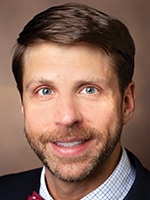
Similarly, when opening a new 11,000-square-foot laboratory, “our laboratory team looked at lighting as well as heating as an opportunity to reduce our energy usage. Throughout the new facility there are parts of the day when lights and other items will turn on and then as people leave they turn off so we’re not fully ramped up all the time.”
One of Dr. Wiencek’s co-presenters, Ilyssa Gordon, MD, PhD, started a student group dedicated to environmental sustainability while in medical school in 2009, when fewer in medicine were tuned in to the cause. Now hundreds if not thousands are active in that space, says Dr. Gordon, professor of pathology and medical director of sustainability at Cleveland Clinic. And there are far more ways that labs can contribute to sustainability, she says.
“Packaging can generally go in a regular landfill or be recycled, but for the nonpackaging material, the laboratory may only have a red-bag container, which means all of the plastic, even if it’s not potentially hazardous, may go in the red-bag or biohazardous waste, producing a higher carbon footprint for processing than regular landfill because it has to be heated to clear pathogens,” Dr. Gordon says. That’s some of what laboratory staff might see regularly “in terms of a frustration or burden they may or may not feel they can speak up about.”
Sometimes health care as a field can seem wedded to single-use packaging and containers for patient care safety reasons, but there are ways to get beyond that, Dr. Gordon says. Life cycle assessments start by looking at raw material inputs like mined substances or fossil fuels that go into making the plastics and follow-through to use and disposal.
“Life cycle assessments let us see where in the process of making a product we could have the greatest impact on greenhouse gas emissions and pollution and use options that have less impact,” she says. In studying biopsies, she found that one of the largest contributors to greenhouse gas emissions from the entire laboratory process was the production of the biopsy jar and the lid. “They’re both plastic. And I don’t anticipate us moving to reusable stainless steel or glass specimen containers, but we did find there are ways to reduce the number of jars used for a particular procedure. Who’s providing us with these jars? Can we tie it into good lab stewardship and ordering guidelines?”
On the purchasing side, she says, “We need to teach manager-level caregivers and laboratory managers about the increasingly greater number of options out there to support good manufacturing practices.” Many companies in health care report on their environmental, social, and governance metrics. It would also be beneficial if lab managers had information on which companies are greenwashing—making statements that are a little “fluffy”—so lab managers can patronize companies that are not, Dr. Gordon says.

Facilities management at most health care institutions includes engineers and operations professionals who know how to run buildings, and they are also helpful. “As medical director for sustainability at the clinic, I’m involved in our utilities and energy management discussions where we’re trying to reduce how much energy we use and how to reduce our contribution to climate change.” Translating that into practices that are energy efficient is another goal, and that can include best practices like not leaving the lights on when leaving the laboratory. “You may not want to turn off your desktop computer because there may be updates for security going on and generally you’re not supposed to turn off your computer. But you can turn off your monitor.”
Getting those messages out and re-sending them continually are also important, she says. “Because people might not have heard it the first time, some people are new, or they’re working in a different area of the hospital.”
In the ADLM session, James Connelly of My Green Lab will explain the certifications that are helping to promote green laboratory practices.
Says Dr. Gordon, “I want people to come away inspired and appreciative that there are so many smart people all over the world who believe in the importance of sustainability and are able to leverage the best minds to get us out of the climate crisis.”
Anne Paxton is a writer and attorney in Seattle.