

Valerie Neff Newitt
April 2025—The transition from pathology training to practice is not just about diagnostic skill and confidence in that skill but also laboratory administrative duties, with experience in the latter harder to gain as a trainee.
“When you get to a job with a group of pathologists, they say, ‘We’d like you to look after the blood bank or the chemistry lab,’ or whatever the case may be. And that means the new person must be the administrative director of that unit—and many don’t have a clue,” says Gene P. Siegal, MD, PhD, Robert W. Mowry endowed professor of pathology and executive vice chair, Department of Pathology, University of Alabama at Birmingham Heersink School of Medicine.
And today, in a robust job market, the runway from residency to pathology practice is, for some, shorter than in years past, with residents tending to do fewer fellowships and some, headed for private practice, forgoing even one fellowship.
“That’s one of the reasons why we beefed up our program here and our curriculum in laboratory administration,” says Geoffrey Talmon, MD, MEd, associate dean for medical education and professor and vice chair for medical education, Department of Pathology, Microbiology, and Immunology, University of Nebraska College of Medicine. “We know there are some folks who are coming right out of residency and they’re going to hear, ‘Congratulations, now you’re director of the microbiology lab.’”

Community practices and even academic institutions to some degree, Dr. Siegal says, can have trouble finding the pathologists they need. “So they’re going out and doing the college football routine—they’re recruiting and saying, ‘You don’t need a fellowship. Come to us and we’ll teach you everything.’ They often come across as just needing bodies to do the work.”
“We have a desperate need for pathologists,” says Yasmeen Butt, MD, of the pathologist shortage. She is chair of the CAP New in Practice Committee and associate professor and consultant, Department of Laboratory Medicine and Pathology, Mayo Clinic in Arizona, where she says it took almost three years for her group to hire a renal pathologist.
Rich Cornell, founder and president of Santé Consulting, describes the job market as “extremely competitive” and confirms it’s difficult in some cases to find good candidates. “Candidates or residents or fellows looking for a position have a lot of options in all the various sectors, from the academic centers to community hospital-based settings.”
Fellowships remain an expectation for academic jobs, Dr. Talmon says, so opting to forgo a fellowship is largely about private practice, and in particular smaller pathology groups.
“There was always an assumption there was an extra year for some of the finishing touches of training, like learning billing and coding and the communication skills that come with having your name on the line as the pathologist who signed out the case or directing a laboratory,” he says. When he directed the residency program at the University of Nebraska, “it hit home that we had to be sure we were giving people the skills within residency programs to hit the ground running if they decided not to do a fellowship.”
He describes it as a program “shift” in terms of imparting more of the necessary lab administrative skills, “maybe not making residents experts but at least providing an understanding of the vocabulary and where to go to find answers in those types of topics.” The solution was to create a laboratory administration rotation and to build it around a book Dr. Siegal co-edited originally with Elizabeth Wagar, MD, and the now late Richard Horowitz, MD, and then updated in 2019 with co-editors Dr. Wagar and Michael Cohen, MD, and Donald Karcher, MD. It is titled Laboratory Administration for Pathologists and is published by CAP Publications.
Whether pathologists new to practice are directing a laboratory or not, the lab administrative skills are important in practice and generally not being taught in residency, Dr. Siegal says. “One of the reasons we wrote the book originally was that it was clear there was little to no literature on these administrative duties for pathologists.”
“You need to know enough to keep yourself out of trouble and to do the right thing,” he says.
Says Dr. Talmon: “Pathologists are scientists, but we’re also managing a business. The book does a good job of teaching residents the fundamentals they would otherwise have to pick up on the fly.” Each University of Nebraska pathology resident is provided with the book, which covers management and leadership principles, laboratory operations, personnel management, pathology information systems management, legal affairs, quality management, space planning, laws and regulations, patient safety, and ethics, among other things.
One of the chapters new to the second edition is “Competencies and Interfaces of the Involved Pathologist.”

“I think that’s critical,” Dr. Siegal says. “Pathologists are often sequestered. And now they’re out in practice and find out they have to talk to the head of the hospital, the board of trustees, other clinicians, perhaps patients. You can get squirreled away when you’re a resident. There are a lot of layers between you and those people. Now you have to interface with those groups and do it very well. What happens if you need a piece of equipment? How do you get it? Do you just ask for it? Who do you ask? There’s a whole system in place, and you have to know how to work within the system.”
Also critical is financial management, he says. “If you don’t know about that, you’re at risk for going to jail or bankrupt or experiencing other terrible things. What happens if the government shows up and says you filled out Medicare forms wrong? What are you going to do about it? What forms do you have to fill out every day? You have to learn those skills and know where to get answers.”
Personnel is where Dr. Siegal spends significant time. In large laboratories, in particular, with hundreds of people, he says, “someone’s always having a crisis, and you’re where the buck stops. How do you deal with that?” It takes skill, too, to deal with a difficult colleague or resident, and to do so legally. “You don’t want to wind up spending all your time in court,” he says.
There’s ample information available, he notes, in the form of classes in management, life skills, and negotiating, for example. “But you have to know you need it and where you can go to find it.”
All issues related to regulation and accreditation are crucial to understand, Dr. Talmon says, as is the structure of laboratories and business and finance “at least to a small degree.”
“How Medicare works, how our CPT codes are generated, and what it all means behind the scenes are the underpinnings of business comprehension covered in the book,” he says. “It’s about understanding the laboratory’s role in the health care architecture and the health care scheme, how we’re administered, who the players are.” Diagnostic skill is what the pathologist is paid for, he notes, “but understanding these things is what helps you be a good leader.”
At the University of Nebraska, the laboratory administration rotation for fourth-year residents takes place shortly before they take the American Board of Pathology examination. “We were able to carve time out for them to do it and it helped solidify these concepts and begin to put things together,” Dr. Talmon says, “especially as they transition to take their boards.”
On the board exams are questions that appear to be derived from the book’s content, judging from feedback Dr. Siegal gets from residents, “because essentially there is no other book like it in the field,” Dr. Siegal says. “I have to assume the people who write the exam questions are going through the book to extract questions they want to include.”
Dr. Talmon has had similar feedback from residents, who tell him the book was good preparation for the laboratory management questions on the exam. “When residents who have transitioned to practice return to talk to trainees, they say, ‘All the stuff that’s in the book—I live it every day.’”
Rich Cornell of Santé Consulting advises residents and fellows to start the job search a year in advance, “as the best positions are claimed quickly.”
The top two subspecialties most in demand are cytopathology and hematopathology, he says, noting, “A lot of the community hospital-based pathologists who have those boards recently retired.”
“Soft skills like communication, adaptability to new technologies, organization, and business and regulatory knowledge are becoming increasingly important for pathologists, alongside strong clinical skills,” he says.
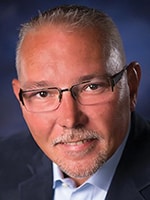
The latter—understanding the business—puts young pathologists, whether resident or fellow, “ahead of the game,” Cornell says. “They need to understand the regulatory aspects of laboratory medicine in addition to billing and coding and reimbursement.” Understanding that part of pathology practice not only puts the candidate “ahead of the learning curve,” he says, when they begin practice but also helps them stand apart from other candidates when they’re interviewing. Santé offers free quarterly webinars on these and other topics.
Once in the job, Cornell says, communication skill is key. “The more connectivity you have with your peers, the more successful you’re going to be in that practice.”
“Getting to know referring physicians, getting them to trust you professionally and personally, and within the practice getting to know your associates and taking an interest in them” all matter, Cornell says.
“If you have an interesting case, are you going to pick up the phone and call the physician who ordered the biopsy and talk to them about the results, or are you just going to report it? A really successful community hospital-based pathologist is good at communicating with the clinician.”
In Cornell’s experience, most employers do want candidates who have completed a fellowship, and most pathologists are fellowship trained. “But I encourage our clients that are community hospital-based practices to look at residents over a fellow if they’ve come out of a good, strong program and they’re confident in their surgical pathology skills.”
Dr. Butt of Mayo Clinic agrees that billing and coding and other financial and business knowledge is an advantage for those who have it, largely in private practice. “That [instruction] is very much lacking in a lot of residency programs, I think, if not most of them,” she says.
Pathologists just out of training do find themselves directing laboratories, Dr. Butt agrees. “That is a common scenario that happens in the private practice world, but it can also happen in academics as well.” She trained in a large academic institution and has worked in that setting since, but she too was a medical director on day one and she knows colleagues in private practice and others who were too, and they share their experiences with her through her New in Practice Committee work. “You reach out for the resources you can get online and in person,” including mentors and others who are new in practice but may have more insight, “and it’s a little bit of trial by fire,” Dr. Butt says of those who are residents or fellows one day and lab directors the next.
The lab administrative responsibilities Drs. Siegal and Talmon speak of, she says, are indeed “pain points” for some.
The CAP’s own workshops for laboratory medical directors and its new Job Prep Bootcamp are among the resources that can help fill the gaps left by training, Dr. Butt says. The Bootcamp, developed by the New in Practice Committee, is a virtual program for CAP members that takes place over two weekends, with access provided to all recordings and additional material made available post-Bootcamp. The first was held in December 2024, and the second will be held in May 2026. It consists of pathology courses across subspecialties and panel discussions on professional development topics such as being a first-time medical director, how to be a good colleague, and managing finances. Also covered are billing and coding and laboratory management.
“Our learning curve is a little brutal. It’s very different than other areas of medicine in that most never hit that sign-out button until their first day of practice,” Dr. Butt says. The job of the New in Practice Committee is to “create and curate resources for pathologists who are new in practice or early career” and to address their leadership and other responsibilities and challenges, she says.
Dr. Butt worries about those who are choosing to forgo a fellowship: “My personal feeling is that’s a mistake.”
“Even though there’s a desperate need for pathologists, there is just as much or more of a need for subspecialty people. Medicine is not getting simpler. It’s only becoming more complex. Individualized health care is pathology,” Dr. Butt says. “It is driven by specific laboratory testing, molecular profiling of patients’ tumors, and laboratory diagnoses.” And pathology groups, even smaller private practice groups, tend to have subspecialists in at least all the high-volume areas, she notes. “So I do worry about people not doing a fellowship.”
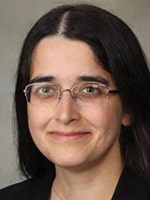
Dr. Butt predicts the pendulum will swing back. “I would hate to see a cohort of people with no subspecialty, drowning in the general world, sending more cases out for consult or, even worse, signing cases out incorrectly or not to the level of quality that we want to see from the pathology community.”
It’s not to say that generalists can’t be excellent pathologists, she is quick to add. “I know so many wonderful generalist pathologists, but I would hate for the short-term potential benefit of an immediate job opportunity to overshadow obtaining a subspecialty.” And it’s hard to become expert in a new area once in practice, Dr. Butt says. “Often missed or not thought about in training is how much time you don’t have to dedicate yourself to self-study after you become a practicing pathologist. You just don’t have time. It’s very challenging to keep up, even in your own field, let alone learn a new one to the level of being an expert in it.”
At the University of Nebraska, the number of residents who have skipped fellowship in the past five to six years is fairly small. “Seventy-five percent, probably more, are still doing a fellowship,” Dr. Talmon says, “but we do see a reduction in the number of fellowships a resident goes on to do. When I was a resident, multiple fellowships were not unusual. Today a person may do one.”
Dr. Siegal agrees. In years past, “People were doing two and three fellowships to try to differentiate themselves from the people they were competing with in the marketplace,” but that has changed, with fewer now doing two and three. “If they were doing three, they’re doing two now. If they were doing two, they’re doing one. And some are doing none, but not here,” he says of UAB. “We exert enough pressure to convince them that’s the right move.”
“There’s no experience like experience.”
Valerie Neff Newitt is a writer in Audubon, Pa.