

Editors: Raymond D. Aller, MD & Dennis Winsten
How a pathologist’s ‘keyboard shortcut’ became much more
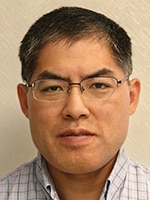
September 2025—In his previous role as a pathologist at Seattle’s Virginia Mason Medical Center, Dick Hwang, MD, PhD, was looking for a way to make his life—and his colleagues’ lives—easier. So he reached for something he hadn’t used in a while: his doctorate in computational biology.
It was 2014, and Virginia Mason’s pathology group had just rolled out M*Modal Fluency Direct speech-recognition software as an optional tool for dictating diagnostic data. Dr. Hwang and many of his colleagues embraced the new software, but they soon realized that it meant they’d be spending a lot of time editing and formatting data. Entering a final diagnosis required, for example, typing “1.{tab}{caps lock},” dictating “cecum and ascending colon comma polypectomy,” then typing “:{caps lock}{return}{backspace}A.{tab}”—just as a start.
“The other thing was, we would have to spend time on ICD [International Classification of Diseases] coding,” explains Dr. Hwang, who is now associate professor of clinical practice in the hematopathology division, Department of Laboratory Medicine and Pathology, University of Washington School of Medicine. “If there’s an adenoma in the ascending colon, there’s a certain ICD code for that, and we’d have to remember which one and then go into Cerner CoPathPlus [acquired by Oracle Health] and enter those one by one.”
So Dr. Hwang dusted off the computer coding skills he’d gained during his PhD studies and got to work. After many, many iterations and improvements over several years, he brought to fruition PathScript, a software tool that comprises a dictation module that uses smart templates and novel voice commands to increase productivity when using voice recognition, an ICD coding module, and a proofreading module.
Say pathologists want to create a report for biopsies from the ascending colon, descending colon, and rectum. Without PathScript, they would have to dictate and format the information for each biopsy to add it to the report. With PathScript, the software pulls all of the biopsy information from CoPathPlus and automatically creates the appropriate formatting so “the pathologist can just dictate the diagnosis under each part,” Dr. Hwang explains.
PathScript too features text shortcuts and defaults that make it easy for the user to select, replace, or copy text. Rather than pressing a combination of tab, caps lock, backspace, and return keys, the user can simply dictate “keep field” or “delete field,” for example. The user can also, when presented with multiple blocks of text in a template, say, for example, “keep fourth option.”
The software offers math commands, as well, so when a user dictates, for example, “insert percent 2.5 by 12,” the text “21 percent” will appear. That’s useful for procedures like prostate biopsies, Dr. Hwang points out, in which the pathologist may need to document percent of the core involved by tumor.
PathScript is coded in the programming language AutoHotkey. “I like it because it works well with other software,” Dr. Hwang says. “CoPathPlus uses Word as its editor, so AutoHotkey can read the text that’s in Word and change formatting and insert text. And it can also read data from CoPathPlus.”
In a study of 21 small biopsies, using the dictation, ICD coding, and proofreading modules together resulted in an average time reduction of 32 percent per case, Dr. Hwang reported in a talk and poster presentation at the 2025 annual meeting of the United States and Canadian Academy of Pathology earlier this year and in a Laboratory Investigations abstract (doi.org/10.1016/j.labinv.2024.103596). Furthermore, “it made voice recognition more acceptable to pathologists, and they were more willing to move on from transcriptionists,” he says.
Not only do the majority of pathologists in Virginia Mason’s pathology group now use PathScript, but Dr. Hwang finds himself fielding the inevitable question from colleagues at other institutions: “Is it portable?”
The answer, unfortunately, is, not really. “Right now it’s written to be very integrated with Virginia Mason’s [CoPathPlus] system,” Dr. Hwang explains. “So there’s no easy way that someone can just download the program and use it.” Even another institution that uses CoPathPlus would have to customize PathScript. The program “pulls data from specific fields in CoPathPlus—for example, the specimen names,” he says. “And depending on how each institution has CoPathPlus set up, those fields might be slightly different.”
There are a couple pieces of good news, however. One is that, with Dr. Hwang’s help, it’s possible to deploy some of PathScript’s functionality, such as math commands, using M*Modal. “There are some functions I wrote in JavaScript for M*Modal, so if another institution is using M*Modal, I could send those JavaScript files to them, and they should be able to use those,” he says. “I’m happy to make other people’s lives easier.” (Anyone interested in the JavaScript files can reach out to Dr. Hwang at dhwang@u.washington.edu.)
The other is that Dr. Hwang thinks it’s possible to deploy the PathScript proofreading module by itself. “Right now, it’s pretty integrated,” he says. “So when you’re ready to sign out a case, PathScript will intercept that sign-out request and run the proofreading module on the report and point out any errors.” However, he adds, those that want to use only the proofreading capabilities could potentially cut and paste the patient report into a PathScript window and launch the proofreading module as a standalone program.
For those who would like to develop something similar to PathScript at their own institutions, Dr. Hwang offers encouragement to the effect of “start small and see what happens.”
“Start with very basic things,” he says, pointing out that PathScript itself didn’t start out nearly as complex as it is now. Dr. Hwang initially wanted an easy way, when looking at a patient in CoPathPlus, to open the chart for that patient in Cerner PowerChart, but this would have required paying Cerner a fee to add this custom feature. “So I just made a keyboard shortcut that pulled the medical record number from CoPathPlus and put it into PowerChart,” he explains. “That’s what it started out as—a keyboard shortcut. Over time, I added additional features.”
—Anne Ford
Clinisys acquires Orchard Software
Clinisys has purchased Orchard Software from Francisco Partners, bringing together two long-standing companies in the laboratory information systems marketplace.
“The combination of Orchard’s LIS portfolio and Clinisys’ LIMS [laboratory information management system] and diagnostic solutions creates new opportunities for customers across North America and international markets,” the companies reported in a joint announcement of the acquisition.
“As we continue to pursue excellence in developing both our world-class solutions and our industry expertise, expanding with Orchard’s proven solution in the physician office, reference, and veterinary laboratory space was a clear decision for us,” said Clinisys CEO Michael Simpson, in the press announcement.
Orchard will continue to operate out of its Carmel, Ind., headquarters.
Clinisys, 520-570-2000
Labcorp introduces AI-based laboratory test search tool
Labcorp recently launched Test Finder, a generative artificial intelligence tool that it developed in conjunction with Amazon Web Services.
The tool, available on www.labcorp.com, is designed to simplify lab test selection by enabling health care providers to ask questions or describe medical conditions in plain language and receive a curated list of suggested tests and descriptions based on their input. It also gives providers access to thousands of laboratory tests across numerous therapeutic areas, including oncology, women’s health, neurology, and autoimmune disease.
Test Finder was developed using Amazon Bedrock and large language model technology.
Evident to purchase Pramana
The microscopy solutions company Evident has announced a definitive agreement to acquire the digital pathology solutions provider Pramana.
Evident will expand its digital pathology offerings with Pramana’s autonomous imaging and workflow solutions that incorporate real-time artificial intelligence algorithms.
“We’ve seen remarkable enthusiasm for our autonomous whole slide imaging systems, and when combined with Evident’s long history of superior optics and proven performance, we see a significant opportunity to accelerate the global adoption of digital pathology and usher in a new era of intelligent imaging systems,” said Murali Aravamudan, cofounder and CEO of Pramana and of Nference, the company that founded Pramana, in a press release.
Evident, 800-787-6007
HL7 International opens artificial intelligence office
The nonprofit interoperability standards-development organization HL7 International has established an artificial intelligence office from which to institute foundational standards for safe, trustworthy AI innovation in health care and convene the global community driving this transformation.
“As artificial intelligence rapidly transforms health care, the AI office will serve as the hub for aligning emerging technologies with ethical frameworks, building trusted infrastructure, and ensuring AI delivers meaningful improvements in care quality, accessibility, and outcomes,” according to an HL7 press announcement.
Key initiatives already underway involve developing and enhancing frameworks for AI explainability and transparency, fostering partnerships to combat health care fraud via the use of AI, and creating implementation guides for safely deploying AI in clinical settings.
HL7 International has appointed Daniel Vreeman, DPT, chief artificial intelligence officer for the new entity, adding to his current role as chief standards development officer for the organization.
The AI office is located at HL7 International’s headquarters, in Ann Arbor, Mich.
CSS adds medical references to AI engine
Computer Service and Support has integrated real-world, evidence-based medical references and citations into its Avalon Insights artificial intelligence-powered reporting engine.
Avalon Insights is embedded in the Avalon laboratory information system as well as accessible to patients via interpretmyresults.com, the CSS website on which patients can upload their lab reports for analysis via AI. The technology can be integrated with EHRs or health care documentation systems.
Avalon Insights provides in-depth analyses of laboratory findings, including probable diagnoses, as well as alternative interpretations and key discussion points for provider consultations.
Computer Service and Support, 800-336-4277
Docus releases AI-driven lab reporting solution
Docus has introduced its artificial intelligence-powered laboratory reporting platform, Docus for Labs.
The next-generation platform provides AI-generated reports with follow-up suggestions, medical interpretations, and trend tracking for blood, urine, swab, stool, Pap smear, and semen tests. It is intended for all types of laboratories, from walk-in to reference to in-house labs. The platform can be integrated into an EHR, laboratory information system, or other lab software via an HL7 or application programming interface or interfaced for manual upload of test results or PDF files.
Docus also provides flexible report formatting and white-label options, allowing laboratories to customize the offering with the lab’s domain name, logo, color palette, and brand identity.
Docus for Labs is “designed to help labs deliver faster, more understandable clinical reports,” according to a company press release. “The system automates medical insights, streamlines follow-ups, and improves communication between labs, doctors, and patients.”
Docus, 302-600-1289
Dr. Aller practices clinical informatics in Southern California. He can be reached at rayaller@gmail.com. Dennis Winsten is founder of Dennis Winsten & Associates, Healthcare Systems Consultants. He can be reached at dennis.winsten@gmail.com.