

“So we now have multi-monitor-equipped rooms, with the microscopes still multiheaded, but the primary manner in which cases are expected to be signed out is via use of a glass cockpit,” as he puts it, “with its associated diagnostic-grade computer monitor.”
At many institutions, space is at a premium and sign-out can be a “cramped and claustrophobic setting,” Dr. Balis says. “By virtue of being a new facility, when we designed these spaces in 2017, we knew we would be eventually transitioning to primary diagnosis by digital workflow and therefore purposely allocated far more space for sign-out rooms than was the norm of the day. In realizing digital workflow, having this space available has indeed paid substantial dividends.”
With the department’s transformation to a digital primary diagnosis workflow will come simplified interdepartmental case sharing and rapid deployment of advanced artificial intelligence solutions, he says. The next major phase of the project, to take place in the next 18 months, is to activate all of the subspecialty AP services in phased steps.
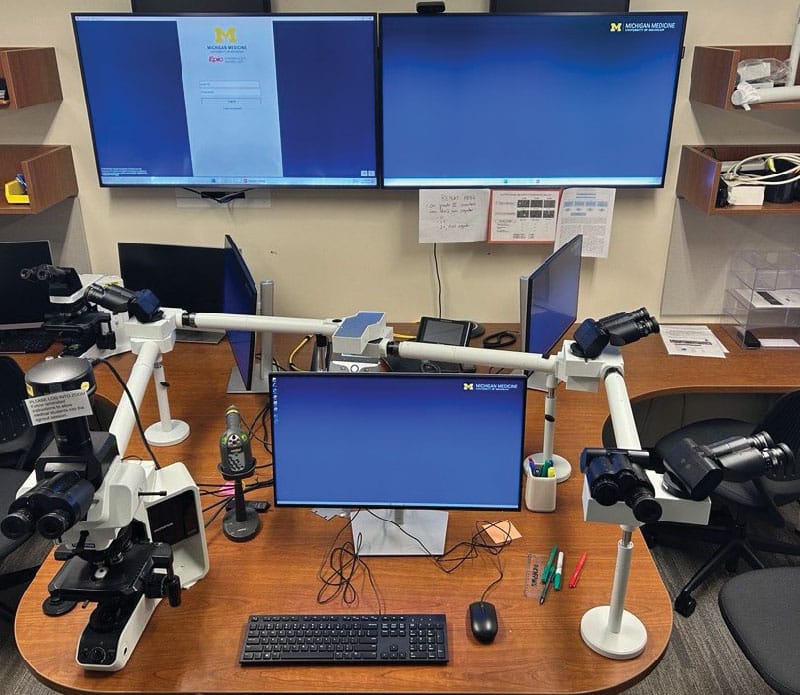
For the six-month transitional period during which slides will be co-delivered while whole slide image use for primary diagnosis is ramped up, a multiheaded microscope will remain available. However, a fundamental configurational change is evident in that the primary microscope viewing location is now sitting to the side location of the attending pathologist’s place setting, with the primary workplace now reserved for a medical-grade display. Additional display screens are available for the AP lab information system, gross images, electron microscopy images, electronic health record access (Epic), and the endoscopy image management system.
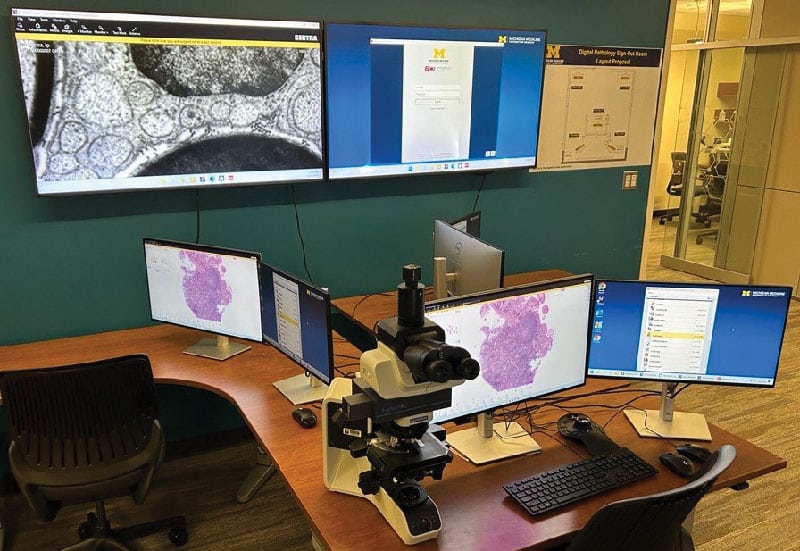
In the anticipated final production sign-out room layout, only a single-headed microscope will remain in place for the attending pathologist’s occasional use. The central monitor is now replaced by two centrally placed diagnostic-grade monitors, and further duplicated on the left and right with paired monitors that have exactly mirrored views, in support of resident and fellow teaching. A 3Dconnexion SpaceMouse is used for whole slide image navigation.