

The CAP is a global partner
September 2026—From the CAP’s founding nearly 80 years ago, our organization has had a focus that sets us apart from all other pathology societies: our commitment to laboratory quality. Those of us in the U.S. are very familiar with the CAP accreditation process—which is widely considered the gold standard in laboratory accreditation—as the CAP has deemed status to accredit clinical laboratories under the U.S. Clinical Laboratory Improvement Amendments regulations.
Perhaps less known is the CAP’s reputation as an international partner for laboratory quality. The CAP is a global leader in this area, even though laboratories outside the U.S. aren’t required to seek its accreditation. Nearly a thousand laboratories around the world choose to go through the CAP laboratory accreditation program and peer inspections even though there is no mandate from their own governments to do so. It’s an incredible honor that the CAP is so trusted, and it’s inspiring to see the truly exceptional commitment to quality these international laboratories have.
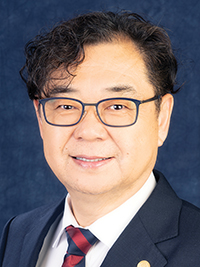
The CAP’s international work serves a larger purpose: to strengthen the practice of pathology and laboratory medicine worldwide so that more patients, wherever they live, can benefit from accurate diagnoses and high-quality care. The CAP brings decades of experience in accreditation, proficiency testing, education, and quality improvement. Equally important, we have much to learn from colleagues practicing in different health systems and resource settings. The CAP recently launched a new international initiative to promote collaboration, create more deliberate opportunities for this two-way exchange, and expand our awareness globally. We’re still in the early days of this, but we are working to establish clear goals and strategies before moving forward with a working group. If this mission speaks to you, I encourage you to reach out and let me know you’d like to be involved.
When it comes to international work, collaboration is the name of the game. The CAP’s role is to listen to, learn from, and collaborate with local pathology societies, laboratories, and quality organizations. We want to support their priorities and complement the expertise and systems already in place. Sustainable progress will come not from prescribing a single model but from working together to identify approaches that are relevant, practical, and responsive to local needs.
After nearly 80 years, the CAP has the largest reservoir of pathology knowledge in the world. We have 20,000-plus members and nearly 9,000 accredited laboratories in the U.S. We want to share that wisdom, and we also want to learn from other pathologists and laboratories, both domestic and international, so we can constantly add to that reservoir. Working together is the best way to achieve that.
We will need to be creative to find ways to make this happen. As a first step, I’d like to mobilize our CAP international fellows—pathologists outside the U.S. who are already engaged as members of the CAP. You have valuable connections to pathology societies and events in your own countries, and I would like to ask for your insight about how the CAP can collaborate. We might be able to provide speakers, educational materials, or other assets that would make a difference for local pathologists. I am eager for your ideas and wisdom.
I’d also like to ask our U.S.-based CAP fellows who have international connections, especially the 30 percent or so of our membership who are international medical graduates, to become more deeply engaged with us. If you’re like me, you might be making regular trips to your homeland to visit family, stay connected, or even perform lab inspections. Like our international fellows, you could serve as a bridge between the CAP and the groups in other countries that could benefit from partnering with us. You know the language, culture, and people, and you know better than most which tools would be most valuable to pathologists in these countries.
Speaking of language, I am excited about the opportunity to use AI tools for cost-effective and accurate translation of the wealth of educational materials produced by the CAP. Translating this content into other languages has been prohibitively expensive and time-consuming in the past, but AI-powered translation could help us get these valuable resources in front of more pathologists who need them.
I am truly eager to see what a difference we can make for patients around the world by raising awareness of the CAP as a global partner for laboratory quality. With our new international initiative and the help of our fellows, I believe we’ll see a positive impact in the near future.
Dr. Zhai welcomes communication from CAP members. Write to him at president@cap.org.