

A year later, in July 2021, the lab went live with its first test: a pancancer solid tumor panel on the Illumina sequencing platform. One of the biggest challenges was simply acquiring the necessary equipment and reagents in the midst of a global pandemic. “Everything was used for COVID testing.” It was, she says, a struggle to focus others’ attention on cancer as being equally important.
Since then, they’ve added assays for hematological cancers, as well as a couple of smaller panels, including one for myeloproliferative neoplasms. And in early November, they launched a pharmacogenomic panel for DPYD, which, when mutated, can cause severe adverse effects, including death, in patients receiving certain fluoropyrimidine chemotherapy drugs. They’ve also added a smaller assay for BCR-ABL to look at quantitative fusions, to assess molecular response to treatment.
A bigger recent launch was a liquid biopsy test, which complements the solid tumor panel, Dr. Gass says. It’s a good option for patients who can’t have a traditional biopsy, and it’s also used for monitoring patients during treatment.
Surveying the many molecular offerings at her lab, Dr. Gass says, “It does seem like a lot, doesn’t it? It’s been one thing after another.”
She continues: “I’ve always thought we should have started with a smaller assay, because the solid tumor assay is our most complicated assay. But starting out with that big assay allowed us to expand to other, smaller assays more easily. Jumping headfirst into something difficult allowed us to bring on other tests quickly.”
“After that first validation,” she adds, “each test gets easier and easier.” Even something as complex as the liquid biopsy, which went live in July, was simple to validate and launch compared with that first test. “It was a nice surprise.”
Having the oncologists on board from the beginning—as noted, they were the ones to initially request in-house NGS—helped speed the process along. So has the organization’s financial commitment to building the lab. And the oncologists continue to request bringing additional assays in-house as their needs evolve, such as adding PGx testing to improve turnaround times.
A final spur toward speed was more personal. As Dr. Gass puts it: “I like to meet my deadlines. I’m pretty eager to get something finished once we get started.”
FCS now has three laboratory geneticists on staff who handle the majority of questions related to molecular results. Most queries are about mutation status and targeted therapies. The molecular lab works closely with the pharmacy department as well as the oncologists. “We’re all kind of woven together,” Dr. Gass says. That came largely at the request of the oncologists, who wanted the reports to include drug information as well as information about relevant clinical trials.
Other questions have to do with apparent discrepancies between a molecular result and a clinical condition—for example, a patient with an FLT3 mutation who does not appear to have acute myeloid leukemia. “So you go back to the data. Maybe the patient needs a bone marrow, to check even further into what is going on,” Dr. Gass says.
Looking back, Dr. Gass still identifies the pandemic as one of the biggest challenges to launching the molecular lab. “That threw a wrench into everything else.”
But the “everything else” has its own challenges. Acquiring sufficient validation materials, especially the clinical samples, can be arduous. So is hiring qualified personnel, though that has gotten a little easier post-pandemic, she says. And for labs not associated with a medical school—FCS is not—it can be even harder.
Getting paid for doing the test is another ever-present difficulty. Even when a test is reimbursed, it might not be at a rate sufficient to cover the costs of doing it. “Figuring out who your payers are, and doing that due diligence before you bring on a test, can make things a lot easier on you,” Dr. Gass says.
At Sentara, an integrated health care system in the mid-Atlantic/Southeastern region of the country, the laboratory’s most recent NGS testing addition is a myeloid-based profile, using the Oncomine Myeloid Assay GX v2 (Thermo Fisher Scientific).
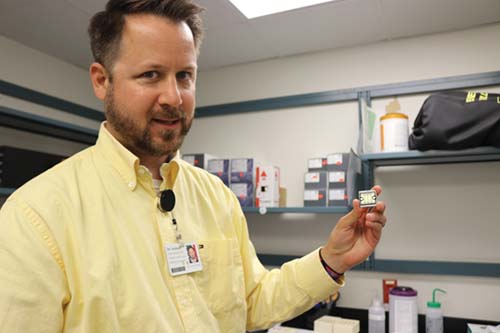
The panel went live in 2024, says David Seidman, PhD, by which time the laboratory had accrued nearly nine years of experience performing clinical NGS.
The lab serves 12 area hospitals and also works with medical groups throughout Virginia and North Carolina. “We serve as a community laboratory, a reference laboratory, and an integrated laboratory for external providers as well. So a lot of the oncology practices we work with are non-Sentara physicians and providers,” says Dr. Seidman, scientific director of molecular diagnostics and serology and administrative director of cytogenetics.
He’s quick to add that the new myeloid panel isn’t particularly complicated, nor does it require special techniques. Rather, the slow-roll adoption of NGS reflects what might be seen as a laboratory philosophy: “We took a progressive build approach to bringing these types of tests in,” says Dr. Seidman.
The laboratory also performs solid tumor analysis, using the Oncomine Precision Assay. “When we started out,” Dr. Seidman explains, “we were performing just a single-gene analysis in our laboratory for a DNA mutation.” Since then, the lab has gradually added more complex, comprehensive panels. “We moved to a hot-spot-based DNA panel for solid tumor, and then we added in an RNA component about a year later. Then we’ve added into our new assay and changed our methodology to the Precision assay.”
The lab has been running the solid tumor assay for roughly four years, Dr. Seidman says; the myeloid panel has been live for slightly over a year. The experience with the first test made bringing on the second one a bit easier, as the lab relied on the experience it had gained with workflows and skill sets for solid tumors.
In early 2025 the Sentara laboratory was accepted into the National Cancer Institute’s Designated Laboratory Network for ComboMATCH, a group of precision medicine cancer clinical trials to assess the use of drug combination treatments based on targeted genetic profiles. Being able to provide in-house NGS can open the door more easily for patients to enroll in clinical trials, Dr. Seidman notes.
The myeloid testing is not part of a clinical trial. “We started performing that testing in-house because we felt there was a need to provide a more rapid turnaround time for that in our hospital-based setting,” Dr. Seidman says, “especially for patients in acute care.” With genetic data and analysis available more quickly, physicians can provide better care plans and begin treatments sooner than when they had to wait for results to be returned from an outside laboratory, Dr. Seidman says. It can also reduce hospital length of stay, he adds.
By the time Dr. Seidman and colleagues decided to add myeloid testing, they had considerable experience in understanding the challenges of performing genetic testing in-house, including validation and verification for clinical performance. “We felt pretty comfortable with that,” he says.
The water temperature was agreeable, in other words. “It was a progression of lessons learned over time,” Dr. Seidman says. This included learning the requirements for various sample types and understanding mutations of interest—“how many we would need to perform an adequate validation to say that we’ve clinically challenged the assay for sensitivity, specificity, limitations of detection,” he explains. “In other words, all the metrics within the AMP/CAP guidelines for verification, but also for our own internal quality performance.”
Over time, Dr. Seidman continues, he and his colleagues have built up quality metrics that show that validation runs and production runs meet their standards for producing good data. “It’s been a bit of a learning curve for us to develop those, but over time we’ve gotten comfortable with them.”
Echoing Dr. Gass, Dr. Seidman reports that finding qualified and experienced personnel to manage in-house NGS (or to fill many laboratory positions, for that matter) wasn’t easy.
In this respect, Dr. Seidman did a headfirst dive. “I’m not an individual who had a lot of NGS experience prior to joining a clinical laboratory,” he says. He’s not a trained bioinformatician, nor did the lab employ someone with that training prior to launching NGS. That’s not the case now—there is a team member who specializes in bioinformatics. “But this is just saying that with the methodologies we’ve employed here, we haven’t needed that kind of deep bioinformatician understanding of the workflows,” he says. Instead, he and his colleagues have learned the necessities themselves and worked with the support of outside partners. Moreover, the workflows and pipelines they’ve developed have, by design, been relatively straightforward. (Or, in his words: “We tried to make it not too complex.”)
In short, he and his colleagues have become comfortable with their skill sets as molecular scientists.
That’s not to say everyone was eager to adopt NGS initially. (Gee, that water’s cold . . . .) Having joined the lab prior to implementing NGS, Dr. Seidman recalls the apprehensions shared by many in the laboratory. “We have the skills. It’s just getting past that—I don’t want to call it a mental hurdle—barrier of handling new technical challenges.” It was helpful to identify partners and resources to provide guidance, he says, including from the CAP and AMP. That further helped the laboratory continually assess whether its testing followed consensus in the field.
Now that the Sentara laboratory has compiled a fair amount of experience performing in-house NGS, how does Dr. Seidman assess the impact? Has it met expectations?
“Yes, absolutely,” he says. “I think as we’ve progressed over time, we’ve been able to even exceed what we had initially set out to perform.” The lab’s foray into solid tumor DNA-only sequencing was aimed at getting results back more quickly. At the time, the outside reference lab it was using had turnaround times of two weeks to a month or more.
When the testing moved in-house, sequencing profiles were turned around in five to seven days. By way of comparison, says Dr. Seidman, “we’re still seeing that send-out times are significantly longer.”
Dr. Seidman points to other helpful changes in the laboratory, including adding reflex protocols for certain cancers, such as non-small cell lung cancer, for which the laboratory, pathologists, and oncologists collaborated after evaluating the NCCN guideline and the numerous actionable mutations within NSCLC that would benefit from rapid detection.
He and his colleagues have found a reflex protocol helpful for acute myeloid cases as well. The key, he says, has been to partner with oncologists to identify which types of cases would benefit from reflex, or escalation, testing to obtain these profiles. Over the years, he says, “We’ve worked together as a system and organization to ensure we’re providing standardized continuity of care and testing for our patients.”
The two panels are analyzed and interpreted differently. The solid tumor sequencing follows a pathological diagnosis of a particular tumor, and the sequencing is aimed at identifying mutations that might help guide therapy, including precision therapies and directing patients to clinical trials.
Adding myeloid took a different mindset, Dr. Seidman says, since the mutations are used to help shape the diagnosis, be it myelodysplastic syndrome, acute myeloid leukemia, or another type of myeloid neoplasm. That meant a change in how to think about reporting, as well as the workflow that would be needed to interpret the mutations. “Before we began work to in-source the test or perform validation/verification,” Dr. Seidman says, “we had conversations with our pathology team, letting them know that this type of analysis would require deeper review and interpretation postanalysis—that it will change how we report out these profiles.” Those conversations enabled the lab to verify that the new testing would be clinically relevant and that there would be a process to report results efficiently.
They’ve also seen changes in the cytogenetics laboratory as a result of adding NGS. When they started with solid tumor, it was a DNA-only profile, which meant there was still a need to identify potential translocations or rearrangements that could be detected in, say, RNA. The cytogenetics lab would thus perform ALK and ROS FISH analysis. When the lab added in its RNA panel for solid tumor, it included not only the aforementioned analysis but also RET, METex14 skipping, and EGFR rearrangements. That effectively reduced the workload for the cytogenetics laboratory.
That has also helped with tissue conservation, Dr. Seidman adds. If scant tissue from a fine-needle aspirate or core biopsy is sent to the IHC laboratory for PD-L1 testing, then to the cytogenetics lab for ALK and ROS testing, there may be insufficient material when it arrives at the molecular lab for NGS. “By consolidating the test, we’re reducing the times that block gets cut, increasing the overall chance of success for that test to be performed. It’s a better overall quality result and better circumstance than the prior algorithm.”
Looking over his lab’s nearly decade’s worth of success using NGS in-house, does Dr. Seidman wish they had started sooner?
“There’s a lot to think about,” he says. “And it can seem overwhelming. In retrospect, I don’t think we have any regrets about our approach. And it’s enabled us to progressively grow to where we are today.”
Not that they’re hopping out of the pool anytime soon. “The panels we run today may not be needed next year,” Dr. Seidman says. And newer panels may offer more comprehensive testing, on the order of 300 to 500 genes worth of data. “We’re asking ourselves if there’s a need for that in a hospital-based setting, as well as in our reference laboratory. We’re always evaluating whether what we’re doing is sufficient, and what’s best for our patients.”
What about Dr. Gass—with so many tests already in place at FCS, is she ready for a cooldown? Hardly. “I’d like to bring on germline testing, as well as an MRD [measurable residual disease] assay to monitor disease during treatment,” she says.
In other words, no one will be treading water anytime soon.
Karen Titus is CAP TODAY contributing editor and co-managing editor.