


Alternative revenue models for laboratories, specifically laboratory testing for functional health and other health care practices that traditionally haven’t been part of conventional medicine, came up in a May 6 online Compass Group roundtable, led by CAP TODAY publisher Bob McGonnagle. The conversation, which opens with what pathologists asked members of Congress for this spring when they visited Capitol Hill, follows.
The Compass Group is an organization of not-for-profit IDN system laboratory leaders who collaborate to identify and share best practices and strategies.
Guillermo Martinez-Torres, tell us about the CAP’s Pathologists Leadership Summit that you attended in April.
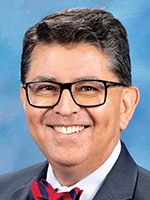
Guillermo Martinez-Torres, MD, president and chief physician executive, NorDx, Scarborough, Me.: We had our annual summit in Washington, DC, where we learned about our advocacy priorities. We were on Capitol Hill talking to our respective congressional delegations.
We continue to be concerned about the state of Medicare reimbursement in the physician fee schedule. Reductions continue while inflation rates continue to rise. There’s a significant delta between reimbursement and expenses, so we are behind the curve. We are asking our congressional delegations to stop kicking the can down the road and intentionally address physician fee schedule reimbursement reform.
We also talked about the upcoming PAMA reductions on January 1 and the downstream effect because most of our commercial reimbursement is tied to Medicare reimbursement. Even in the state of Maine, we were just notified last week that MaineCare, the state’s Medicaid program, is revaluating its own laboratory fee schedule, which would be a significant reduction to our current reimbursement rates. I’m sure this is also happening elsewhere.
We also addressed workforce issues, residency positions, and H-1B visas. We would like to have H-1B fee exclusions for health care providers. We also talked about LCD legislation, J-1 visas, and the Conrad 30 waiver program and expansion of that. I’m happy to say that my own senator in Maine, Susan Collins, is behind the legislation supporting Conrad 30 expansion. So good news on that front.
We had a lot of asks this year; usually we limit ourselves to two or three. This time around, we had more than that, so we focused the conversation accordingly.
On the negative side, the power brokers in Washington feel that nothing substantial is going to happen between now and the end of the year in regard to health care legislation, which is a little disheartening.
The Big Beautiful Bill, or H.R.1., gave physicians a two and a half percent increase in Medicare reimbursement for 2026, but at the same time in pathology it penalized us two and a half percent for an efficiency gain. So we ended up right where we started, and actually a little behind because inflation continued to go up in the meantime.
At the Executive War College meeting in April, a great deal of attention was paid to these same matters. Lâle White of XiFin pointed out how we have fallen terribly behind the cost of living on the professional and clinical lab fee schedules. There was a plea for everyone to get behind the RESULTS Act.
Also in April, Northwell Health hosted an onsite Compass Group meeting where we heard an interesting presentation on Northwell’s decision to keep its laboratory information system with Cerner in the midst of this rush to put in Epic Beaker. Mike Eller, can you share a bit of insight into that decision?
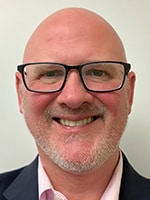
Mike Eller, vice president of business strategy, Northwell Health Laboratories, New York: We looked at the totality of our business and then did the math. Our outreach program is substantially larger than that of most hospitals and health systems. The larger it gets, the more complex it gets, the more interfaces there are, the more customization there is. We’re client driven; we’ve put time, effort, and resources into the experience for the clinician and patient. When you take that into account and look at the potential loss of business, investments we’d have to make in interfacing, and the lack of a Beaker blood bank module, it was clear Beaker wasn’t mature enough for us to benefit from it. We’re not discounting it for the future, but it doesn’t make sense for us to switch over at this time.
It was a great exercise to educate the health system leadership on the laboratory’s complexities. This isn’t plugging something into the back of the machine and everything works. There are hundreds of instruments in 30 hospitals throughout the geography.
Gaurav Sharma, you attended the meeting at Northwell. Do you have a comment about it?
Gaurav Sharma, MD, system vice chair of clinical pathology, division head of regional laboratories, and medical director of the outreach laboratory, Henry Ford Health, Detroit: There were two good takeaway points from the presentation by Michael Dowling, Northwell’s former CEO [CEO emeritus as of October 2025]. Number one was the vision and foresight to establish a Northwell high school, Northwell School of Health Sciences, as a reliable and sought-after pipeline for kids in the area who enroll in the high school and connect with Northwell Health laboratories and other departments. It teaches us that they are thinking of staffing as a long-term infrastructure issue rather than as an HR function only. Creating that pipeline is creating infrastructure, and I hope this becomes more common across the country. As someone who has kids in school, if given a choice between going to a public school or one that has a health system affiliation, I would rank the second higher because that child will get connections and mentorship there. It is fascinating they thought through that level of detail.
Second, Medicare and Medicaid reimbursement will remain steady at best but probably continue to decrease, and Dowling mentioned alternative revenue streams, beyond Medicare, Medicaid, and insurance and going directly to the customer, consumer, or patient—however you define it. In the lab industry, since we are captive to the clinician’s choice, we must think outside the box. It is not that it’s unusual, considering companies like Function Health are now entering the market with consumer-driven diagnostics. We, as established clinical laboratories, should also think about alternative revenue models and not be solely dependent on fee-for-service Medicare and Medicaid work.
Let’s go a step further. As you bring this idea of new revenue streams to Henry Ford, what kind of reception are you getting?
Dr. Sharma (Henry Ford): We have been working on this for some time. Following a prior Compass Group meeting in Chicago, where Luminate Health sponsored a webinar, Henry Ford pathology and laboratory medicine partnered with the Executive Health Program to begin developing a consumer-facing offering. Executive Health operates as a premium, niche practice. Patients pay for direct access to their physicians, who are not constrained by traditional RVU structures and are encouraged to spend more time with each patient. This creates an opportunity to thoughtfully integrate laboratory diagnostics into a more personalized care model.

In discussions around engaging the worried well, as my Executive Health colleague describes this population, we identified a key gap: the lack of a clear, curated front-end product. The concept is to offer a defined panel—perhaps 100 tests instead of several hundred—with results integrated into Epic and interpreted in context by the Executive Health physician. This creates a more guided and clinically meaningful experience for the patient.
From the clinician perspective also, this approach is advantageous. Executive Health providers are increasingly encountering large volumes of externally generated data from direct-to-consumer platforms or à la carte laboratory testing. They have expressed a preference for curated, internally aligned testing strategies—extending beyond strict evidence-based thresholds but still grounded in clinical judgment—rather than reconciling disparate and sometimes fragmented data sets. The same challenge applies to complex molecular reports.
There is a broader opportunity here. Across recent Compass Group discussions, we have seen early signals of a shift toward more consumer-aligned, clinically integrated diagnostic models. This is an area where health systems and laboratories can continue to evolve and potentially create value.
Would anyone else like to comment on how concierge and/or functional medicine is affecting their health care system?
Walter Henricks, MD, vice chair, Department of Pathology and Laboratory Medicine, and laboratory director, Cleveland Clinic: Functional medicine testing is making inroads; we’re seeing more requests into the laboratory. Organizations may need to make decisions about whether and how these tests are included in their test menu. This type of testing may involve clinicians ordering tests directly from the outside laboratories and arranging to have the specimens or kits sent outside of conventional laboratory testing. For these, laboratories don’t have responsibility for reporting or interpreting the results. These results may sit outside the usual display of laboratory results in the EHR. You could also get into situations where doctors want the lab to draw functional medicine send-outs at the same time as drawing other tests and then send out to the functional medicine testing only.

There appear to be new business models emerging. Nonphysician functional medicine providers may encourage patients to order their own testing and then interpret the results for them. Or they may partner with authorized providers to write lab orders for functional medicine tests that then they could use to interpret in their advising or treating of patients, such as recommending supplements.
In any event, we have to consider stewardship of these tests in the organization and if there are different workflows.
Stan Schofield, what are you seeing in this realm of patients being enabled to order their own tests facilitated by large laboratory organizations?

Stan Schofield, VP and managing principal of the Compass Group (formerly of NorDx/MaineHealth): On-demand or concierge are terms they use often, not only for medical care but also their laboratory concierge. People internally are trying to drive these programs like a personal shopper in a high-end department store. They help you navigate the initial tests that should be considered and ordered. The reception has been positive, and they’re taking the pilot programs to mainstream laboratories on the West Coast.
Quest and Labcorp in their quarterly presentations are reporting impressive statistics about the growth in that area of their businesses. Does anyone else want to comment on this question?
Dr. Sharma (Henry Ford): The integrated delivery network laboratory market tends to oscillate between two suboptimal extremes. One reflects the landscape from several years ago, when access to testing was limited—even for patients willing to pay out of pocket. The other extreme is an environment where virtually any test is accessible, often without sufficient clinical context or guidance, leaving both patients and physicians uncertain about how to interpret the results.
Within IDNs such as Cleveland Clinic and Henry Ford, there is an opportunity to occupy a more balanced middle ground. These systems combine broad access to laboratory testing—much of it performed internally—with physician-led models, including Executive Health programs, that provide follow-up interpretation and clinical integration of results. This creates a more coordinated and meaningful diagnostic experience.
In contrast, some direct-to-consumer or functionally oriented testing models face challenges beyond test access—particularly in translating results into actionable clinical decisions. Generating data is not the limiting factor; interpretation and integration into care remain the greater challenge.
Health system laboratories are well positioned in this evolving landscape. By pairing diagnostic capability with longitudinal clinical oversight, they can offer a differentiated model that emphasizes both access and interpretation.
Greg Sossaman, can you speak to this question of concierge and functional medicine and the role that a large IDN laboratory can play?
Gregory Sossaman, MD, senior medical director, pathology and laboratory medicine, Intermountain Health, Murray, Utah: Two aspects that haven’t been mentioned are how we ensure stewardship and look at laboratory testing misuse. That issue comes up when we talk about partnering with these companies or looking at the offerings. It’s a shotgun approach with a huge menu of panels and is in contradistinction to what many of us are trying to do with appropriate utilization. That’s thinking about it from the medical practice side.

The opposite side is if you don’t do the testing, someone else will. It’s going to become more and more popular. Capillary collection devices are coming into the market now, and when there are more FDA-approved devices like that, we will see more and more of these companies in the market. Functional medicine companies have strong strategic alliances with some of the commercial entities that have those devices, and I’ve heard Quest and Labcorp have a coinciding interest with these companies and are providing services for them.
All the large IDNs will have to figure out how to address this because, if we don’t, it will take up some of our business.
Does anyone have a final comment?
Dr. Henricks (Cleveland Clinic): It’s important to keep in mind a distinction between patient direct-to-consumer testing of typical laboratory tests and patient testing for functional medicine that may have less established, or not established, clinical validity. How should these less conventional tests be dealt with in regard to our test menus? Are we comfortable having such tests on our menu and orderable in the system? You assume if you’re coming to one of our places you’re going to get good medicine, and we might not want to endorse some of these tests or how they’re used. I’m speaking globally here; there’s value to some of the tests.
It’s a challenge we’re going to face because we want to be careful about what we put on our menu. By virtue of it being on our menu, we endorse that testing.