


Laboratory information systems were the topic of a Sept. 8 roundtable led online by CAP TODAY publisher Bob McGonnagle, with 10 people participating. Part one of the discussion was published in the November issue; they spoke about interoperability and standards, among other things (https://bit.ly/CT_1125-LIS). Part two begins here, with more on standards and with the participants talking also about AI, IT conferences, and release of results to patients.
For CAP TODAY’s 2025 guide to laboratory information systems, see the November issue (https://bit.ly/CT_1125-LISPG).
Suren Avunjian, can you comment on the application of AI in the lab workflow?
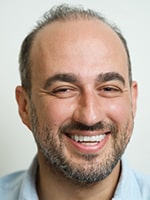
December 2025—Suren Avunjian, cofounder and CEO, LigoLab Information Systems: In our industry we often talk about AI as if it’s a sledgehammer, something to be applied everywhere possible. But AI works best when used like a scalpel—precise, targeted—and designed to augment rather than replace people. The goal isn’t to remove the human element but to eliminate repetitive and low-value tasks so professionals can focus on higher level work.
There’s still a trust gap with AI because it’s often seen as a black box—hard to audit, explain, or verify. That’s why at LigoLab we focus on transparency and human oversight. We’ve embedded AI directly into the LIS for several high-impact use cases. For example, our platform uses speech-to-text and speech command tools to streamline case documentation and sign-out. It also uses AI-powered optical character recognition to automatically scan, extract, and map data from paper requisitions and other documents directly into the correct orders. Each output still goes through human verification, with configurable confidence thresholds.
We’re also extending AI into our ICD-10 and CPT coding modules to automatically suggest and validate medical and billing codes based on clinical data and reports, which helps reduce errors, accelerate turnaround times, and improve reimbursement accuracy.
We see great potential in having conversational interfaces, like a GPT-style assistant, built directly into the LIS. Imagine being able to “talk” to your lab data, instead of navigating through dozens of reports, and ask real-time questions about turnaround times, case volumes, or revenue performance and getting instant, context-aware answers.
AI in the lab shouldn’t replace expertise; it should amplify it. The labs that understand this balance will lead the next wave of operational and analytical transformation.
Beth Eder, talk about AI in the workflow as you’ve seen it develop over the past 18 months.
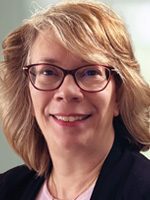
Beth Eder, BS, CT(ASCP), director of product management, Orchard Solutions, Clinisys: AI can help with many repetitive tasks. There’s still a need for human interaction. In the next five years we’re going to see more innovation from AI, and we might be able to use it in more elaborate workflows. AI is a tool to help the labs that are doing more with less now, but we need to implement it strategically and with great thought.
Bruce Friedman, there is a plethora of meetings that lab people, pathologists, and vendors can go to. You started AIMCL in 1983 [Automated Information Management in the Clinical Laboratory], which continues today as the Association for Pathology Informatics. Are we guilty of having too many specialized meetings where we don’t get the full integration and synchronicity of the problems we’re talking about in this discussion, like interoperability? Could that be part of the friction of solutions to this matter?
Bruce Friedman, MD, emeritus professor of pathology, University of Michigan: I’m sure that’s true. You can compare our complex set of conferences to radiology, which had consolidation early. I think we’re going to have to live with this. There’s a degree of specialization in the lab world that enables or perhaps even forces us to have this many specialized meetings. The API continues to thrive in its niche.
I don’t see a consolidation of meetings in the future. It will probably get even more detailed as the lab mission becomes more complex with AI. We’ve tried certain consolidation initiatives within the API and it hasn’t succeeded. The sponsors of smaller niche meetings do not seem to be looking for consolidation, in my opinion.
Nick Trentadue, how do you see this lack of a single meeting where this synthesis can take place and in which we would not be missing key players in the specialized meetings?
Nick Trentadue, VP, laboratory and diagnostics, Epic: It’s time for pathology, which is newer to some of these areas, to have a seat at the table. It’s a two-pronged approach. If you are too general, you won’t get what you need for the specialist. If you are too specialized, you won’t get what you need in general.

Pathologists have to figure out where they want to live. Do you want to talk to your computer all day and use Ambient? That’s being released now in Beaker. Do you want to use digital pathology in the AI models on the images to come in? Do you want your LIMS to be your source of truth? As we look at all the new vendors and toys, we need to remember that all of us on this call do the basics well: You still want to get paid, you still want registration, you still need your report to go out. When we see these new vendors, I usually ask, How are you going to bill for that?
I think everyone is on the same page on the need for standards and wanting to take advantage of them. But we will continue to see stress on the standards community, because where do you want the AI models to live? Do you want them to live in Beaker or LigoLab or Clinisys? Or do you want new standards to be developed so they can run outside the LIMS? We have to decide as a community where the best place is to do that. On the LIMS side, we want to support it. It’s figuring out what those standards are and how we can best work with the vendors in the space.
Chad Meyers, what’s your reaction to having a single source of exchange where these problems can be addressed and solved, in standards and workflow, and with an emerging consensus from customers, without which it will be hard to develop efficient solutions?
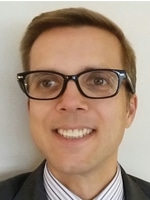
Chad Meyers, VP, Clinisys Laboratory Solutions for Healthcare, Clinisys: Clinisys sits on many standards committees—we’re in 35-plus countries around the world. I sat on the Association for Pathology Informatics standards committee, and we talked about recommending the use of SNOMED CT or other standardized definitions for specimen source for several years. We may need to think about how we as an industry can co-fund dedicated individuals to move standards along at a faster rate because we’re not able to get to all the topics. The challenge is speed and having the time to devote to it, given how fast things are changing. Even as we look at AI and image analysis with the Digital Pathology Association, the industry hasn’t reached the point of specifying one approach to sharing image analysis results. As an industry we need to look at how to help accelerate standards creation and adoption. It’s important for leading laboratories and vendors to balance the need for workflow tailoring with improvements in data standardization so we can advance health care together.
Gui Axus, do you agree with your colleagues about the need to accelerate development?
Guillaume (Gui) Axus, divisional vice president of digital health, Abbott: Absolutely. We’re looking at that field in terms of total lab solutions—where do we still see labor-intensive work? We’re exploring digital pathology and anatomic pathology now. When we look at diagnostic imaging, specifically within hospitals and where they are with AI agents having the ability to triage and read imaging, we can see parallels within AP and digital pathology.
Ul Balis, why doesn’t pathology have the equivalent of a Radiological Society of North America?
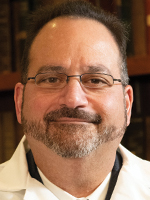
Ulysses G. J. Balis, MD, A. James French professor of pathology informatics and director of the Division of Pathology Informatics and of the computational pathology laboratory section, Department of Pathology, Michigan Medicine: I don’t know that any one person has the answer. I have noticed with the renaming of ADLM that it’s emerging as the big meeting for vendor spaces. Part of the problem is a little bit of tribalism, where subspecialties recognize their uniqueness and want to convene at least once. We do that with pathology informatics—the unique issues and topics that are of interest to pathology informaticists may not be of general interest to all pathologists. Having a unique meeting allows an ongoing exchange of ideas as well as networking. Similarly, there’s a need for the larger meetings like ASCP, CAP, and USCAP.
We have many splinter groups ostensibly in the digital pathology space. API and the Digital Pathology Association have a cordial relationship, but it doesn’t gel into a merging of meetings. We have a host session for them and they for us at our respective meetings. People have hypothesized it’s because organizations like API are a 501(c)(3), which is a nonprofit educational organization, and DPA is a 501(c)(6), which is a trade organization. They have slightly different operational missions—academically or community-based pathology supported versus vendor supported.
Maybe this requires a retreat of all organizations to get serious about consolidating the number of meetings so we can have greater attendance.
Liron Pantanowitz, same question.

Liron Pantanowitz, MD, PhD, MHA, chair and Maud Menten professor of pathology, University of Pittsburgh Medical Center and University of Pittsburgh: It’s hard to get the following three key stakeholders at the same meeting, which is why I think we have failed to date. One is the decision-makers with the expertise in pathology informatics: We need not just the informaticists and pathologists at the table but also the IT analysts, LIS vendors, et cetera. Two, the people who sign the checks, the leadership, don’t tend to come to these meetings because they’re too technical. Three, the LIS vendors themselves are often absent. In my experience from serving on scientific program committees for society meetings, when trying to get panels together, the hardest stakeholders to get to participate are LIS vendors. They are reluctant to come and talk in a public forum about integration complexities, new digital workflows, and adoption of standards. If we can get LIS vendors to participate, that would be ideal.
Nick Trentadue, what is your diagnosis for what you’re seeing in the lab space to help resolve some of these problems?
Nick Trentadue (Epic): Over the past decade, more dollars are not coming in, we’re getting paid less for tests, and we’re asked to do more. Our industry has always been ahead on the robotics side, and we continue to see that with new instrumentation and automation. Many of our academic groups are automated on microbiology, and they’re ahead in Europe—we’re seeing specimens go in and cassettes coming out. We’re only going to see more automation and robotics.
From the vendor side, we will support AI making things easier for clinicians, support staff, even for analysts. We have tools coming out that allow analysts to use AI to build new tests quickly. At the same time, we want to be cognizant of not turning everyone into an AI reviewer. We don’t want people to spend their time saying, “Here’s a thousand requisitions and result reports that our large language model automatically mapped for you. Can you review them all?” It will take time before we land on who’s on the hook if the model gets something wrong. We will continue to fully support robotics and AI so we can help people focus work at the top of their licensure.
Quest and Labcorp are two huge corporations and yet they’re not participating in these discussions, even though no one generates more lab results. They also in many cases have their own systems to help accomplish their testing needs. Matt Folsom, what do you make of these suppliers not being at the table when we talk about LIS issues?
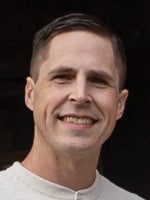
Matt Folsom, senior director of software engineering for Xifin LIS: Labcorp and Quest must be part of these conversations because of the influence they wield. They frequently acquire smaller labs and impose their own standards, creating a paradox: While smaller players innovate, grow, and push for future progress through standardization, they are often absorbed by larger entities that replace those efforts with their own processes. The scale of Labcorp and Quest demands standardized operations, leaving little room to consider alternative approaches since their primary focus is on delivering results to patients, which is ultimately the shared goal across the industry. Their involvement is essential as their power positions them to help drive alignment and establish consistent standards that can move the field forward.
Nick Trentadue, talk to us about MyChart and its reach to patients and about the two major players that should be more involved.
Nick Trentadue (Epic): Empowering patients is an Epic goal. That’s the future. It is also a time and money saver for organizations. We have dashboards and calculations for our customers that show MyChart and other tools save hundreds of dollars per year per patient in staff time.
Quest and Labcorp are Epic customers now. With that we will see more partnerships, more ease of integration, and better relationships with our providers. The more we can reach all the areas a patient goes to for health care, whether it’s a diagnostic lab mandated by a payer or one that’s more convenient for the patient, and the more we can bring people to the table, the more we will see everyone win.
Gui Axus, tell us about Abbott’s concentration now on patients as a key component of Abbott Diagnostics’ mission.
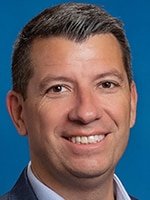
Guillaume Axus (Abbott): Abbott’s diagnostic business is focused on patients because everything we do ultimately impacts their care. Our mission in digital health is to empower health care organizations to deliver smarter, faster, and safer care through a connected digital ecosystem. By leveraging data-driven technology, we help labs optimize workflows, automate processes, and unlock insights that improve efficiency and compliance, enabling clinicians to make quicker, more accurate decisions. Our digital health solutions address key market dynamics, reducing cost and utilization pressures, consolidating testing and disciplines, and enhancing connectivity. These innovations ensure that labs aren’t just processing tests, they’re becoming strategic partners in patient care. Our concentration on patients is about enabling better outcomes through technology that transforms the entire continuum of care.
Ul Balis, talk about direct contact between laboratories and patients for test results.
Dr. Balis (Michigan Medicine): We’ve taken a stab at direct patient reporting and direct testing and, most interestingly, pathologist hours for patients interested in reviewing their cancer findings or histology, which got a positive response during our pilot efforts. There’s something transformative about a patient being ready and able to go to battle by virtue of seeing their cancer and having a conversation with their pathologist about the anatomic extent of disease, what the disease represents, and what the biologic potential of their malignancy is. Patients told us that having the opportunity to speak with their pathologist was the first step in preparing them for their cancer treatment, and they similarly reported having tremendous gratitude for this opportunity.
There are untapped opportunities for pathology and pathologists and the various laboratorian areas, such as HLA, for example, to make better use of communication conduits to reach out to patients through emerging patient portal technologies. We could formulate this as a retreat at a pathology meeting—ways for pathologists and laboratorians to be more visible and accessible to patient populations and to assist with direct testing. Similarly, the visibility helps with development and fundraising. When you have grateful patients, philanthropic input comes back to the pathology department directly. Alternatively, without such visibility, philanthropy more typically goes directly to the clinical specialties, altogether bypassing pathology.
Liron Pantanowitz, what are your views here?
Dr. Pantanowitz (UPMC): Patient portals unveiled a new world to pathology and patients. For the first time, patients get to see their pathologist’s name on the report and meet them, at least virtually.
The immediate release of results to patient portals under the 21st Century Cures Act is mandated in almost every state. For those involved in informatics, this introduced complexity. It has changed the practice of pathology, subtly and not so subtly. Physicians do not like to be blindsided by having their patients receive certain results first, which causes anxiety and querying. From a workflow perspective, it’s still important to put in restrictions to block the release of certain sensitive lab results. That creates confusion, however, because if the mandate is to provide immediate release of results, how do you restrict certain results and be compliant?
Pathologists are aware now that patients read their reports directly, so their choice of words matters more than it did before. For example, some pathologists don’t like to use the word “debris” in their reports. Patients may question what it means to have debris. Instead, pathologists may opt to use the word “necrosis,” for example. Issues have also been raised about gender. A patient may not identify with their biological gender, so if you refer to “his” prostate, the patient may take offense because they don’t identify as a “he.” In the past, the patient might not have read the entire report because the provider received and relayed the results.
Gilbert Hakim, what are your thoughts on Quest’s and Labcorp’s absence from the discussions in the world of LISs?
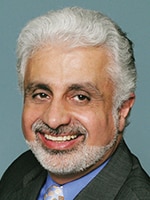
Gilbert Hakim, founder and CEO, SCC Soft Computer: Labcorp and Quest are also our clients. Their approach to growing their business is to take over hospital laboratories. Their business model is slightly different than that of hospital laboratories or independent commercial labs, which is why they can dictate what they use when they take over a hospital laboratory. They have less incentive to improve the application or their products because they have only one client when they do R&D.
Can you comment also on patient interaction with the lab information system and laboratory results?
Gilbert Hakim (SCC Soft Computer): The issue relates to the marketing of the laboratory to patients, which has evolved into providing a tablet- and phone-based connection to the data. I’m not sure if our clients are looking for anatomic pathology results, because it’s dangerous. They don’t understand what it means. However, for clinical pathology, which is primarily numeric or graphic, it’s possible to show them the results.
We have synoptic-integrated content reporting, which allows hospitals or commercial labs to insert patient education materials into the report. We’ve provided a feature in our patient portal for scheduling a patient’s appointment for a blood draw. It’s been instrumental, especially for small commercial laboratories.
Bruce Friedman, would you like to make a final comment?

Dr. Friedman (University of Michigan): I’m looking forward to the future, particularly with AI analyzing results and diagnosing predisease. That will be a new era in terms of utilizing large data and predicting that a patient is going to develop, for example, a cancer 20 years hence. It will catapult us into a new environment in which we will not have access to FDA-approved drugs to treat predisease, and it will create chaos with consumers. It will be a headache but also an opportunity, at the same time, for all of us.
It’s also critical to begin to discuss the extent to which AI will reduce the number of pathologists and whether younger people will avoid going into pathology because of the decreased manpower need, at least on the pathologist side. On the other hand, I think this new environment will mandate that pathologists who come into our field have a background in computer science.