

June 2025—Chemistry and immunoassay analyzers—the customer input that shapes their development and the laboratory acquisition process and timeline. That and more, including the IT obstacles and solutions, were the focus of a roundtable, led by CAP TODAY publisher Bob McGonnagle. He spoke with Moira Larsen, MD, MBA, of MedStar Health; Joe Baker of Baylor Scott & White; and representatives of Beckman Coulter, Roche, and Siemens Healthineers. Their April 15 online conversation follows.
Click here for CAP TODAY’s interactive chemistry and immunoassay analyzers for point-of-care use and low-volume laboratories guide.
Dr. Culshaw, the stakes are high for companies that provide core laboratory automation in chemistry and immunoassay. In addition, health systems that are considering core lab automation want a family of analyzers that extends into all the nooks and crannies a health system has in today’s consolidated world. What are your thoughts about the importance of this anchor for Beckman Coulter?
Nick Culshaw, MBBS, vice president, clinical chemistry and immunoassay innovation and product management, Beckman Coulter: A fully scalable portfolio has to be at the center of your product design philosophy because multiple forces are impacting the need for scalability, whether it’s integrated delivery networks growing or hospitals outsourcing labs to major reference labs. IDNs and other hospital groups and lab networks are making different design choices, so you have to have a portfolio that scales right up as well as right down.
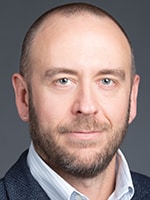
We need to be particularly mindful of the smaller labs within a network to ensure they can always deliver the highest quality of care. It’s the reason we’ve invested in workcell technology like the new DxC 500i; it’s crucial that we bring a level of automation to those small labs because they often have the hardest staffing challenges.
Martu Richards, tell us about your perspective at Siemens Healthineers as you look at the automation of systems regardless of volume and geographic distance, among other things.
Martu Richards, director of marketing, core lab solutions, Siemens Healthineers: Along with scalability I would add levels of automation. For years when manufacturers and laboratory partners spoke about automation, they were thinking about total lab and task-targeted automation. Siemens Healthineers is trying to find solutions in these areas. With the Atellica CI, we’ve added what we call integrated automation into the platform. The Atellica CI is a small- to mid-volume integrated chemistry and immunoassay analyzer, and within the past 12 months we’ve given our lab partners the ability to integrate our sample handler, which allows integrated or built-in automation functions, such as decapping, sealing, archiving, sorting. We’re integrating automation into these lower segments that, because of size and cost, don’t have those options available to them.
Jeff Shockley, can you comment on what you’ve heard so far and give us a hint of Roche’s initiatives of late?
Jeff Shockley, senior technical product manager, Roche: Integration is critical. We’re seeing that the line between our analyzers, automation systems, and digital and IT systems is blurred. We’re finding that these solutions need to be fully integrated across all these spectrums. We’re trying to drive the digital infrastructure aspects of our solution to make these systems work together seamlessly. As it becomes more complex for these systems to work together, we have to bring it to the market and to our customers in a way that masks the complexity and simplifies their operations.
Moira Larsen, the conversations at the Compass Group meetings are often around getting the IT solution right regardless of who your vendor is. It’s an ever-greater challenge not only for laboratories but also for vendors because vendors have to go into areas of IT departments that may not have laboratory at the top of their priority list. Can you comment on how important IT solutions are?
Moira Larsen, MD, MBA, physician executive director, MedStar Medical Group Pathology, MedStar Health: This is a can of worms because you have your instrumentation that has its program and software, your lab information system that may or may not be the same system as the hospital EHR, and then we like to call on middleware to do calculations and to connect and translate. How many interfaces do we need? How many different systems have to talk to each other? Those complexities become quite difficult. In cases where we have chosen to forgo aspects of middleware because the lift for the IT need seemed overwhelming on both sides, or we couldn’t get the hours from our IT team to build what we needed, we had to make do and cobble things together through side arrangements and calculations.
Then there’s the firewall and protection of data issue, and when we tell our IT team we have a new analyzer coming in and need a hole in the firewall to let the vendor monitor the instrument and we need to add three software platforms to do preemptive work, it becomes a bigger project that takes longer and longer. When there is a problem, it can be difficult to pinpoint where it is in the system and whose problem it is and to schedule the personnel needed to look at the system.
Joe Baker, can you comment on your recent Epic install and the complexities Dr. Larsen is speaking about?
Joe Baker, senior vice president of diagnostic services, Baylor Scott & White Health: This is a complex dance. We took advantage of our Epic Beaker implementation to harmonize the variation we had within the organization, specifically around reference ranges, autoverification rules, test builds, and workflows where applicable. It was still difficult for a system of our size to align because our sites and labs were of different sizes and scopes. We found we needed two project managers, one from the operational side and one for the IT side. Both had to walk in lockstep because there was so much crossover. It was difficult.
We are fortunate because we have our own LIS team who were great partners with our corporate IS team. We had an entire team across all departments that was shepherding this project for us. If you don’t have that, it becomes exponentially more difficult trying to navigate this path. The project is worth doing because it allowed us to further our goal to remove friction points and provide the highest quality care possible.
Jeff Shockley, consolidation gives laboratory operations like Baylor Scott the kind of scale whereby they can have a devoted LIS team. It seems those devoted LIS teams are becoming ever rarer across the board in labs. Do you agree or disagree?
Jeff Shockley (Roche): A little of both. We run into quite a few customers that still have some degree of an LIS team, but it’s more common that they don’t have the luxury of having that dedicated staff. That’s where they are looking for vendors like Roche, Siemens, and Beckman to help with the challenges they’re running into.
Cybersecurity is a challenge we have to work with between the LIS and IT teams. When there is a dedicated LIS team, we have an ally to work with. When there isn’t, we sometimes have to rely on the lab to help push its IT team on things we need to navigate to ensure the solutions are secure and meet their guidelines.
Martu Richards, do you think the complexity of managing this can lead to an acceptance of the status quo? There’s a lack of action even though many people in the lab know that better solutions are at hand if they had the staff and the cooperation from the entire system. Can you speak to that?

Martu Richards (Siemens Healthineers): I don’t think you can accept the status quo because then you’re accepting defeat. You try to find different approaches to give organizations the flexibility to do what they need to do. I think about it as big IT and small IT. Big IT is about LISs and integrating multiple disciplines. You have to have products that provide flexibility and customization and be able to meet the lab where they are and align your systems or solution to help.
Little IT is dealing with instrumentation that’s managing a specific discipline, say chemistry or immunoassay. It’s not a perfect solution but the more options that major manufacturers give laboratories in the areas of flexibility, customization, open systems, and customized rules they don’t have to write themselves, the more it will help them.
For example, on the little IT side, we’re making autoverification available in the software for our standalone systems. We’ve built into our software some of the reporting and analytics that have to be done on the preanalytical side to prepare for inspection. When it comes to big IT—that is your data manager—the biggest thing for us is to give the lab similar flexibility, because if your system software has narrow capabilities, the laboratory is going to have to do workarounds, customized work, and it can make the lab’s validation process more difficult.
Nick Culshaw, there are serious lab staffing shortages, particularly for experienced senior-level laboratory management and laboratory medical scientists. It’s another factor that seems to complicate the successful acquisition of instrument systems. Can you speak to that and what you’re thinking about at Beckman Coulter to overcome staffing challenges?
Dr. Culshaw (Beckman Coulter): The seniority of the staff that is leaving is crucial. That has to be baked into your product design philosophy across the portfolio at the instrument and assay levels. Beckman’s heritage has been in automation and optimizing lab workflow, and even as we seek to bring out a broader menu, we can’t forget that. At the portfolio level, I think about fully scalable automation and workcells for small labs and those in rural locations—small, low-volume automation; intuitive interfaces; and common reagents and workflows across the portfolio and therefore across customer networks. At the instrument level, innovations like reagent loading on the fly, zero daily maintenance, reduced weekly and monthly maintenance. Ensuring that each new generation of analyzer requires less maintenance is crucial. At the assay level, focusing on precision, minimizing QC, QC rules, and increasing the number of tests per pack make a difference in labs that are workforce constrained. Every bit helps.
Dr. Larsen, what tips do you have for someone who is looking at a contract ending and beginning to assess potential new vendors or maintaining a current vendor? If my contract is coming up at the end of 2026, is it too late to start a serious evaluation? What timeline do you recommend?
Dr. Larsen (MedStar): If your contract is up in a year and a half, you’re pushing it. These are large, complex systems that are changing rapidly, and there are many factors to consider. At MedStar we like to have a good three years of looking at what’s available and what people are offering. Some considerations are what the test venue is and whether you can do all the testing you need to service the populations and service lines you have.

The last time we did an instrument request for proposal, it came to light that there are certain tests we might need. For example, MedStar Georgetown University Hospital is a major transplant center that does a lot of transplant drug testing. Some systems require significant pretreatment and some require less, and that has an impact on the personnel you need to run the operation. If you have assays that are more esoteric in some systems, processing the sample will require more staff time.
Throughput is not a big issue for us. All these analyzers are faster than you need. If you calculated the capacity and throughput of the analyzer versus what we use in our systems, you would be horrified to find that your busiest hospitals may use only 25 percent of your capacity most of the time.
Joe Baker, is three years your time frame for assessing systems?
Joe Baker (Baylor Scott): Yes. I’d say it’s between two and four years, depending on what you’re looking to accomplish and the complexity of your organization. Our initial challenge was how involved we needed our subject matter experts to be and what the governance process is for decisions we have to adjudicate. The other piece is ensuring we involved the right partners outside of laboratory, because when we’re talking chemistry, placing large instruments in laboratories, construction and renovation are often needed as part of it. We don’t have many laboratories that have a transition space where we can place these instruments while we get it validated to switch out. That’s a challenge. Also, there are quite a few people outside of laboratory who need to be part of the RFP journey as we try to make a decision—our supply chain, IS, and finance partners.
Do you recommend having more or fewer people involved?
Joe Baker (Baylor Scott): You have to find the right balance. Our testing teams all want to have a say in what we’re choosing because it’s not just a cost decision; it’s ease of use, the removing of friction points, decreasing the complexity, and enhancing the testing activity menus. We balance the number of team members involved utilizing our established chemistry council, which makes most of the recommendations, and our overarching pathology laboratory medicine council, which makes the final decision.
As we go through this journey, a lot of the vetting still has to happen with contracting and information security. There are many other things that have to happen in parallel to the equipment evaluation. If we don’t do these things concurrently, it will be closer to four years.
Jeff Shockley, how difficult is it to convince executives with the company that three- to four-year time frames are not only realistic but essential as people evaluate business plans?
Jeff Shockley (Roche): It’s challenging, especially on the digital side. A two- to four-year cycle is a lifetime in digital. We may start a journey with a customer or prospective customer and by the time we get through it, new solutions and capabilities are on market. It’s key to show health care providers the innovation we can bring, because while it’s a two- to four-year cycle to make a decision, many times these might be 10- to 20-year decisions because changing infrastructure and systems is not easy. We have to make sure partnering with them gives them confidence they’re making the right decision.
Martu Richards, it strikes me that many systems have contracts coming up. Are people looking for a system commitment and solution that’s at least six to eight years? Is that in the ballpark?
Martu Richards (Siemens Healthineers): Very much so. Sixty months used to be the standard and now it’s probably the exception. We’ve seen contracts of seven to 10 years on average.
Health systems are making complex decisions. They’re looking at finance, IT, and supply chain, not just instruments. Now take all of that complexity they’re dealing with and let’s look at it from the manufacturer side. As a manufacturer, when you go to an RFP, you have to have a team that can speak to and explain these areas and find a solution that’s a good fit. The days of speaking about product only, in terms of assays and instruments, are over.
Nick Culshaw, what is Beckman Coulter’s recommendation for people who say they’d like to send you an RFP? Do you talk about what would be desirable in an RFP?
Dr. Culshaw (Beckman Coulter): Understand both lab and hospital strategies, how they enable each other, and their joint visions for five, 10, 20 years down the line. How does the lab enable that and how do we as a lab provider enable it? Are they looking to grow transplant, cardiac, complex testing? Consolidate their network? Grow via acquisition? If we understand those deeply, we can work to identify which of our solutions most meets their needs.
Dr. Larsen, all too often it seems the health system may leave out the understanding of how much more the laboratory will be asked to do if the system is planning to provide more cancer care or transplantation, for example. Can you speak to that and to your role at MedStar to help your system and laboratories succeed?
Dr. Larsen (MedStar): You raise a good point, which is that many times in the laboratory we keep things running and no one knows if laboratory is getting into trouble unless something breaks. But we don’t let it break to the point where they see it. I’ve been to countless medical executive meetings where someone said, “We’re going to bring in a lot of patients for cancer testing. Will you be able to handle it?” And my response is, “We’ll get it done. It will be seamless.” One has to go out of their way to become involved and be seen by your system or hospital leadership in a way that they know to come to you and say, “We’re going to be adding more hematologist-oncologists to our system and we’re doubling your bone marrows and lymph nodes over the next year. We’ll give you time to figure out if you need more NGS, PCR, or tumor marker testing capacity.” You have to position yourself so you are informed about the strategic direction of your system and can align your laboratory strategy with it. You can’t be reactive.
That’s a role you play at MedStar—everyone knows to call Dr. Larsen when a big project is underway that will require laboratory support, correct?
Dr. Larsen (MedStar): Absolutely. I train my medical directors to keep their ears open at every hospital meeting. They’ll call me and say they’re thinking of adding another colorectal surgeon in the next couple of years, or they’re about to expand transplants from hearts to hearts and kidneys at MedStar Washington Hospital Center so they have to start testing for transplant drugs. You need to keep your network aware so they come to you. Whether it is new services or transplant coming to me and saying they need to go to the race-blind equation for eGFR and all of a sudden 300 new patients can get transplants, that comes through me as a clearinghouse so I can prioritize and help make sure we stay on the cutting edge and offer the best care.
Joe Baker, tell us how that similar planning and the points of contact work at Baylor Scott.

Joe Baker (Baylor Scott): This is a true dyad partnership between our pathology leaders and our administrative leaders, because we each hear things in different arenas, through the medical executive committee or chief medical officers. On the administrative side, we’re hearing about the budgetary process—“FYI, we’re going to start these new programs, so you might need to build some things in on this.” But between me and Dr. Ari Rao, our system chief pathology and lab medicine officer, we have our ears to the ground on everything. We have line of sight on the strategic initiatives happening at a system level. The challenges are at our local facilities on what they want to do. That’s where we rely on our local CLIA directors and administrative leaders to have those conversations, communicate and share information, and escalate it for awareness. With increased line of sight, we can guide, balance resources, and work together so individual sites are not having to figure out solutions themselves.
Nick Culshaw, is it one of your responsibilities to ensure that your large install base of users is properly mined for information to help you plan for the future?
Dr. Culshaw (Beckman Coulter): Yes. We would be remiss if we didn’t engage customers in all aspects of the new product development cycle. Voice of customer is crucial as we think about what features and benefits they’re looking for on the analyzer side. Dr. Larsen doesn’t need higher throughput but she may need something else. On the assay side, what menu is required that we don’t have or no one has today in the IVD space but you see scaling in the future to meet your strategy? On the automation side, how is your network changing in size and scope? How does that combine with the staffing challenges? It’s having a constant cadence of voice of customer, with formal user groups and informal conversations, and then making sure you speak to happy and not so happy customers.
Martu Richards, tell us how you work with your customers to help ensure not only their satisfaction but also the future of the Siemens Healthineers enterprise.
Martu Richards (Siemens Healthineers): In the past three years Siemens Healthineers has put many new products on the market—instrumentation, software, some of the newer markers—and in each case, it’s the customer who has informed why we’re going in the direction we’re going. I’ll give you two examples. We incorporated some of the functions on task-targeted and total lab automation into the Atellica Solution and Atellica CI and brought them to market in response to customers saying, Less money, less space, can we do more on a standalone platform?
The second is the user interface or the software that drives these instruments in a standalone capacity. In 2022 we introduced software that manages our instruments—it’s the same for all Atellica platforms—with the concept of it being easy for every skill level. There are functions in the software that make it easier to train because we know laboratories are short-staffed and staff don’t have time to spend in formal education. It has inspection-ready reports and the increased traceability needed for their CAP survey, Joint Commission reports, or a level of customization. MedStar is different from Baylor Scott—how can we give them the flexibility to set up their instrument and user interfaces differently?
That’s all based on customer feedback. If you don’t have the level of customization to give the lab, then they’re locked into doing things the same way, and that forces you to do workarounds, which makes it difficult for them. With every opportunity to come up with a new product, we take information from our customers and lab partners.
Jeff Shockley, tell us about Roche’s approach to optimizing relationships with its customers with a view to the future and how that may inform product development.
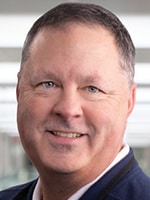
Jeff Shockley (Roche): Voice of customer is integral to how we’re advancing our solutions. Less maintenance, increased reliability, simplification of operation are things customers are constantly telling us about. The challenge comes with finding solutions to things customers haven’t yet identified as an issue. How can digital solutions and artificial intelligence be integrated into solutions to take operational data and turn it into insights, to bring to their knowledge things that may be going wrong or improvements that could be made but that they haven’t thought of.
Nick Culshaw, diagnostics is a global business. How similar are labs outside the United States? Is there an overall global movement for what’s going to be happening with laboratories?
Dr. Culshaw (Beckman Coulter): They’re more similar than different. Having local teams and understanding local nuances is paramount to being successful, and that can be in terms of menu and workflow. Some geographies are more interested in being a leader and others are more interested in heritage and looking at what is done in the U.S. or Europe. It’s crucial to have local sales and service teams that understand customers deeply—their workflows, reimbursement differences, guidelines, physician and customer expectations—and work with them to come up with the solution.
Dr. Larsen, would you like to make a final comment?
Dr. Larsen (MedStar): It’s important to recognize that these instruments are becoming more complex and in-person training is critical. We worked on an install during the pandemic and several of our hospitals had only remote training because of that, which impacted our ability to work well with our analyzers. As soon as the pandemic ended and we could send them in person, it made a difference. It’s important to recognize your vendor is your partner and you need to use them to optimize your ability to understand and run your instruments. With this complexity, there’s less our own technologists can do to fix them than they could on an older machine. That causes frustration for the technologists, and you need to understand that cultural change.
We’re an Atellica shop and we benefited when Siemens put in place people to be our clinical partners. When we were having clinical questions or problems with a test, PhD chemists, not engineers, were assigned to us and we could call them to ask questions. It’s great to know how an instrument works technically, but you need people in the company with hospital-based experience to help support your hospital-based clients for certain problems. Engineers just don’t get it. It’s important to make sure you have the partnership you need for the highly technical chemistry and immunoassay questions as well as the instrumentation.