


Summary
International medical graduates (IMGs) are crucial to the American healthcare system, particularly in pathology, where they make up a significant portion of the workforce. The College of American Pathologists (CAP) is advocating for policies that support IMGs, such as exemptions from the increased H1-B visa fees and the Conrad 30 program, which allows IMGs to waive the two-year home country return requirement in exchange for working in underserved communities. The CAP is also working to attract top talent to the U.S. and support laboratories in other countries.
Importance of international medical graduates
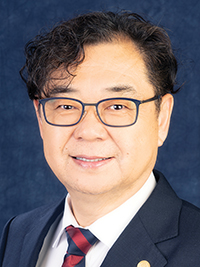
March 2026—It’s no exaggeration to say that the American health care system would not function as well as it does without international medical graduates. That’s especially true in pathology, where about a third of the workforce consists of IMGs, as well as in many other medical specialties. As the first CAP president who graduated from a medical school in China, I’d like to dedicate this column to the contributions of IMGs and the resources the CAP is developing to support this essential community.
I was incredibly fortunate to have excellent mentors during my training, including Krishnan Unni, MD, at Mayo Clinic, where I completed my residency, and Alberto Ayala, MD, Jae Ro, MD, and Mario Luna, MD, at MD Anderson Cancer Center, where I had my fellowship. Like many pathologists, I expanded my skills by reading the pivotal surgical pathology textbook from Juan Rosai, MD. All of these people happened to be IMGs. They helped me not only to become a better pathologist but also to navigate the challenges that are common to IMGs serving as physicians in this country. Whether it’s working on English fluency or understanding differences in our culture, background, or religion, IMGs often face a steep learning curve when they get to the U.S.
But there’s one thing we all have in common: our passion for pathology. That’s something I love about our field—no matter the differences in our education, background, socioeconomic status, or political leanings, pathologists will always prioritize our ability to care for our patients.
Recently, the U.S. government introduced or implemented new policies that will make it more difficult for us to attract talented IMGs. You have likely heard about the executive order that would require employers to pay a petition fee of $100,000 to sponsor someone through an H1-B visa. The previous cost of sponsoring an H1-B employee was approximately $7,000. This could drastically reduce the number of IMGs sought by American employers, which is why the CAP signed on to letters from the American Medical Association and the Medical and Public Health Laboratory Workforce Coalition advocating that physicians be exempt from this new rule. Our lobbyists are raising this issue with members of Congress.
The J-1 visa is the most common visa used by IMGs to train in the United States. Once IMGs complete residency and fellowship training, they must return to their home country for two years before they are able to return to the U.S. and work. The Conrad 30 program allows IMGs to waive the two-year requirement if they agree to work in medically underserved communities in the U.S. for at least three years. Under this program, each state has access to up to 30 IMG physicians. That’s not 30 pathologists; it’s every type of physician. During the past three decades, the Conrad 30 program has helped bring some 20,000 physicians to the U.S. The government’s recent bans on new immigrants from nearly 20 countries are estimated to affect up to 20 percent of incoming physicians using J-1 visas; frequent changes to the new rules have left many in limbo. A recent proposal to limit J-1 visa holders to just four years in the U.S., instead of “duration of program,” led the CAP to request that physicians be exempted from this rule because it would lead to training disruptions and uncertainty.
Having a steady stream of IMGs coming to the U.S. is critical for the quality of care we provide. With severe shortages of physicians of all specialties in this country—and pathology is no exception to this—we need all the help we can get. In underserved communities, the lack of pathologists is even more dire. All too often, patients don’t have access to the pathology expertise needed to ensure the best possible outcomes.
The CAP is working hard to make a difference. Every year, we lobby Congress to reauthorize and expand the Conrad 30 program. We are also in the process of forming a committee that will focus on IMGs and how to continue to attract top talent to the U.S. And the CAP has international initiatives in place designed to help laboratories in other countries; these initiatives could increase the pool of well-trained pathologists, some of whom may one day be interested in practicing in this country.
I was the first IMG to campaign for the presidency of the CAP, but I know there will be many more in the future. As a community, I hope we find more ways to support the IMGs coming to train and serve as pathologists here in the U.S. We need their help and they need ours.
Whether we ran the gauntlet of medical school in the U.S. or in another country, we are all one big professional family. On a personal note, my daughter Jasmine is attending a medical school here in the U.S. right now. We respect, accept, and embrace each other and work toward one common goal: better patient care.
Dr. Zhai welcomes communication from CAP members. Write to him at president@cap.org.