


March 2024—Reflex criteria, middleware, bladder cancer screening, point of care, controls, and collections came up in CAP TODAY’s Jan. 16 roundtable on urinalysis. Six people weighed in, with CAP TODAY publisher Bob McGonnagle leading. Their take on where things stand and where they can be better follows. CAP TODAY’s guide to urinalysis instrumentation begins here.
Tim Skelton, in last year’s urinalysis roundtable we spoke about the need for reflex testing. One of our roundtable participants said that without reflex testing, his laboratory had an unacceptably high rate of false-positive urine cultures. The laboratory adopted reflex testing, and the result was a dramatic improvement in patient care and laboratory efficiency. Is reflex testing a hot topic for you at Lahey?
Timothy Skelton, MD, PhD, medical director, core laboratory and clinical informatics, Lahey Hospital and Medical Center, and medical director, laboratory and pathology informatics, Beth Israel Lahey Health: It is. Two clinical groups with different priorities have competing interests. One is primary care providers and the emergency department. They don’t want to miss any urinary tract infections, and to give them a false-negative is problematic. The other is the infectious disease group and the pharmacy. Their primary interest is antibiotic stewardship. They don’t want to prescribe an antibiotic unless there’s a UTI diagnosis. They have a different opinion about what the reflex criteria should be. So we do the full urinalysis—chemistry and microscopic. Ten to 15 percent of the time we have a negative chemistry dipstick but significant findings on the microscopic—it’s either red cells or white cells and then rarely crystals. We do 100 percent microscopic on all our urinalysis, so we can use the microscopic as our reflex criteria. We have decided on a white blood cell count of 10 per high-power field. If it’s above that, we reflex the urine culture.
Is that the Solomonic lab value that satisfies both ends of your clinical demand?
Dr. Skelton (Beth Israel Lahey Health): It’s a compromise. For a while we required bacteria to be present, but the ED had examples in which there were significant white cells but a bacteria count below the cutoff and the patient was not treated and then found to have a fulminant UTI later. We decided we wouldn’t suppress the reflex based on lack of bacteria.
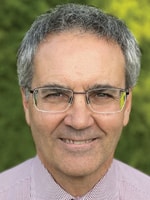
We started at three white blood cells per high-power field, but the infectious disease and antibiotic stewardship groups were concerned we were doing too many urine cultures. Their concern is C. difficile. So we did another optimization and ended up at 10 per high-power field. If there’s large leukocyte esterase, a reflex also will be triggered. We added that because sometimes the white cells lyse.
Michelle Dumonceaux, there are similar setups, particularly in large systems, in which there is 100 percent microscopic and it’s all automated through a system. What are the benefits of that strategy and has your customer base largely adopted it?
Michelle Dumonceaux, director, urinalysis product management, Beckman Coulter Diagnostics: It depends on the region. We see anywhere from 100 percent microscopic reflex to user-defined settings based on urine chemistry results on analytes such as leukocytes, nitrites, and red or white blood cells, and yeast-like cells and bacteria cultures. A big challenge we see is there’s not true standardization on what the criteria are. With lack of standardization, the lab could be spending time performing additional work. We try to ensure that our products can meet the needs of each laboratory independent of the lab’s criteria.
Inbal Kinamon, would you like to comment on what you’ve heard?
Inbal Levi Kinamon, global business line head for central urinalysis, diagnostics, Siemens Healthineers: Dr. Skelton mentioned bacteria and getting the right treatment. We should think about a predictive algorithm so we can minimize unnecessary tests and payments. UTI predictive algorithms could potentially reduce the number of bacterial cultures by screening out negative samples. Siemens Healthineers provides subcategorization for bacteria, rods versus cocci, to help inform clinicians waiting on culture results. Our focus will be on creating opportunities to facilitate clinical decision support.
Jason Anderson, is it desirable to have working rules for decision support?
Jason Anderson, MPH, MT(ASCP), senior product manager, urinalysis solutions, IVD product marketing, Sysmex America: Yes. Population-based urinalysis rule sets especially have the potential to drive improved decision support in the laboratory and at the point of care. Many labs are still using the same or similar rules that I used when I started my laboratory career 30 years ago.
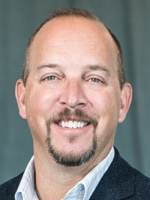
With the evolution of urinalysis technology comes the opportunity to reevaluate these historical rule sets and/or cutoffs to determine whether they’re optimized for the patient populations served. For example, some labs use the white blood cell parameter in a rule set to determine whether to reflex to urine culture. Should the same white blood cell cutoff be used for all patient populations? One cutoff may work well for the general population but may not provide optimal sensitivity and specificity for disease detection in other populations, such as for transplant, immunocompromised, obstetric, and pediatric patients. Unfortunately there’s not much evidence-based information in the literature that supports different criteria for different populations, and much of the research available is based on older technology. In last year’s urinalysis roundtable we talked about urinalysis rule sets evolving to include inputs from clinical staff such as clinical symptoms, as well as parameters from outside urinalysis, like the white blood cell count to check for a neutropenic state, in addition to commonly used urinalysis parameters.
It’s been a theme in our discussions how little science and research has gone into urinalysis, which is unfortunate given that it’s a high-volume test. It should be amenable to rules and a better understanding. Michelle Dumonceaux, can you comment on that?
Michelle Dumonceaux (Beckman Coulter): I agree. I’m intrigued by the work being done in Europe by a team chaired by Dr. Timo Kouri. They’re updating the European Urinalysis Guidelines published in 2000 by the European Confederation of Laboratory Medicine.
In the United States urinalysis is done in the core laboratory, but outside the U.S. it is done in the microbiology laboratory or the core lab. Some places aren’t doing urine chemistry testing; they’re relying on their clinical chemistry analyzer. A lot of dynamics are at play, and it’s important for us in the industry to keep up with that and try to anticipate those trends.
Andrew Schaeffer, what’s your reaction to what you’ve heard here, from the perspective of a third-party vendor of urinalysis controls? And is there a different topic you would like to comment on?
Andrew Schaeffer, manager of technical support, Quantimetrix: We make an effort to support the fully automated systems and continue to add elements to our dip-and-spin control product to accommodate these analyses, including multiple bacteria and crystal types.
Another topic is urinalysis at the point of care. Based on clinical analysis, the error rate at the point of care tends to be high. It emphasizes the importance of control products when the personnel running the tests are not laboratorians or don’t have that expertise. Having a single-use control product to avoid issues, such as open-vial stability and multiple use, keeping track of dips, et cetera, comes to the fore in this situation.
Many patients get a quick empirical diagnosis based on a dipstick, often performed by a nonlaboratorian, and leave the outpatient center with a prescription and begin taking an antibiotic. If the urine is cultured, the results may indicate a different bacteria, and the patient may have to start taking a different antibiotic. Dr. Skelton, do you have these conflicting points of testing and patient encounters in your large system? And what do you do to herd all these cats, if anything?
Dr. Skelton (Beth Israel Lahey Health): For point of care in an outpatient center, we have the center staff send the sample to the lab if the patient is asymptomatic. If the patient is symptomatic, we allow the dipstick and report it in the medical record. They also pour it off into a yellow-top tube and blue-top tube and send it to the central lab, where we do a full urinalysis. We have determined that the urine dipstick isn’t adequate for making clinical decisions—not just the visual reading but also the dipstick reader. We decided as an institution, using Joint Commission standards that require you to define a test as screening or definitive, that the urine dipstick is a screening test. It’s used only in specific situations and must be confirmed with a central laboratory urinalysis.
For different patient populations we allow the clinician to order both a urinalysis and urine culture up front, for example, on patients who have an absolute neutrophil count of less than 500 or if the patient is pregnant or immunosuppressed. For those patients we rely on the clinician to integrate information and make the call.
We’d like to get parameters that suggest it’s a contaminant. Many urine collections are not done correctly and the specimen is contaminated. In the future, we’d like to use data from the instrument to feed back to the person who collected the sample to say, This is a contaminated specimen; you didn’t instruct the patient well enough. For some molecular tests you want a sample from the first part of the stream, and for urinalysis you want a clean, midstream collection, so you need two different samples. We could improve on instructing patients on proper collection.
Michelle Dumonceaux, do you agree that in places like doctors’ offices, clinics, and patient service centers we don’t extract from the instruments as much data as we could to inform the future? We see this in our discussions of hematology too.
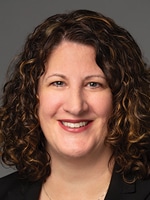
Michelle Dumonceaux (Beckman Coulter): Yes. In the point-of-care market, it is a challenge to try to define the CLIA-waived devices in that space that provide a high-level initial screen. To make more relevant decisions they need additional tests or parameters. How do you bridge the gap from the skilled worker to the tests needed in those initial centers? That’s a challenge we as an industry have to work on.
We already get a lot of information from urinalysis, and it remains one of the most cost-effective, noninvasive tests. In the future, there will be a focus on what additional clinical parameters we can glean.
Inbal Kinamon, it seems we’re relying on vendors, through your science and automation, to make up for the shortage of laboratory workers. Would you agree?
Inbal Kinamon (Siemens Healthineers): Yes. It needs to be a combination of AI capabilities and addressing the staffing shortage with automation. We will always need medical laboratory technologists who have the right experience and knowledge to analyze difficult results or complex patient samples.
Siemens Healthineers has the Clinitek Novus urine analyzer, which uses reagent cards enclosed in a cassette to eliminate manual loading of individual test strips and prevent disruptive strip jams. We want to make sure experienced laboratory technologists aren’t using their time for menial tasks.
We believe full field of view technology for urine sediment analysis can improve turnaround time. The AI capabilities automatically tag sediment particles to increase consistent results, which is advantageous for labs that have limited microscopy expertise.
Jason Anderson, can you comment on the software that needs to be built into the testing system to ensure this happens? AI depends on good computer solutions, doesn’t it?
Jason Anderson (Sysmex): It does. As hardware technology continues to improve our ability to accurately detect, differentiate, and quantitate urine parameters, it becomes even more critical to have sophisticated software that can manage and analyze the wealth of data measurements generated in next-generation urinalysis analyzers. AI and machine learning capability in urinalysis will be key to improving efficiency and addressing skilled labor shortages by driving more automated decision-making and a higher degree of autovalidation, not to mention the improved clinical quality aspect of being able to deploy more sophisticated and population-based algorithms and parameter pattern recognition across disciplines.
Michelle Dumonceaux (Beckman Coulter): When you have a central computer or a product into which results from urinalysis, hematology, clinical chemistry, and other tests can go, you’re able to look at a much broader picture, and we do that with our DxOne Command Central. Beckman Coulter has done a good job with its clinical informatic tools, having a central area where you’re pulling the information together to be able to look at it holistically and see the big picture.
Andrew Schaeffer, where’s the limit in this process on what you can contribute as a company selling controls?
Andrew Schaeffer (Quantimetrix): As these instruments become more sophisticated and more parameters are used for clinical decisions, that’s the critical point at which the control product needs to change. From a control perspective, the only required parameters for the automated instruments are white and red blood cell counts. Yet the field is moving forward and other analytes are being used to make important clinical decisions. Eventually those will have to be brought in and made part of the control process to make sure the instruments are working properly and producing accurate results.

As the controlling software adds more analytes into the normal control run that’s done at the shift or at the day, we will move forward with our control products to accommodate that. In some ways, we’ve led the market by adding quantitative crystals and quantitative bacteria into some of our products, and we’ll continue to do so with whatever parameters are needed such as yeast.
Dr. Skelton, we’re dealing with a complex clinical presentation, with many clinical pathology instruments, tests, and results that need collation and expert-drawn conclusions. Do you find that you’re adequately staffed for these data analytical tasks?
Dr. Skelton (Beth Israel Lahey Health): Our experience is that it’s easier to teach a medical technologist computers than it is to teach a computer analyst about the laboratory. Our IT department is staffed by many former medical technologists. That model has worked well. Now medical technologists also need to be data analysts.
We have three middleware products and our electronic health record requires middleware. We’ve found it works well when the medical technologists have ownership of the middleware. The senior medical technologist in the chemistry lab is the person who modifies and validates the rules. The IT department will work on interfaces, but the logic of the algorithms and the intralaboratory decision support is a basic skill of a medical technologist.
Inbal Kinamon, can you comment on middleware?
Inbal Kinamon (Siemens Healthineers): We have middleware, Atellica Data Manager, that consolidates most of the disciplines in the lab—urinalysis, hematology, chemistry, immunoassay. During the pandemic, we were able to investigate a predictive algorithm for COVID disease progression interfaced to Atellica Data Manager. This algorithm, for investigational use, combined nine clinically significant parameters, reflecting the potential of middleware in the lab.
Usually the lab prefers to work with its own LIS and create its own rules, but sometimes the vendor’s middleware can provide a broader statistical analysis. Using insights from laboratory staff, an algorithm can be tailored to meet the laboratory’s needs for its patient population.
Michelle Dumonceaux, the middleware really is the old LIS. The LIS is a frame and the middleware constructs the house, so to speak, and you have sophisticated middleware. Can you comment on that?
Michelle Dumonceaux (Beckman Coulter): Before instruments had their middleware, you could say they were essentially the same. Middleware is the intelligence or operating system that runs the lab and guides our workflows. One of the first generations of our iWare software was sold separately, but now it’s incorporated into the analyzer. The iWare software solution provides onboard validation and verification in a single step, helping laboratories process results efficiently. When you move toward automation and integration, it allows you to build different layers within your IT landscape.
It’s worth having a conversation, whether we’re talking about preanalytics or looking at predicting elements, about how every urinalysis system needs to be robust and have strong uptime. These are high-volume systems that need maintenance. How do we include analytics that identify things like, You’re now reaching this test threshold. Or, You need to perform this maintenance. Beckman Coulter’s ProService software provides the analytics to keep instruments up and running.
Jason Anderson, can you talk about how the middleware translates effectively into the EHR?
Jason Anderson (Sysmex): With all the different capabilities of LISs and EHRs, and the lack of usability in some cases, it is important to have intelligent, robust, flexible, and easy-to-use middleware solutions to manage and process the data generated in today’s analyzers. In the Sysmex urinalysis solutions, we have the integrated Urinalysis Data Manager, or UDM, which provides an easy-to-operate interface between our urinalysis analyzers and the LIS. With the UDM, the laboratory can more efficiently build its cross-check and reflex rule sets to facilitate automated decision support at the analyzer without having to tap its busy IT department for LIS changes.
On a more holistic level, Sysmex offers customers the Caresphere Workflow Solution, which helps laboratories organize clinical data for making quick and accurate decisions.
Michelle Dumonceaux (Beckman Coulter): Many urinalysis samples end up in microbiology, so having continuity with that product line and the ability for those two disciplines to connect is critical. We should be looking at areas broader than the core lab or standard analyzers.
Dr. Skelton, how much of this is a reality in your system and in the systems your colleagues are directing?
Dr. Skelton (Beth Israel Lahey Health): We’re trying to optimize bladder cancer screening. The cutoff for microhematuria is three red cells per high-power field, so the ability of the instrumentation to accurately and consistently distinguish two red cells per high-power field from three red cells per high-power field is an important point we’re optimizing. We’re working with a urology fellow to optimize the downstream workup because you can do a cystoscopy, a CT scan; there’s a lot of downstream cost and intervention based on how many red cells are in the urine.
The other aspect is how much manual review is required by a medical technologist versus how reliable the automated method is. If you can autoverify a large number of urine samples, you’ll have a much better turnaround time and save labor. That’s a win-win. Having accurate white and red blood cell counts and the ability to autoverify those is clinically important and we’re using our intralaboratory middleware cross-check rules to optimize that.

Screening for bladder cancer as revealed through urinalysis has long been a holy grail. Inbal Kinamon, are you finding an increased appetite within your installed base and your potential customers for this application?
Inbal Kinamon (Siemens Healthineers): Yes, there has been an increasing number of requests. Many of our academic customers would like to conduct studies around bladder cancer. Increasing the clinical value of urinalysis starts and ends with detection algorithm development. This is where we are focused.
Michelle Dumonceaux, is bladder cancer top of mind in many cases?
Michelle Dumonceaux (Beckman Coulter): Yes. A benefit of our digital imaging technology is its ability to look at those particles and cells in detail. There are many parameters that laboratorians can make use of with the instrumentation and the technology. That will continue to advance as more technology is integrated. Having the particles and parameters in the controls for validation will be critical steps in how we move forward.
Jason, can you speak about the interest in bladder cancer among your customers and within Sysmex?
Jason Anderson (Sysmex): At Sysmex, we are interested in expanding the capabilities of routine urinalysis to include things like bladder cancer detection. There has been more research in this area overseas over the past few years, so customers are beginning to recognize this and are expressing interest in having the ability to screen for atypical cells in the urine. It is an exciting direction. Getting to the point where we can accurately detect and differentiate these atypical cells in an easy to collect, routine urine sample will be a fantastic improvement in clinical care.
Dr. Skelton, what are your desiderata?
Dr. Skelton (Beth Israel Lahey Health): I’d like to get microalbumin on the urinalysis. We do albumin on chemistry analyzers, and it would be wonderful if it could be part of the urinalysis. There are strips, but I don’t think they’re available in the U.S.
I’d also like to maximize autoverification and get quality data. It’s good to have a flag from the instrument that says, I’m not sure about this result; do a microscopic or digital review. We care about what clinically matters and less about what’s technically possible or looking at everything you can find in urine. We’re focusing on using clinical tolerances and pushing autoverification as far as we can because it reduces turnaround time and labor.
How is the quality of collections? Is it improving or deteriorating, or are we at a steady state?
Dr. Skelton (Beth Israel Lahey Health): We’re not making progress. We have many specimens with squamous cells and a lot of mixed bacteria, and so you grow mixed flora in the urine culture, which is a wasteful process. It’s an area in which we could have great improvement. It also depends on the clinic. If studies in the literature come from a urology clinic, they have wonderful data. Bacteria matters in those publications because they’re doing a good job of getting samples. The urology nurse is giving proper instructions and making sure they collect correctly. In most collection sites it’s poor.
Michelle Dumonceaux, do you agree that there’s room for improvement?
Michelle Dumonceaux (Beckman Coulter): Yes, and in addition to collection, storage and transportation remain a challenge. In areas outside the United States, samples may travel across half a country to get to a core laboratory. It’s a reason Beckman Coulter made a commitment to work with companies that supply preservative tubes for urine samples—to lower storage and transportation costs.
Inbal Kinamon, can you comment on specimen transportation?
Inbal Kinamon (Siemens Healthineers): Siemens Healthineers just launched the Atellica UAS 60 analyzer outside the United States. It’s a compact digital urine microscopy solution for low- to mid-volume laboratories. It can save transportation time and costs and has remote viewing capabilities. Expanding full field of view capabilities into laboratories with lower throughput demands means they can perform testing in-house and save time and money associated with sample transportation.
Jason Anderson, same question.
Jason Anderson (Sysmex): For being such a simply obtained sample, urine can be quite complicated and provides its share of preanalytical challenges. It’s important to continue to research and work on solutions to better preserve urine because not all elements are the same; they don’t degrade in a linear fashion and there are many variables to control for. Analyzer technology advancement also plays a part in solving this problem. Developing alternative measurements and algorithms to more accurately measure parameters in less optimal urine collections or having better abilities on the analyzer to detect whether a sample is contaminated or “too suboptimal” will go a long way in improving the quality of urinalysis results overall.
Andrew Schaeffer, do you have a final comment?
Andrew Schaeffer (Quantimetrix): We frequently get calls from doctors’ offices and urgent care centers where clinical decisions are made with a urine strip reader. It’s the only resource they have. We also get calls from technologists who don’t know how refractive index instruments work and need help. And I do realize, for instance, that something like a Status system is a commodity. You sell it through McKesson; you don’t have direct connection to your customers. Anything the industry can do to educate these users could help a lot of people.