

Sponsored Roundtable
April 2025—This is the first of a new feature in CAP TODAY: a one-on-one virtual roundtable in which CAP TODAY publisher Bob McGonnagle speaks with one vendor and one laboratory expert. Tosoh Bioscience is the sponsor of the first such roundtable, and its sponsorship is in recognition of National Cancer Prevention Month, which was in February when the roundtable took place. The topic: the critical role of biomarker testing, laboratory efficiency, and diagnostic precision in comprehensive cancer care.
Tosoh market development manager for diagnostics Anthony Alburo opens the conversation and introduces two others. Bob McGonnagle takes it from there.
Anthony Alburo, MBA, market development manager, diagnostics, Tosoh Bioscience: Tosoh Bioscience has a longstanding legacy in immunoassay diagnostics and HPLC [high-performance liquid chromatography] technology. Our immunoassay platforms support comprehensive cancer care with reimbursable tests for oncology, endocrinology, reproductive health, and chronic disease management. Our HPLC column solution has set the standard in A1C testing, a key factor in managing diabetes, which can intersect with cancer treatment. We remain committed to advancing laboratory science to support clinicians and patients at every stage of care.
I’m honored to introduce Melanie Samko, our director of marketing, who brings not only a deep expertise in health care marketing but also a deep personal perspective: She is a breast cancer survivor. Her journey highlights the real-world impact of early detection, diagnostic accuracy, and patient advocacy. Carrie Pruett, MLS(ASCP)CM, laboratory quality and compliance manager at Illinois CancerCare, which recently merged with the US Oncology Network, has extensive expertise in laboratory operations and compliance. She will provide invaluable insights into the challenges and advancements in oncology diagnostics.
CAP TODAY: Carrie Pruett, when did Illinois CancerCare join the US Oncology Network?
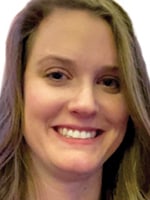
Carrie Pruett, MLS(ASCP)CM, laboratory quality and compliance manager, Illinois CancerCare: We merged with US Oncology effective September 1, 2024. We’re excited about the merger. We think it’s going to provide many resources for us. Tosoh is one of its preferred partners, so that too is great for us, as Tosoh customers already.
Where are you located physically?
Carrie Pruett: I am in Peoria, Illinois, about two hours south of Chicago. Illinois CancerCare has 14 clinics within the Central Illinois area in which we provide care, but Peoria is the biggest clinic.
How many sites are you overseeing where biomarker testing is involved?
Carrie Pruett: Five of the 14 clinics have laboratory services attached. For biomarker testing with Tosoh, we have several different throughput sizes. All five sites have Tosoh equipment, which we like because it allows our patients to go to any of those sites. They’ll get the same results with the same good quality of specimens at each Illinois CancerCare clinic.
When we think of biomarkers, we think of esoteric tests performed at large academic medical centers, but the role of biomarkers is almost like bread and butter in a cancer care environment and cancer clinics. Give us a sense of how people are worked up for biomarkers in your institution.
Carrie Pruett: We do a variety of biomarker testing, but the majority is based around solid tumors, CEAs, PSAs. We do several thyroid tests, and CA 19-9, 27-29, and 125, and vitamin B12, folate. We also do intact parathyroid hormone for our renal patients.
When we have a new patient, many times they don’t have the initial testing done. They have the results associated with the mass itself. Once a patient is here, physicians usually like to get a baseline tumor marker drawn. Take for example a patient with breast cancer who comes through and sees the provider. Depending on the status of treatment and what route they want to go, they might come down to the lab after their initial visit with the doctor and get their 27-29 result, usually within 45 minutes to an hour. On subsequent visits throughout their treatment, patients can come in an hour before their appointment with the doctor and get the labs drawn, and then all tumor marker results are available to the patient and provider before the patient leaves.
Tell us about the convenience to patients and the importance of not having a lot of redrawing or complications in preparing reagents, particularly because you’re used to the dry reagent in the Tosoh model. What are the advantages from your perspective as a laboratory?
Carrie Pruett: The cups are meant for one test, so you don’t have to worry about carryover as much. You can rely on the fact that the reaction that’s taking place is an accurate one. We don’t see a lot of false-positives or false-negatives. Knowing that the result you’re putting out is accurate and sensitive helps, so if something starts to change, our physicians can see that on any of the assays we do. They can then add imaging or other tests to see what’s going on and if treatment needs to change. That’s why we like Tosoh products.
With the efficiency of your instrumentation and reagents, patients have results in hand by the time they see the clinician, and the clinician can then recommend treatment or not treatment, as appropriate to the results of that day?
Carrie Pruett: That’s correct. Our model is comprehensive. We know it’s a lot for a patient to come to the clinic two to three days a week. To add an extra day for a lab draw is tough, especially when you’re not feeling well and need help with transportation. We’re able to get the lab drawn and within an hour have results to the provider when they see the patient.
Tosoh is famous for a good fertility panel. Talk about the importance of understanding fertility for cancer patients, particularly for younger women.
Carrie Pruett: We’re seeing a concerning trend now of younger patients coming in. When a patient who is 28 or 30 comes in and you’re talking about fertility, that’s a hard conversation. I’ll use breast cancer as an example because it’s hormone driven most of the time. The providers and the patient have to make a decision—what do we do if you want to have children later in life? Initially we essentially put them in menopause, and fertility testing is done during that process, before or during treatment. We’re developing a good survivorship program, so the reproductive hormones are helpful in managing the symptoms these patients may be experiencing. We are working internally at Illinois CancerCare to try to better the type of testing we can do for our patients to make sure we give them the best quality visit we can.
It has been noted nationally that there are many cancers that seem to be arising sooner in ever younger patients. It’s been highlighted at ASCO, and the CAP recently did a webinar on colon cancer with higher occurrence in younger patients, men and women.
Tell us about the role that measuring anemia and markers of anemia plays at a cancer clinic such as yours. What anemia panels do you offer?
Carrie Pruett: Ferritin is one of our highest use assays. It’s used for a variety of things, from patients who have solid tumors who suddenly become anemic to patients who have leukemia and are anemic and get frequent blood transfusions, for whom iron overload becomes an issue. We also do it in patients who have polycythemia or any other type of myeloproliferative neoplasm related to that. That becomes a helpful piece to diagnosing patients who may come in with anemia, knowing they’ve not been worked up by their primary care physician. We have the ability to run ferritin or other assays associated with anemia and give them a better picture of what’s going on. Is it anemia related to iron or to something else? We’re able to rule that in or out with the assays we perform.
Is there a consistent rate of discovery of anemia in cancer patients?
Carrie Pruett: Yes. We have a hematology clinic where we see just hematology referrals. Much of the workup starts with all of the iron, the B12, the folate, et cetera. Sometimes a patient needs iron and other times it’s multiple myeloma or something along those lines. It’s a broad range but we’re able to test it and rule in or out certain diagnoses.
So the menu you have is a considerable workhorse in terms of the analytes you offer on your machines.
Carrie Pruett: Yes. With Tosoh we’re able to order a quarter’s worth of reagent because most of the calibrations are good for 90 days. For ferritin it’s almost 600 tests, sometimes more. It’s easy for us to do and we’re not having to recalibrate all the time. That’s also helpful from a technologist’s perspective.
Medical laboratory scientists and technologists are at a premium, no matter where you are in the country. What is the labor situation for you?
Carrie Pruett: Being a clinic and not a hospital system, we aren’t able to provide off-shift differentials, but that’s what some employees are looking for when they come here. We don’t work weekends or holidays. But it’s been difficult for us to get seasoned employees. Because of the work we do, I generally don’t hire new graduates. We work with an MLT program at the community college in Peoria, so we do take students. If we have openings, I keep them in mind.
Let’s talk about thyroid markers. Not everyone might think about thyroid in a cancer clinic, but explain the importance of it to you and your patients and clinicians.
Carrie Pruett: Initially we used TSH for anemia workups and patients with thyroid cancer. With the emergence of immunotherapies such as Keytruda and Opdivo, for example, a lot of data have come out about an increased risk for immunotherapy-related thyroid disease, so we have seen an uptick in TSH orders. Much of it goes with monitoring per cycle but we also see it based on symptoms. A patient will say, I’m very fatigued—is it related to treatment or to a thyroid disease that’s started occurring?
Hand in hand with TSH is cortisol testing, all part of the endocrinology piece. We get a baseline and then follow NCCN recommendations and/or patient need.
It’s interesting to me that the need for a good differential diagnosis that’s been brought to you and your clinicians by virtue of the checkpoint inhibitors now becomes a big part of your laboratory practice, correct?
Carrie Pruett: Yes.
Do you see a diminution of the use of checkpoint inhibitors or is their use continuing to grow?
Carrie Pruett: It is continuing to grow. We find that patients overall don’t have as many symptoms-related adverse events per se that aren’t manageable, so I do foresee their use increasing.
We’ve mentioned the importance of unit dosing with dry reagents—it prevents potential mistakes and makes it easier to begin testing, correct?
Carrie Pruett: Yes. One of the things we like with Tosoh’s products, in addition to the single-cup dosing, is that they are available in serum and plasma. We got the AIA-2000 and decided to validate serum and plasma on most of our assays. When patients come in with a CBC and CMP we’re able to add iron studies. We can limit re-sticks on patients who get stuck once a month or twice a week—whatever it is, it’s too many blood draws.
Melanie Samko of Tosoh Bioscience, I’m sure you’re warmed to hear that the instrument and reagents lend themselves to validations for serum and plasma. Can you talk to us about the importance of giving your customers flexibility?
Melanie Samko, director of marketing, Tosoh Bioscience: It was important for me to join as a survivor because I want to speak to the personal experience of what Carrie is talking about. When she talks about efficiencies in the laboratory, it’s important to also think about what that means to the person who is going through the process of being diagnosed and treated. A lot of what you’ve heard here is about what’s been built into the instrument and assays to facilitate better accuracy, sensitivity, and speed to results. It can be difficult to wait for your dose of chemotherapy and for your lab results, because there are a lot of immune system side effects that have to be monitored. Those are important tests that need to be done within a tight time frame.
What is in the future for Tosoh? What developments are you looking at now?
Melanie Samko: We have a lot of innovation going on around our HPLC platform, which is the gold standard for A1C testing. With the incidence of diabetes increasing and the importance of detecting diabetes early and accurately, being able to test for all those hemoglobin A1C variants is critical. We are improving and innovating in that space, as well as in the amino assay space, and we’re looking to add more assays, especially related to oncology.
Carrie, what is on your wish list, not only for your enterprise but also for Tosoh Bioscience?
Carrie Pruett: We would like thyroglobulin testing because the turnaround time now is high. We do a lot of it with our thyroid patients. We send out the tumor marker and antibody, and we’d like to do both at the same time and cut turnaround time by a few days.
Chromogranin A is another test we do for many of our gastric patients; it’s a highly ordered test in our area.
Anthony Alburo, tell us how you funnel customer ideas to R&D and scientific development.
Anthony Alburo: It starts with customers like Carrie, as well as patients like Melanie. Improving patient outcomes and experience, and improving the experience for people on the front lines, drive our innovation. We’re always looking at how we can remove touch points and human intervention in the workflow because of the shortage of technologists. If you can remove human intervention, you can improve reproducibility, turnaround time, and burden on workforce efficiency.
We listen to people like Carrie and other customers to see how we can improve on diagnostic success. There is a doctor and a patient waiting on the other side and we want to make sure they get the results they need at the moment they need them, because it’s not just about guiding therapies but also giving patients the assurance they need to live their lives and make decisions accordingly. It’s conversations like this that enable us to gather requirements and deliver them to our development team.
Carrie, can you describe the quality control you’re using?
Carrie Pruett: We use Bio-Rad; it has stable assays. In general we can buy 90 days’ worth of supply and not have to recalibrate it again due to a trend within the calibration that was done in the QC. That saves us on product and time. When you have to recalibrate because QC doesn’t work, you’re spending an additional hour, and that puts specimens behind. We don’t want patients to have to wait around if they don’t have to. Having a product that is reliable and has stable assays is huge. Tosoh is one of the best with that.
Melanie and Anthony, would you like to comment on QC?
Melanie Samko: We consistently hear from our customers the value of the 90-day stability. It’s an advantage for them because it’s not as much of a burden to manage the ordering and make sure the inventory is in stock when they need it. It’s much easier to manage.
Anthony Alburo: In the immunoassay market, that’s growing at about a four to six percent compound annual growth rate. If we can deliver that type of savings on hands-on time to the lab, four to six percent or more in savings in terms of quality control, that time can be used to help them catch up and deliver more tests to patients and help them align with their business case in the next two to five years. These are the kinds of insights we look into for the benefit to the patient and to our customers, but also to the organization and its business goals.