


March 2025—Urinalysis reflex rules, reimbursement, instruments, research, and specimen handling and transport are some of what came up in the Jan. 15 roundtable with eight participants online and CAP TODAY publisher Bob McGonnagle leading the discussion. What they told CAP TODAY begins here, and our revised guide to urinalysis instrumentation is here.
In our urinalysis roundtable last year there was emphasis on reflex testing as a solution to some of the need for efficiency in the urinalysis workflow. Of course, people in pharmacy and the infectious disease physicians have different views about reflex criteria in urinalysis. We also talked about the need for working rules in the interest of efficiency and workflow amid automation and artificial intelligence. Lastly, we talked about the science of urinalysis, which seems to be underappreciated in the United States. Jason Anderson, can you comment on the current relevancy of those themes?
Jason M. Anderson, MPH, MT(ASCP), senior product manager, urinalysis solutions IVD product marketing, Sysmex America: Reflex testing, when done appropriately, can provide a host of benefits, from improved laboratory efficiency to more timely information for clinicians and ultimately a higher standard of patient care. Determining optimal reflex algorithms can be a challenge. Laboratory practice in urinalysis is not always standardized. Even within an integrated health network, you might see the use of different cutoffs or reflex rules at different facilities. Establishing reflex rules, agreeing on those with the various stakeholders, and making sure they’re optimized and evidence-based to the specific patient populations served are key.
With the progress of AI, machine learning, and expert system disciplines, in conjunction with increasing evidence-based outcome data, I believe we’ll see a strong emphasis on developing even more powerful and advanced reflex testing algorithms that are population specific in many cases. Add to this that analyzer technology is allowing for greater standardization, sensitivity, and specificity in laboratory testing and I see a recipe for making a positive impact on patient care.
Michelle Dumonceaux, can you comment on those topics and where we are today with the urine microscopic? Are we getting less and less of it? Are we automating it more with the available technology?
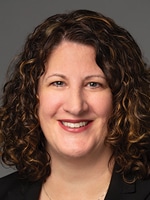
Michelle Dumonceaux, director of urinalysis product management, Beckman Coulter Diagnostics: We have a great opportunity now to map out what’s happening in the lab—where the samples are going, what tests are ordered, and how we can look at efficiencies and then figure out if we’re relying just on urinalysis. Are we relying on data from the clinical chemistry analyzer, the microbiology area? How do the samples tie together, and can software be used to combine data using AI, machine learning, et cetera? How does it help the lab? More and more labs use microscopy; it’s critical, especially in smaller labs. How do we make it more efficient for them? There are great opportunities there. Looking at standard of care from the point of care to integrated delivery networks and small satellite labs, how do we ensure we have that same rule writing so doctors, regardless of where they’re getting the results, are not guessing or saying, I have to look at it this way for this place versus a different way for another place? Those are all critical as we continue to place the analyzers in the market and people use them and labs look to rely on that data.
Chris Scanlan, BayCare Health has many sites as well as technical and less technical personnel, remembering that urinalysis is a high-volume test. Can you comment on that?

Chris Scanlan, director of laboratory administration, BayCare Health System: We are finalizing an agreement for new urinalysis. We have a PhD scientist who guided our review of what is on the market, and we involved all levels of our laboratory to be part of that evaluation to make sure they were comfortable with the workflows and technology presented. Some of the technology coming on the market is evolving, especially with automation—the artificial intelligence reading elements in the microscopic. Our team felt their manual review would still be beneficial at this time; they’re well-educated and trained team members.
Kazuhiro Hara, can you share the thoughts that are top of mind?
Kazuhiro Hara, senior marketing manager, Arkray USA: Urinalysis’ history is about the challenge to win at efficiency and achieve a better turnaround time and accuracy in diagnosis. It’s ideal to integrate an AI/machine learning engine with sediment analyzers, but it’s difficult to get FDA clearance for that. And if there are changes in performance, you have to refile with the FDA—that is a challenge. Digital pathology is becoming more popular all over the world, so aligning with that movement is a big interest of ours now.
I think we all agree that AI is somewhere between a great idea and an everyday reality in the lab all the way to a bench-level laboratory scientist. Dan Dees, talk about urinalysis from that perspective and what is top of mind as you look at urinalysis.
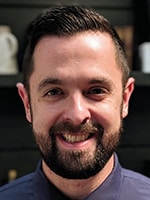
Daniel Dees, DCLS, MLS(ASCP)CM, associate medical director and technical director, hematology, Brigham and Women’s Hospital; member, CAP Hematology/Clinical Microscopy Committee: We are interested in AI/machine learning and ways to make urinalysis more efficient. Our hospital system is consolidating and integrating testing and providing remote options. We have Beckman Coulter, so the DxOne Command Central software has been great for off shift. They can sign out urinalysis results from anywhere in the lab. They can load and walk to another department and review everything from the computer they’re at. If we could adapt those kinds of software to not just within a lab but within a system and to small rural hospitals where samples are loaded but reviewed by an experienced medical technologist 20 miles away, that’s a good way to leverage expertise and equipment. Automation is a lifesaver when it comes to the volume of urinalysis in a large medical system.
We often talk about the critical shortage of laboratory scientists and veteran senior medical laboratory scientists who may be retiring or moving on. Those positions can be hard to fill. What is your experience in that regard at Brigham?
Dr. Dees (Brigham and Women’s Hospital): It’s one of the things that keeps me up at night. About a third of our staff is within retirement age in the next three to five years. That’s a lot of experience to lose at once.
We’ve been fortunate in that our system is forward-thinking. We’ve developed an MLS program in our system in which individuals with a bachelor’s degree in science go through an MLS-specific training program and then rotate through our labs, including the urinalysis section. We’ve been successful not only in training these people but also in retaining them after they finish the program and pass certification.
Andrew Schaeffer, what’s the current state of urinalysis from your perspective?

Andrew Schaeffer, manager of technical support, Quantimetrix: From the clinical control perspective with regard to urine sediment analysis and the incredible capacity of automated systems to differentiate so many different analytes, we had anticipated the need to adapt our controls for each of the analytical subtypes—crystals, bacteria, yeast, et cetera. It hasn’t played out that way. Most of the automated systems are still using just the red and white cells with regard to running QC routinely. We’ve already introduced the crystals and bacteria but are holding off on introducing other elements until we see a true clinical need for them. That was a surprise to us. I assume at some point these various elements will be introduced into the routine software used with QC.
Regarding the loss of skilled technologists and the introduction of younger people and perhaps nurses, we’ve attempted to meet that need by simplifying our QC process as much as possible. For instance, we introduced single-use QC products in pouches that can be used and disposed of and have tremendous room temperature stability, so you no longer have to keep track of dips or open-vial stability. You don’t even necessarily have to remember to put it back in the refrigerator. This makes it easier for and removes some stress from the personnel who run these analyses.
Rob Fratino, as interim head of urinalysis, what are you thinking as you step into the leadership of that group at Siemens Healthineers, and what are your thoughts on the conversation so far?
Rob Fratino, interim head of centralized urinalysis and global product manager, diagnostics, Siemens Healthineers: Top of mind for me is reimbursement, especially outside the U.S., where there is pressure cost-wise, so I’m excited about AI. We shouldn’t look at urinalysis in a vacuum; we need to integrate it with other disciplines. We also have to keep in mind the value urinalysis provides to the laboratory as a low-cost screening method. There’s a fine line on developing advanced parameters and clinical utility, but we can’t look at it without looking at reimbursement, at the cost impact. By investing and potentially creating more and more, are we ensuring access to these new technologies and clinical utilities? It’s important to consider this as we advance urinalysis and potentially take it out of the proverbial basement and move it into the spotlight.
You’re referring to reimbursement problems in Western Europe and other places where there are mature health care systems but still pressure on health care costs overall, correct?
Rob Fratino (Siemens Healthineers): Correct. Some markets are hesitant to adopt sediment testing because of the lack of reimbursement for it, which is dangerous because it provides utility for patients and clinicians. Countries globally are looking to lower their reimbursement rate for sediment analysis as well. We’re starting to reach a potential tipping point, with the headwinds we’re facing, where we have to look at what we can do to preserve the value of urinalysis.
Chris Scanlan, are you worried about the reimbursement for urinalysis as you look at the clinical lab fee schedule?
Chris Scanlan (BayCare): Yes. The combined 10 percent, 10 percent, 10 percent, looming 15 percent reduction is always top of mind. For a high-volume test like urinalysis, it adds up quickly. Any fee schedule cut is a concern; it will impact decision-making as you look to upgrade analyzers or add technologies.
Mariann Amador, is specimen transport an increasingly important consideration for people who perform urinalysis?
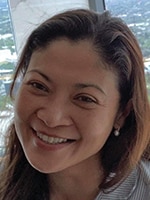
Mariann Amador, marketing manager, Arkray USA: Yes, it is. If some of the rural or satellite clinics can do the urine, then you can access that microscopic sediment and the more experienced technologists can look at it from the core laboratory. Having that structure in place can lower the transport cost and preserve specimen integrity in the process.
Jason Anderson, specimen collection and transport can be a headache in urinalysis, can’t it?
Jason Anderson (Sysmex): Preanalytics in general are challenging in urinalysis. It’s a sample that sometimes isn’t treated with as much reverence as other samples, and there isn’t a universal preservative for all parameters. We have at least a rudimentary understanding of how parameters are impacted over time, but understanding the dynamics, environment of the urine, storage conditions—it’s not a linear degradation for many elements. So how do labs know how good the urine specimen is that they’re getting? They don’t. We report out what we can. We have technologies that minimize preanalytical interferences, but we can’t remedy particles that have degraded. If they’re not there, they’re not there. That’s not necessarily the fault of analyzer technology; it’s the nature of the preanalytical handling.
As an industry we need to make greater strides in developing a urine preservative that ensures we’re getting the best results possible for key urinalysis parameters. We talk about microscopy but it could be that we take certain technologies further and minimize the need for traditional image-based methods for urinalysis. Regardless of the technology or platform, laboratories want to be assured they’re getting quality urine specimens so they can be confident they are turning out the highest quality result possible.
Michelle Dumonceaux, tell us about the idea of a universal preservative.
Michelle Dumonceaux (Beckman Coulter): Urinalysis today consists of two tests—urine chemistry, which has a number of analytes, and microscopy. You have to be sensitive to any type of preservative and how it could interact with the entire chemistry line. You’re not looking at just one analyte. For microscopy it’s the degradation of samples, even sitting out for a couple of hours on the benchtop, which we know is a challenge. How do you process those quickly? How do you move it from one area of the hospital or to a site 10 or 15 miles away quickly enough to ensure sample quality? It’s the challenge we have as manufacturers. Working with companies like Quantimetrix, how do you develop a control solution that can help assess up front if the storage, handling, or transport has been impacted? It’s going to be a challenge to create that preservative because the chemistry for all of us is a proprietary process. We’re not using the same chemistry.
Andrew Schaeffer, give us your take on mediums for optimal sample preservation and whether you have QC that can detect a bad sample.
Andrew Schaeffer (Quantimetrix): To the best of my knowledge there is not a system in place, but there should be.
Rob Fratino, what initiatives does Siemens Healthineers have to help with sample collection and preservative?
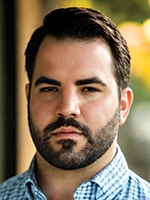
Rob Fratino (Siemens Healthineers): We’re getting more and more inquiries related to preservative tubes. There is concern about off-label use, particularly in the U.S. market. Does it put the laboratory at risk if the manufacturer has not validated a preservative tube? The responsibility often falls on us to do further validation studies of preservative tubes to provide appropriate guidance to laboratories.
Dr. Dees, what is your reaction to this discussion? We’re getting close to a laboratory-developed test or laboratory-verified protocol for tubes you might be using, right?
Dr. Dees (Brigham and Women’s Hospital): Yes. And LDT is a scary phrase now in the clinical lab. The workflow is much needed. We’re integrating testing. We’ve closed some satellite labs, so many things are going to the main lab. We have concerns about transport. A universal preservative would be tremendous.
Jason Anderson, have we made sufficient progress on working rules in the past couple of years?
Jason Anderson (Sysmex): We haven’t made tremendous progress. Part of that is based on peer-reviewed research, doing studies to determine what the optimal rules are. Labs have rules in place that do a good job. There is a stronger need in some cases for population-specific rules and doing the work to establish those. Where can we use cross-disciplinary information in those rules? For instance, looking at a white [blood cell] count and CBC to see if a patient is immunocompromised or leukopenic and wouldn’t necessarily have a white cell response in the urine as we look at things like culture reflex rules.
We alluded last year to European working groups that were attempting [through updated guidelines] to improve people’s understanding of the science of urinalysis. Michelle Dumonceaux, can you comment on the progress those groups are making?
Michelle Dumonceaux (Beckman Coulter): Many conversations are taking place. We’re continuing to monitor it and staying engaged with the main teams in Europe. We’re looking forward to seeing what will be presented at EuroMedLab this year, and we’ll continue to create educational materials to improve understanding of the value of urinalysis as it pertains to the European guidelines.
Kazuhiro Hara, would you like to see updated urinalysis guidelines for patient purposes? I’m assuming it also helps guide strategy for an IVD manufacturer.
Kazuhiro Hara (Arkray USA): Absolutely. Standard guidelines would be a great help for manufacturers and laboratories. Standardization of tests has been a longtime challenge for manufacturers and users in many countries. Guidelines and getting consensus should be more advanced, and I hope the work moves forward in the next several years.
Andrew Schaeffer (Quantimetrix): We recently read through the EFLM European Urinalysis Guideline 2023 [https://doi.org/10.1515/cclm-2024-0070] and have incorporated it into our development strategy. It’s been a valuable tool for strategic guidance.
Michelle Dumonceaux, can you comment on what I’ll call the undeveloped science of urinalysis? I often compare it to hematology or basic clinical chemistry. There’s more to be learned from the sample than we are extracting in terms of knowledge.
Michelle Dumonceaux (Beckman Coulter): There’s a lot of data in the particles, the elements we’re seeing, and especially as we move to greater sensitivity and specificity with our tests, we’re able to identify that. Casts and crystals hold a lot of information, but how do we pull the data and report it? How do we ensure our clinicians are using the best sample and getting the data they need? Again, it all comes back to investing in urinalysis. But how do we do this when urinalysis continues to get cut?
Jason Anderson, where can people who are interested in picking this up get research grant or other support? From the National Health Service or Department of Health and Human Services?
Jason Anderson (Sysmex): This isn’t my area of expertise, but I am working with investigators who have used those channels to obtain grants, research funds to conduct analysis-based research. They’re out there.
Certainly on the customer side, that’s where you’ll find people who can write those grant applications, et cetera, correct?
Jason Anderson (Sysmex): Yes. Clinical investigators and laboratories affiliated with academic institutions generally have good access to internal grant writing and application resources. For investigators or laboratories with less experience or internal resources, I suggest looking into organizations, like the National Institutes of Health, that offer a wealth of easily accessible online resources, including tools to search for available funding opportunities as well as instruction on the grant application and submission process. In addition, many in vitro diagnostic vendors will consider directly supporting customer- and/or investigator-initiated studies if the merits are there.
Rob Fratino, are there good sources of funding to help institutions with research in this area?
Rob Fratino (Siemens Healthineers): It depends on the topic. It’s likely you could find funding in the area of chronic kidney disease. In areas such as bladder cancer, we think in Europe there’s going to be greater calls for screening methods that potentially rely on urinalysis in the next few years. It might be fragmented on the global scale, but opportunities will continue to grow. As an IVD manufacturer, we partner with laboratories that have a vision for additional guidelines or clinical applications to provide technical and financial support.
Dr. Dees, tell us your thoughts on this topic.
Dr. Dees (Brigham and Women’s Hospital): There are many promising studies around CKD specifically, including of sensitive biomarkers that are potentially secreted through the urine. I’ve read studies on cell-free DNA that come through urinalysis. I read an article not long ago about Boston Medical Center identifying six new urinary protein biomarkers [Waikar SS, et al. Clin Pharmacol Ther. Published online Jan. 4, 2025. doi:10.1002/cpt.3531]. These studies are ongoing and probably not given the spotlight they should as screening tools.