


February 2026—Cybersecurity and image management took center stage in a Dec. 12, 2025 roundtable led by CAP TODAY publisher Bob McGonnagle. Among the nine participants were Ulysses G. J. Balis, MD, of Michigan Medicine; Raj C. Dash, MD, of Duke University Health System and vice chair, CAP Council on Informatics and Pathology Innovation; and Omar Z. Baba, MD, clinical pathology resident at Henry Ford Hospital and member, CAP Informatics Committee.
Click here for CAP TODAY’s interactive anatomic pathology computer systems product guide.
Ed Youssef, in last year’s roundtable discussion we talked about anxiety levels decreasing around digital pathology and AI. However, there are many issues around cybersecurity, patient privacy, reporting, et cetera. What anxiety are you seeing at Novopath around the implications of AI adoption?

Ed Youssef, chief strategy officer, Novopath: As digital pathology and AI move closer to routine use, many laboratories are taking a more deliberate look at infrastructure, cybersecurity, and long-term system sustainability. In particular, labs that have historically hosted systems on premises are increasingly evaluating vendor-hosted SaaS models, where cybersecurity, uptime, and system performance are continuously managed rather than maintained internally. That shift gives laboratories greater confidence to adopt newer technologies, including AI and digital pathology, because it brings critical capabilities together in a secure, scalable environment that can support multiple areas of a lab’s operations.
Dr. Omar Baba, we hear how difficult it is to put new instrumentation into laboratories. Henry Ford is one of the systems that is growing rapidly through acquisitions and consolidations. Is cybersecurity one of many headaches you deal with daily?
Omar Z. Baba, MD, clinical pathologist, pathology informaticist, and currently CP resident, postgraduate year two, Henry Ford Hospital: Yes, vendor security reviews remain a significant implementation bottleneck. When onboarding new vendors at our institution, IT compliance and security assessments can extend timelines by six to 12 months. We’ve found that prioritizing vendors with existing institutional relationships dramatically accelerates deployment—they’ve already cleared our security framework. However, even established vendors require ongoing vigilance. Cybersecurity threats evolve constantly, so our due diligence never truly ends. The challenge is balancing thorough risk assessment with the pace of clinical innovation.
Gilbert Hakim, what is your experience with the complication of cybersecurity as your customers are experiencing it?
Gilbert Hakim, founder and CEO, SCC Soft Computer: Many of our clients are moving to the cloud, so cybersecurity is built into the system. Our cloud provider is taking precautions with software to prevent cybersecurity attacks. On premises, we complete cybersecurity certification audits yearly. We get audited for ISO 27001, for information security management, as well as for the MDSAP [Medical Device Single Audit Program] for the FDA.
Tell us about systems or instruments that must be accommodated within a Soft install.
Gilbert Hakim (SCC Soft Computer): The instrument doesn’t normally expose itself to the cloud, so it is usually immune from connection and is within the client’s intranet. We don’t use middleware; everything is our software. There is no need for third-party middleware.
Dr. Ulysses Balis, your comments on what you’ve heard?
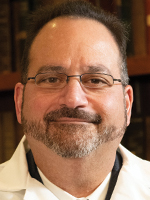
Ulysses G. J. Balis, MD, A. James French professor of pathology informatics and director of the Division of Pathology Informatics and of the Computational Pathology Laboratory Section, Michigan Medicine: Gilbert is right—the instruments live on the intranet, but they are on the live hospital network. Many institutions—and the University of Michigan is prototypic of any larger community or academic center—have stringent requirements for what can live on the internal health system network. We have every device identified by its MAC address—the six-byte identifier—and if a device is not registered properly, the network will shut it down. Any new class of device, including medical instrumentation, goes through a complex six-month to yearlong approval process by our information assurance division, which is our IT security division and is part of central IT. They send a 40- to 60-page query to the vendor about security practices and software and hardware development tasks. The devices don’t get full approval for being on the internal health system network until they have gone through our IA division’s severe and extensive audit for hardware and software. Some devices have been disallowed, and we’ve had to tell the vendor we can’t put their device on the network. Onboarding of devices is a separate matter from the LIS itself. The LIS can certainly have a bidirectional interface; Gilbert provides great interfaces. But if IA says no go, we can’t use that instrument.
Gilbert Hakim (SCC Soft Computer): Yes, of course. We have encryption data at rest and data in flight, so our applications are very secure.
Dr. Balis (Michigan Medicine): The application is great, Gilbert. Soft is completely compliant. But if the instrument hardware itself is suspect by IA, the network engineers won’t let us hang it on the network. We have had hardware that, through development practices, has proved to be noncompliant. For example, the software/hardware ensemble could be deemed noncompliant because a vendor hasn’t kept up with standard IT security practices. As an enterprise, we can see attacks on our networks from overseas hundreds of times a day—port scans, probes. We live in fear of an attack from within once someone sets up shop in one of our internal machines. So having every device on our internal network secure is of paramount concern.
Gilbert Hakim (SCC Soft Computer): It is targeted because the instrument manufacturers remotely access that device, which is beyond our reach. If they’re exposed from the outside, providing remote support, you have to close that loop.
Dr. Balis (Michigan Medicine): If they have a vulnerability on one of their socket listeners, another compromised machine on our network sends out a port scan and attacks that device; then that device could become a launchpad for subsequent attacks. That’s the kind of sensitivity we look for when we do a CORL Technologies security survey of new vendors—not just external but internal vulnerabilities as well. We’ve had internal machines that have become launch points. This is a threat we’ve dealt with and we don’t want it to happen again.
Nick Trentadue, we have so many players now but we don’t have a unified meeting to bring people together—IVD companies, IT, labs—to solve problems. Do you agree?

Nick Trentadue, vice president, laboratory and diagnostics, Epic: It depends. Epic has good relationships with many major instrument and middleware vendors. We’ve always preached standards. I agree with Ul Balis that it’s every vendor’s responsibility—whether instrument, middleware, or software—to make sure its product is safe and not subject to cybersecurity threats. We have standards for how we can interoperate with other software, instruments, middleware, but they could always be better.
Roy Cloots, we do not in the U.S. have an abundance of IT staff in our health institutions, and many labs don’t have a large, independent IT group dedicated to the laboratory and its systems and instruments. Share your perspective on what you know globally and what the conditions are in the U.S.
Roy Cloots, senior product manager for AP Clinisys: It’s a mix. You see departments with a lot of IT staff and others with hardly any. Clinisys is slowly but surely moving to the cloud so we can take some of the burden from labs. There’s security with the cloud, but the client still has to do a big part of the internal security, making sure its environments are safe and no one can open doors and access IT equipment.
We’re seeing a global movement to the cloud. One of the countries where we see it is the Netherlands, where 90 percent of all labs work fully digital. The Netherlands has a national database for all pathology reports and is now planning one for data and images to share nationally. Pathologists are short-staffed in the Netherlands and need IT to help so specialists can focus on cases that need specialist review.
Diana Richard, we more or less agree that moving to the cloud is a good thing, but it is in part a reaction to the staff shortage, both in IT and the clinical departments that are served by so many systems, particularly laboratories.

Diana Richard, associate vice president, national accounts, pathology/radiology/health systems, Xifin: Leveraging modern cloud infrastructure enables greater transparency, consistency, and control across versioning. It allows us to introduce new functionality and security enhancements more quickly and removes many of the limitations inherent in traditional on‑premises systems. It also provides a stronger foundation for infrastructure management, more flexible access points, and real‑time collaboration.
On prem is typically a less secure methodology of data management, often relying on locally managed security protocols that are less scalable and less mature. We saw this firsthand last year when a client experienced power outages following a hurricane. Their on-prem LIS servers were down for days, during which time they had to manually draft pathology reports. Meanwhile, RCM operations continued to move because users could log on from unaffected locations.
That’s the core advantage—ensuring continuity and security of daily operations while eliminating the burden of managing data locally. Agility has always been a cornerstone of our strategy. Investing in a highly secure and scalable cloud architecture is not insignificant, but it is essential for staying ahead of emerging technologies like AI. This approach enables us to balance resource bandwidth, strengthen security, and deploy new capabilities with minimal operational disruption. When viewed holistically, the return on investment is clear.
Dr. Raj Dash, can you share your thoughts on what you’ve heard so far?
Raj C. Dash, MD, professor of pathology; medical director, laboratory information systems; vice-chair, anatomic pathology and informatics; Duke University Health System: Cybersecurity is often relegated to central IT, so it is less pathology laboratory focused. I rely on our central IT group to provide that infrastructure. Every institution needs to have the various components in place, including a reactionary force for when there is a sentinel event. Those processes are defined outside the pathology department or laboratories.
For digital pathology, it’s the opposite. Everything’s driven from pathology, but it’s working its way into the fabric of the health system infrastructure, given that radiology already has much of the IT infrastructure in place, at least for storage. The decision to keep images on premises versus being moved to the cloud is an important consideration when you take into account the storage proportion that pathology will hold in the future, versus what radiology accounted for in the past. It’s here. It’s changing the way we practice. It has a lot of benefits, but the risks need to be mitigated. There are cultural, technical, security, workflow, and billing issues with digital pathology, so there’s opportunity to consider those things. AI will probably change our practice the most, and you need the digital pathology infrastructure first to be able to leverage AI.
It seems to be an emerging thought that the key to a successful digital pathology implementation, with the benefit of AI coming on once that’s well established, has to do with the image management system. This is music to the ears of people in the imaging radiology business because they see an emergence of a super PACS [picture archiving and communication system] product that will incorporate all the images from the many sites within a huge health care system like Duke. Can you comment on that?
Dr. Dash (Duke): A pathology PACS that adopts workflows from radiology is poorly suited to enhance how we function digitally in pathology. We cannot simply move from paper processes to digital in a regimented and inefficient way. For example, being able to right-click on an image and order a rescan or recut is something no system can do today. It’s an intuitive task for which you’d want to create a standard way for PAC systems to integrate with LISs to accomplish a workflow such that you don’t need to say, “This is slide B21,” and then you move from the screen that’s displaying the slide over to the LIS and then find B21 and order a recut. Then you have to order a digital scan task and create a placeholder—if there’s a way to do so in the PAC system—so you know that a scan is coming and don’t sign out that case.
This is all very kludgy, but standard-setting groups are developing standards. DICOM is working with Integrating the Healthcare Enterprise. The CAP is heavily supporting those initiatives, with CAP staff serving as a secretariat for both of those organizations. The CAP, with the help of the Digital Pathology Association and European Society of Digital and Integrative Pathology, is hosting a vendor connectathon to get vendors together. The CAP usually is hands-off when it comes to picking vendors as favorites, but through these standard-setting organizations, the CAP has a vendor-agnostic way of driving the technology forward so it benefits pathologists.
Dr. Baba, is what Dr. Dash described familiar to you at Henry Ford?
Dr. Baba (Henry Ford): Yes, LIS-IMS integration has been a persistent challenge in our field. When I observe fully digital pathology departments at conferences, my first question is always, “How do your LIS and image management systems communicate?” The lack of seamless integration creates real workflow friction—pathologists toggling between separate screens for case data and digital slides. As my mentor, Dr. J. Mark Tuthill, would say, “If we designed an LIS today, it would be architected completely differently.” Legacy systems were built without anticipating digital pathology’s future workflow demands.
One of our concerns with IMS implementation is contextual case loading. When integration fails, the system meant to streamline workflows actually introduces new bottlenecks. User adoption becomes our greatest challenge. Digital transformation requires pathologist buy-in, and it is no secret that pathologists have varying levels of computer savviness and comfort with complex software systems. Adding another platform, especially one that creates workarounds like the placeholder issue Dr. Dash mentioned, directly contradicts our core mission as informaticists: optimizing pathologist workflows, not complicating them.
Gilbert Hakim, how have these new features in the world of pathologists and anatomic pathology been received at Soft, and what are you doing to optimize workflow for your clients?
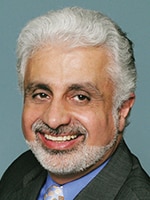
Gilbert Hakim (SCC Soft Computer): Digital pathology is the frontier, as well as what’s called Web-based sign-out, because pathologists are moving around and often get secondary interpretation of an existing slide. We’ve created a Web-based sign-out that crosses all genetics and AP so pathologists can review both slides remotely and log in to the remote system without needing a local dedicated PC to do it. We have a couple of our client sites testing it now.
Nick Trentadue, is digital pathology being driven more by the image management system as opposed to, say, the scanners and the storage of the slides?
Nick Trentadue (Epic): Not yet. We have pathologists across the country who are 100 percent digital for sign-out and some who are zero percent. You still have histopathology, where we need to process everything and make glass. Until we go into truly 3D scanners, that’s going to be there. We’ve had a user group that is strongly opinionated about having the LIMS be their work list. Whether it’s a consult, a second opinion, a case QA—digital or not—all their work lives in one place.
Epic has set up bidirectional interfaces, whether it comes in digital only or starts as a glass slide in the lab. We always want to use vendor-agnostic standards so groups can pick the vendor they want, whether it’s Sectra, Inspirata, Corista, Hamamatsu, or others. Until we get to a point where some of that technical work can go away or everything is digital, I still see the imagers and scanners as more important than image storage because you have to scan them to get there.
Beth Eder, is the LIMS the home of the work and it’s hard to take the work out of the LIMS and put it into an image management system?
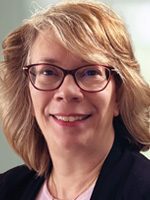
Beth Eder, BS, CT(ASCP), director of product management, Orchard Solutions, Clinisys: Yes. Any LIS or LIMS solution is meant to be comprehensive so that it enwraps the entire workflow for whomever the user is, whether it’s the histotechnologist, cytotechnologist, pathologist, billing, or for querying data—it’s all meant to live in an LIS or LIMS. Some digital pathology IMSs are starting to take that responsibility into their solutions, and Clinisys often integrates to the ability of the solution. Pathologists tell us they still want the LIS/LIMS solution available to use. They want to make sure the data can be queried and billing is done appropriately. As far as the vendors we have worked with, I haven’t seen that type of functionality available in those solutions. Nick, have you seen that?
Nick Trentadue (Epic): From the Epic side, we’re not against it if that’s where people want to go. We’ve spent the last decade making sure that when you’re signing out a case, whether digital or not, you have everything in your cockpit or sign-out space—clinical, information about the requisition and the client, where the report’s going to go. These digital systems are not designed now to be a database for the 50 other things.
Our goal is to integrate seamlessly with the digital images, just like you’re looking in a microscope and you have your LIMS to do the rest. If there is a shift, we haven’t seen it. We’ve had a couple of groups see if it’s a possibility. We’re not against it; we just have a strong user base that is of the view the LIMS should be it until there’s something better.
Dr. Balis, what are your comments on this line of inquiry?
Dr. Balis (Michigan Medicine): I firmly believe that the LIS is the center point for most of the activity in the laboratory, including AP and CP. However, it’s also appropriate to look at this from a nuanced perspective for anatomic pathology sign-out. There is an emergence of thought over the past five or 10 years to emphasize user experience engineering—interfaces that optimize safety and efficiency for the pathologist, specifically the case sign-out workflow of surgical pathologists. From our experience in using DICOM and radiology as the launching point for a full-digital primary diagnosis workflow, we have found it is invaluable to do large-volume sign-outs safely and effectively. Our digital rollout for primary diagnosis was done in partnership with radiology, which de-risked the project in many aspects. We already had the IMS hardware and software solution on prem, which is Sectra, but more importantly we borrowed useful concepts for high efficiency and safety, such as modality work lists. The IMS, as the driver of the workflow, provides a common framework by which, for example, subspecialty-based pathologists, regardless of where they are in the building or campus, can chip away at a given modality in a more efficient way than having conventional scheduling.
The economies of scale don’t allow LIS vendors to put the level of detail of software engineering and user interface design into these thoughtfully made interfaces that allow for efficient sign-out. Raj Dash made an important point about kludges of interfaces. In the current state, that is true. Many deployments lack the creature comforts—ordering a special stain, looking at the manifest list of slides. We were purposeful in how we implemented our IMS with Sectra. The features that are essential for pathologists to not have to break workflow—by constantly needing to switch workflow between the IMS and LIS—are in place in the IMS. The future-state IMS, when equipped with strategically placed features that would otherwise have required such context shifts to the LIS, can alleviate split workflow.
I tip my hat to Gilbert Hakim, who has provided the enabling layer—orchestration along with an open LIS schema. We recognize that the LIS is a source of truth and use it as much as we can. But from a user experience workflow perspective, when we’re trying to create an immersive experience for the surgical pathologist sign-out in one context—they don’t have to go from one screen, the IMS, and back and forth to the LIS—we populate all the information needed in the IMS. That enables rich and granular orchestration, which SCC provides as an open architecture.
We have been systematically building a comprehensive cockpit that lives in the IMS. If you establish a standard workflow in an IMS for surgical pathology sign-out and then happen to change your lab system, we have the locked-in workflow for the pathologists preserved, independent of the LIS transition. That creates stability from the perspective of training. We have expended so much time and effort in training pathologists on how to sign out cases digitally that to have to switch to a completely different workflow model would be significant work, and now we don’t have to worry about that.
There’s tremendous opportunity in looking at the IMS-driven workflow with orchestration for specific tasks that reduce the need for context switching. That said, the LIS, which is paramount for histology and tracking and all the standard things it does now, should stay in place. However, with the unique workflow intrinsic to surgical pathology sign-out, there’s opportunity to layer in AI tools and leverage software economies of scale. I just don’t see the LIS vendors catching up with where the IMS vendors are right now.
Dr. Baba, what is your reaction to Ul Balis’ comments?

Dr. Baba (Henry Ford): This requires a systems-level perspective, more like a 10,000-foot view. We’re not just implementing technology; we’re navigating a complex web of economic constraints, institutional politics, and regulatory frameworks, to name a few. Radiology has significantly outpaced anatomic pathology in work-stream digitization. Even clinical pathology has advanced faster than AP.
Our strategy should focus on learning from proven models rather than reinventing the wheel. Radiology has demonstrated clear value propositions and established sustainable implementation frameworks. We can adapt their successes while acknowledging a critical difference: pathology workflows are fundamentally more complex. Beyond imaging data, we integrate molecular results, clinical histories, quantitative measurements, and qualitative assessments. This data heterogeneity makes our digital transformation more challenging than radiology’s primarily image-centric model. The successful blueprint for digital pathology remains undefined. We’re still determining how to orchestrate these diverse data streams into a cohesive, efficient workflow that delivers value without overwhelming end users.
Dr. Dash, can you respond to Ul’s comment around radiology as a roadmap for how this might develop? It reminds me of a concept that circles back every decade or so about the diagnostic center of the health care institution, popularized in many ways by Bruce Friedman years ago. What is your view of that take on the future of AP systems?
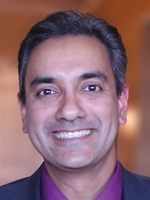
Dr. Dash (Duke): Ul is absolutely correct. There are many opportunities to become more efficient as we reimagine diagnostic sign-out workflows, leveraging paradigms already in place in radiology digital sign-out. Ul is lucky because he has Sectra, but it’s also one of the more expensive PAC systems. There are many competitors in the market that provide perhaps not the same level of maturity but have certain benefits such that you can get started and establish an integration, even if it’s not standards based. Sectra is driving the standard forward for more efficient, safer, more intuitive interactions. Even if you’re using the LIS to drive workflow, if you want to be able to highlight an area of an invasive tumor on the visual and say, “Let’s do HER2 FISH on this circle of annotation,” that must be driven from the visual interface, which is the pathology PACS. We have to get the LIS and pathology PACS vendors more tightly integrated to support better patient care. That’s all it comes down to.