

Karen Titus
January 2026—When new biomarkers become part of clinical practice, the fundamental question—Will this work?—soon gives way to an equally important group of interrogatives: who, what, when, where, why, and how.
At Michigan Medicine, introducing two biomarkers—glial fibrillary acidic protein, or GFAP, and ubiquitin C-terminal hydrolase L1, or UCH-L1—into the emergency department to evaluate traumatic brain injury emphasized the how of the matter.
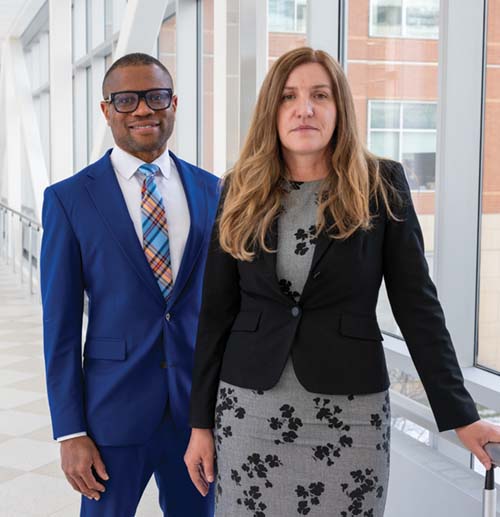
But the markers are the first FDA-cleared blood tests for the brain, Dr. Korley notes. And because Michigan was staking out territory as an early adopter, “We wanted to get a good sense of how the test would work in our own hands.”
A year after implementing the markers, in December 2024, the results look good. But that was neither the beginning of the story, nor is it likely to be the end.
Two years before he and his colleagues launched the test, they began a retrospective study to figure out the answers to the so-called five W’s, paying special attention to who?, where?, and when?
The goal was to look at patients who routinely undergo brain CT imaging following blunt trauma, a practice that at Michigan relies heavily on clinician decisions rather than a formal protocol. Ideally, using the markers could help reduce the number of unnecessary CT scans.
During the study period, residual blood was stored for every adult patient who came into the ED for a trauma-related event and who had a CT scan for traumatic brain injury and a blood draw. The blood samples had to be drawn within 24 hours of injury occurrence, and the samples were processed and stored within that same time period. Batched GFAP and UCH-L1 testing was performed on the Abbott i-Stat TBI Plasma test, overseen by Carmen Gherasim, PhD, associate professor of pathology (clinical), section director of the clinical core laboratory, and director of the clinical chemistry, toxicology, and emergency room laboratories.
The results of the study were published in Annals of Emergency Medicine (Roberts NB, et al. Ann Emerg Med. 2025;S0196–0644[25]01218-1). Among 1,867 patients, 49 (2.6 percent) had clinically significant traumatic intracranial lesions. Elevated GFAP or UCH-L1 showed 96 percent sensitivity.